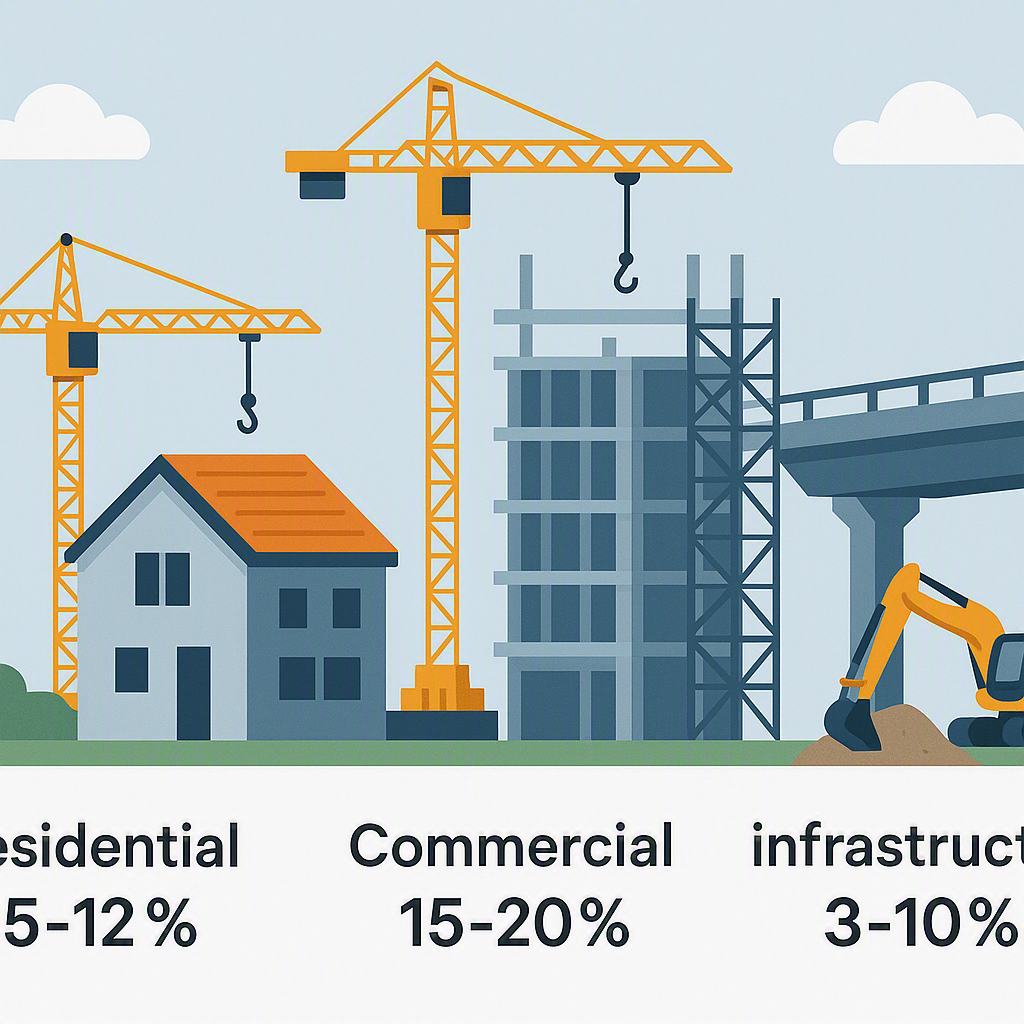
Why Bid Markup Matters
If you're getting bid markup wrong, you're not just losing profits—you're sabotaging your entire project pipeline. Markup is how contractors move from cost to price. It accounts for overheads, risk, and the profit margin you need to stay afloat. Yet, many contractors confuse markup with margin or fail to factor in hidden costs, leading to bids that barely break even.
The Common Misconception
Many believe markup is simple math: take your total project costs, add a percentage for profit, and you're done. However, this approach often ignores critical factors like fluctuating material prices, underutilized equipment, and subcontractor overruns. It also assumes your estimates are entirely accurate, which is rarely the case.
Why This Misconception Persists
The belief that markup is straightforward persists because it feels intuitive. After all, if you know your costs, a percentage seems easy to add. But this simplicity masks deeper issues:
- Hidden Costs: Contractors rarely factor in indirect costs like idle equipment or compliance penalties.
- Estimation Errors: Even small miscalculations in BOQ estimates can snowball into major margin erosion.
- Market Pressures: Competitive bidding often forces contractors to lower markup percentages without understanding the impact on profitability.
How to Calculate Bid Markup Correctly
Let’s break it down step by step:
Step 1: Build Accurate Cost Estimates
Start by creating detailed estimates for labor, materials, machines, subcontractors, and overheads. Break down costs into these five resource factors:
- Labor: Time required for scope completion, calculated for specific roles like masons or carpenters.
- Materials: Quantity-based or value-based budgets for known or unknown materials.
- Machines: Estimated usage time for equipment.
- Subcontractor: Quantities of subcontracted work.
- Overheads: Monetary allocation for indirect expenses.
Step 2: Identify Hidden Costs
Hidden costs include risks like material price fluctuations, equipment downtime, or compliance-related penalties. Identifying these costs early can help prevent margin erosion.
Step 3: Apply Markup Formula
The formula is straightforward:
Selling Price = Total Costs + Markup
But determining the right markup percentage isn’t arbitrary. Factors include:
- Risk Level: Higher risks demand higher markups.
- Market Conditions: Competitive markets may force lower percentages.
- Project Type: Lump-sum contracts often require higher markups than milestone-based ones.
Step 4: Validate with Regular Reviews
Regularly review your estimates and project margins to catch issues like estimation errors or scope changes before they impact profitability. Items showing negative margins need immediate attention.
Common Mistakes to Avoid
- Confusing Markup with Margin: Markup is added to costs; margin is the percentage of profit in the selling price. Don’t mix them up.
- Ignoring Indirect Costs: Overheads, compliance penalties, or idle equipment costs must be included in estimates.
- Arbitrary Markup Percentages: Use data-driven insights, not gut feelings.
FAQ
Q: How do I determine the right markup percentage?
A: Consider project risk, market conditions, and cost accuracy. A systematic approach to identifying these factors is essential.
Q: Can markup percentages vary by industry?
A: Yes. MEP contractors might use lower percentages than general contractors due to higher competition and tighter margins.
What We’re Still Not Sure About
We still struggle to predict long-term impacts of market volatility on markup percentages. While tools and data can help, human judgment remains critical.
Conclusion
Accurate bid markup calculations are essential for maintaining profitability and staying competitive. By understanding your costs, accounting for hidden factors, and using a systematic approach, you can improve your bidding strategy and avoid common pitfalls.
Learn more at EstimateNext