What I Used to Think
For years, I thought AI-powered takeoff tools were overkill for small and mid-sized contractors. The assumption? They’re expensive, complicated, and only worth it for firms handling massive infrastructure projects with endless BOQ lines. If you’re managing four concurrent jobs and your team swears by Excel, why bother?
I wasn’t alone. Many contractors—especially those in the ₹50-200 crore revenue bracket—feel the same way. They think AI takeoff tools are for the big EPC companies and the Fortune 500 crowd. And honestly, I didn’t push back. It made sense.
What Changed It
After exploring AI-driven takeoff tools across a mix of small and mid-sized firms, it became clear that these tools are not just for large-scale projects. AI can assist in validating measurement quantities, identifying discrepancies between BOQs and blueprints, and automating repetitive tasks. This frees up estimators to focus on higher-value activities like rate analysis and strategic decision-making.
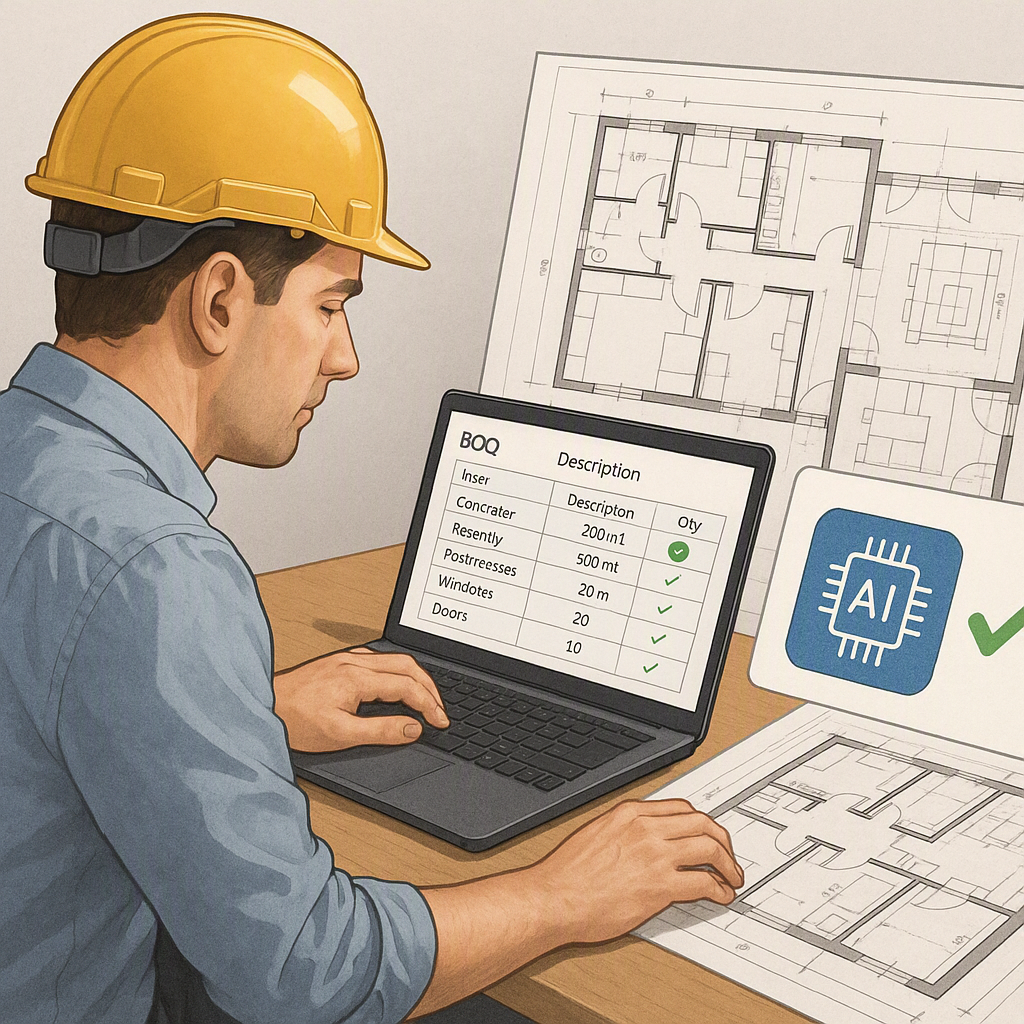
For example, AI tools can scan blueprints, validate quantities, and flag mismatches between BOQs and scope documents. This process, which might take hours manually, can often be completed in a fraction of the time with AI. The key takeaway? AI doesn’t replace human expertise—it enhances it by handling the grunt work.
Why the Old Belief Persisted
The Excel mindset is hard to break. It’s cheap, flexible, and familiar. Estimators know how to massage formulas, add hidden contingency percentages, and link sheets for fancy dashboards. Why spend on AI when you’ve been getting by for years?
And let’s face it: AI tools can intimidate people. Contractors worry about upfront costs, training, and whether the “smart tech” will produce reliable results. Plus, there’s skepticism—the “human touch” argument. Many believe that no software can match an experienced estimator’s gut feeling about rates and scope adjustments.
But here’s the kicker: gut feelings don’t scale. They don’t catch blueprint errors at 2 a.m. during a rushed bid submission. They don’t spot scope inconsistencies buried in line 87 of a BOQ. And they definitely don’t save hours on manual blueprint takeoffs.
What We Do Differently Now
We’ve started recommending AI-powered takeoff tools for small contractors, not just the big players. Tools like JobNext’s AI assistant simplify the process without replacing human estimators—they enhance them.
Let’s say you’re uploading a BOQ. The AI scans the blueprint, validates measurement quantities, and flags mismatches between the BOQ and scope document. In my view, this is where AI shines: it handles the repetitive tasks, so your estimators can focus on higher-value work.
For example, EstimateNext explains how AI tools streamline BOQ creation by reducing errors and saving time upfront. Their blog on computer vision blueprint demonstrates how tools using vision AI can validate blueprints in minutes instead of hours.
Why AI Adoption Matters
Underestimating AI can cost efficiency—and credibility. Manual errors that slip through aren’t just embarrassing; they erode margins and client trust. While adoption hurdles like training and cost remain, the benefits of AI tools in reducing errors and saving time are clear.
Common Mistakes with AI Takeoff
1. Ignoring Validation Steps
AI tools aren’t infallible. Always check flagged errors before submitting bids. Blind trust in automation is dangerous.
2. Underestimating Training Time
Even simple AI tools require onboarding. Estimators need time to learn how to upload BOQs correctly and interpret AI outputs.
3. Overlooking Small Jobs
Don’t assume AI takeoff is only useful for ₹100 crore jobs. Even small BOQs benefit from automated validation.
4. Skipping Scope Alignment
AI tools can’t fix poorly defined scopes. Ensure your scope document aligns with the BOQ before uploading.
FAQ
Q: Are AI takeoff tools worth the cost?
A: For most contractors, yes. The time saved on blueprint validation alone often outweighs the software cost.
Q: Can AI tools handle non-standard BOQs?
A: Many tools, like JobNext’s AI assistant, can adapt to non-standard formats. Training and proper setup are key.
Q: What’s the risk of relying on AI?
A: Overreliance can lead to unchecked errors. Always validate AI outputs manually.
If you’re struggling with manual takeoffs or blueprint validation, tools like JobNext can help. Get started free →
Learn more at EstimateNext