The Real Problem: Hidden Costs in Construction Projects
Margins in construction are razor-thin. Contractors often lose money on projects they thought were profitable. Why? Because indirect costs and missed estimates erode profitability. You might think you have everything under control, but hidden discrepancies in cost rates can significantly impact your bottom line.
Take BOQ (Bill of Quantities) rate mismatches as an example. If your quoted rate differs significantly from your actual cost rate, you’re losing money. The worst part? Many contractors don’t even realize it until it’s too late.
What Cost Engineering Consultancy BV Gets Right
Cost Engineering Consultancy BV focuses on profitability through precision. Their approach isn’t magic—it’s methodical. They emphasize tools and processes that allow contractors to control costs and eliminate waste.
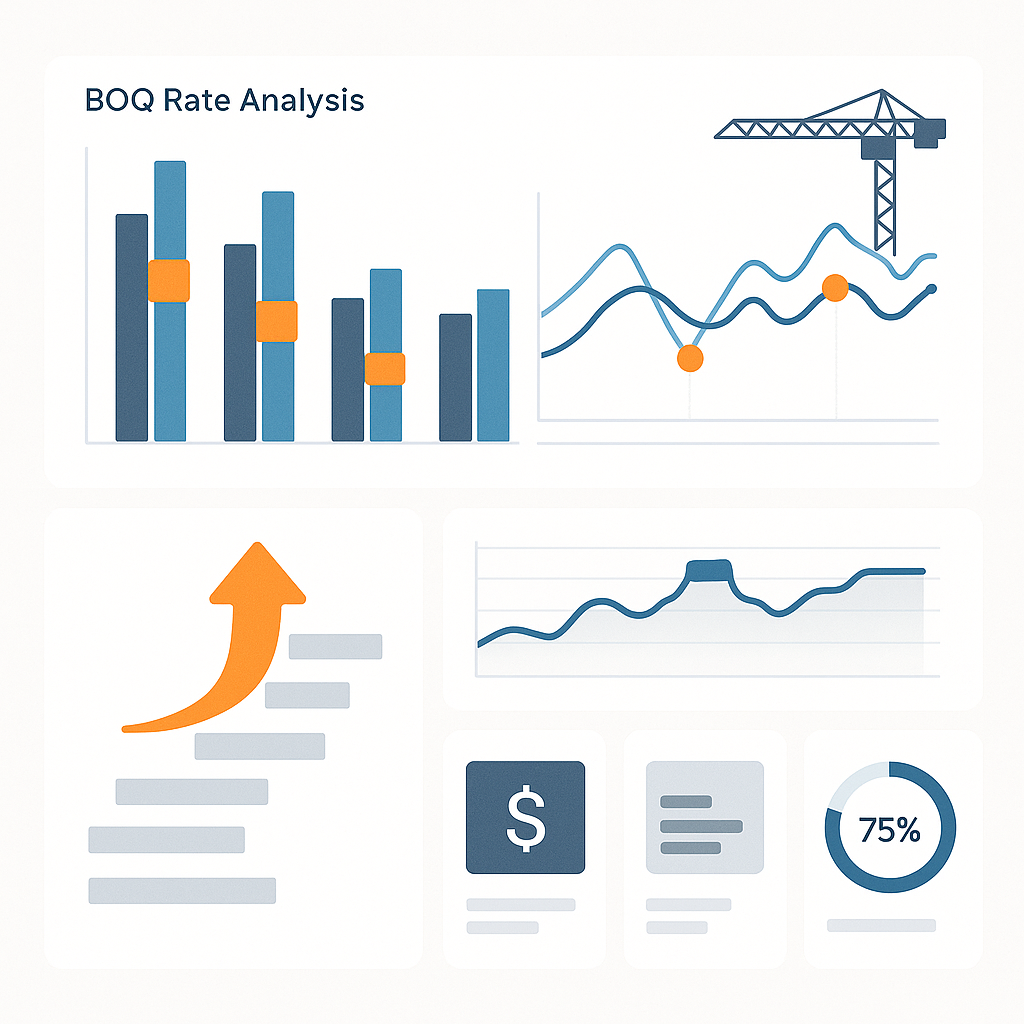
One standout tactic? BOQ rate analysis. Their methodology involves comparing multiple rate dimensions per BOQ item:
- Quoted Rate: What you promised the client.
- Billing Rate: What you invoiced.
- Scheduled Rate: Your internal benchmark.
- Budgeted Rate: The original estimate.
- Actual Cost Rate: What you actually spent.
This isn’t just about numbers on a spreadsheet. It’s about catching discrepancies early. For example, if the actual cost rate starts exceeding your budgeted rate, it’s a red flag. You need to adjust your procurement strategy or pricing immediately.
Illustrative Example: Rate Variance Report
Imagine you’re working on an HVAC project. Your budgeted cost for ducting materials was set at a specific amount. But halfway through the project, the actual cost rate increases significantly due to supplier price hikes. Without a proper rate variance report, you might not notice until the project closes—and your margin takes a hit.
A structured BOQ rate analysis tool flags this variance early. It enables contractors to renegotiate supplier terms or reallocate resources to avoid further losses. Estimatenext.ai’s blog on AI-powered tools explains how automation can streamline this process, ensuring no rate mismatch goes unnoticed.
Why Contractors Fail Without This
Many contractors rely on outdated methods—manual spreadsheets, inconsistent rate schedules, and gut instincts. These won’t cut it anymore. With fluctuating material prices and labor costs, you need real-time visibility.
Unchecked rate mismatches can lead to significant financial losses. The solution isn’t more staff or tighter deadlines—it’s better tools and processes.
JobNext’s Role in Fixing This
JobNext integrates BOQ rate analysis directly into its project monitoring dashboards. Contractors can:
- Track rate variances across all jobs in real time.
- Drill down into specific resource types (materials, labor, plant, subcontractors).
- Generate actionable insights with pre-built analytics reports.
This approach helps contractors improve cost tracking and reduce margin erosion.
Common Mistakes We’ve Seen
- Overlooking Small Variances: Even small variances per BOQ item can add up across hundreds of line items.
- Ignoring Rate Trends: If material prices spike mid-project, your margin shrinks unless you act fast.
- Fixating on Direct Costs Only: Many contractors forget about indirect costs like equipment idle time or ghost workers.
FAQ
Q: Is BOQ rate analysis only for large contractors?
A: No. Small contractors benefit even more because they have less margin to lose.
Q: Can automation really reduce errors?
A: Yes. Automated tools flag inconsistencies instantly, unlike manual spreadsheets.
Q: How quickly can you implement JobNext’s BOQ analytics?
A: Most contractors see results within a short period, especially for ongoing projects.
Call to Action
If hidden costs are affecting your margins, JobNext can help. Get started today with real-time BOQ rate analysis and variance tracking. Learn more →
Learn more at EstimateNext