Civil BOQ: Practical Tips to Optimize Costs for Contractors
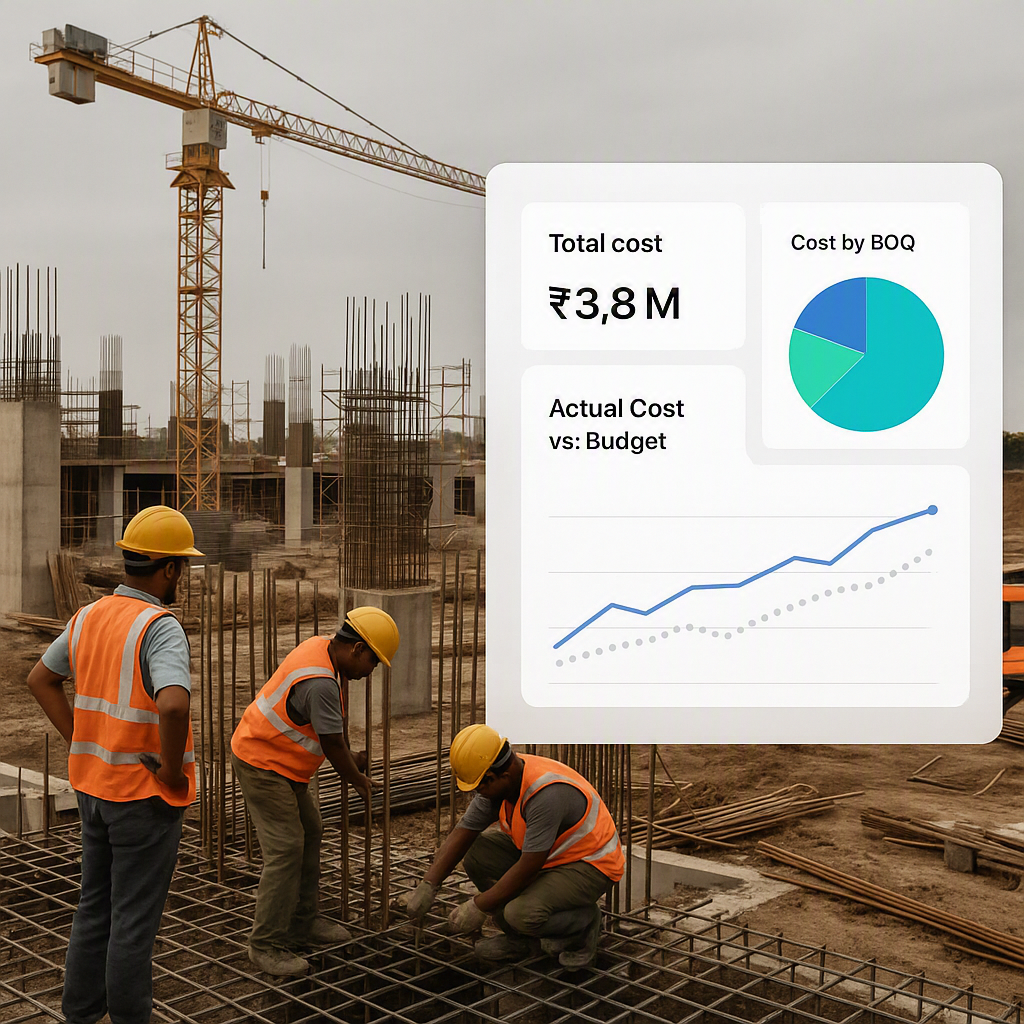
If you're a contractor, you already know the Bill of Quantities (BOQ) is critical to any construction job. It's the foundation for planning, budgeting, and execution — basically, your project's blueprint in numbers. But let's be honest: BOQs can also become a margin killer. Poorly structured BOQs lead to errors, cost overruns, and disputes with clients.
The Problem with Civil BOQs
Here's what most contractors get wrong: BOQs that look good on paper but fall apart in execution. Why? Overestimations, underestimations, or items that aren't linked properly to scopes of work. Errors in quantity takeoffs or rate lookups can lead to significant cost implications and disputes during execution.
Another common issue is billing. In milestone-based projects, dividing BOQ items into stages is crucial for cash flow. But many contractors don't structure their BOQs to align with these stages, creating payment delays and disputes. Manual BOQ creation is particularly prone to errors, which compounds these problems.
Fixing BOQs with Structured Workflows
Let’s get practical. Optimizing your civil BOQ boils down to these steps:
1. Use Centralized Rate Schedules
One of the biggest mistakes is inconsistent pricing across projects. A centralized rate schedule breaks down rates into materials, labor, and plant costs. This ensures every BOQ item reflects actual costs, not guesses.
Illustrative example —
| BOQ Item | Rate (₹/Unit) | Materials (₹) | Labor (₹) | Plant (₹) |
|---|---|---|---|---|
| Excavation | 120/CUM | 50 | 40 | 30 |
| Concreting | 800/CUM | 500 | 200 | 100 |
2. Link Scopes of Work to BOQ Items
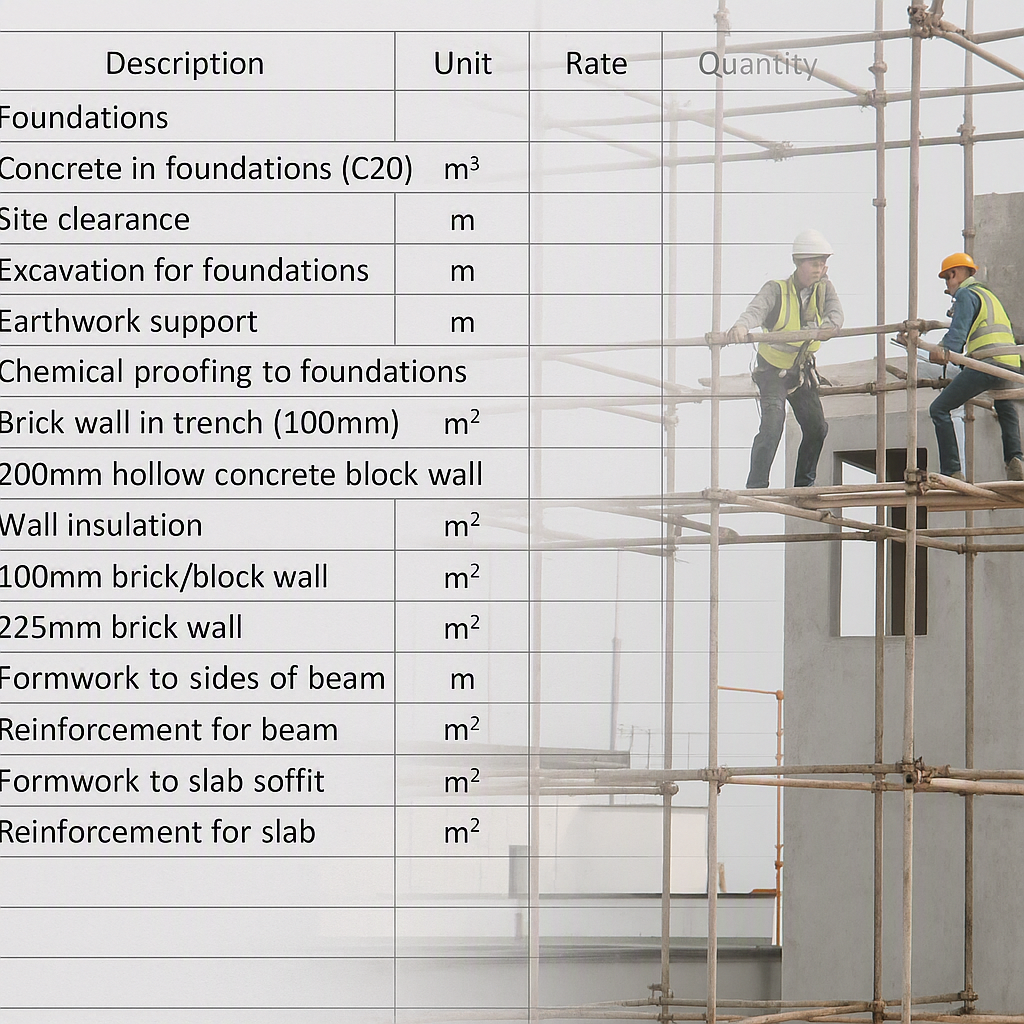
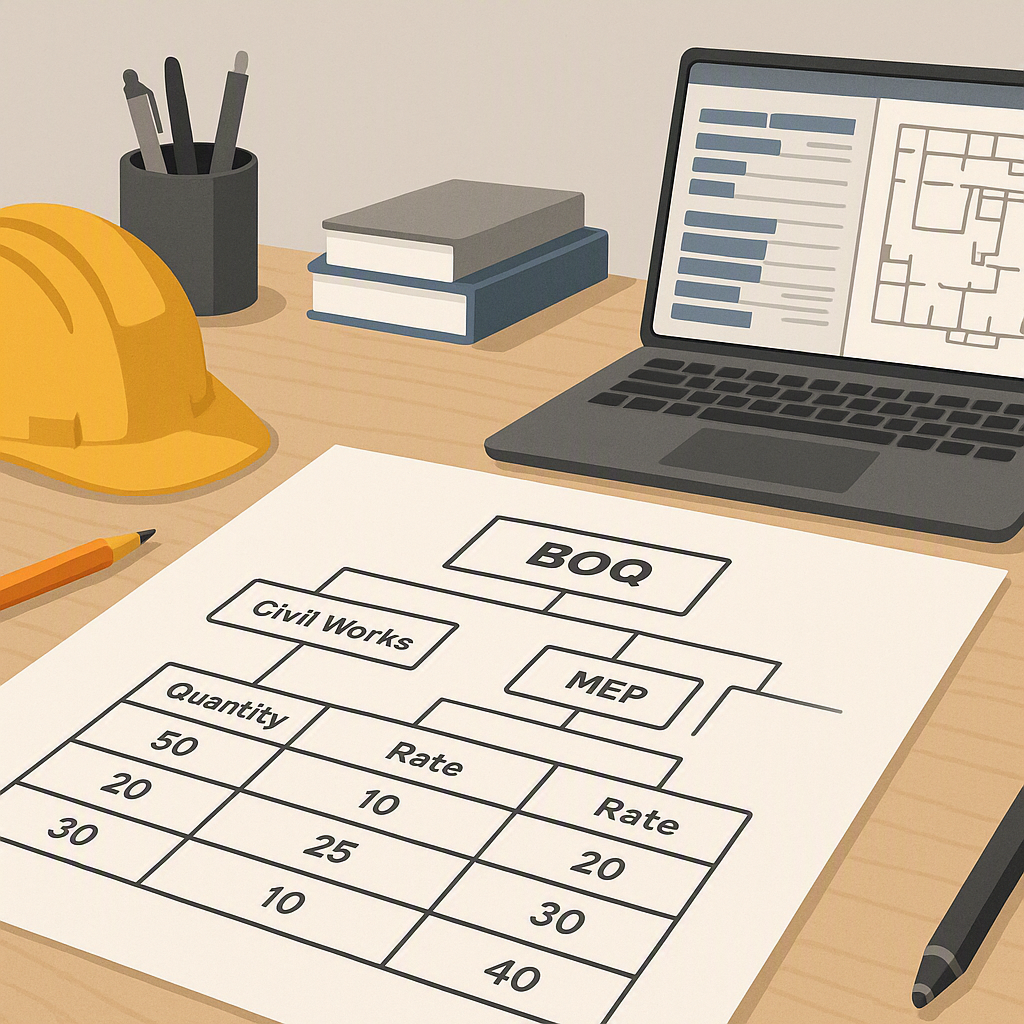
Every BOQ item should connect to a scope of work. This creates a bridge between client deliverables and execution activities. For example, if your BOQ includes "Civil Works" as a group, break it down into items like excavation, concreting, and reinforcement. Each item should specify the quantity, unit, and rate. Automating this linking process can help ensure nothing falls through the cracks.
3. Adopt Stage-Wise Billing
For milestone-based projects, divide BOQ items into stages. For instance, a foundation stage might account for a portion of the total "Concrete Works" BOQ item, while finishing might take another portion. This ensures you're billing as you go, not waiting for completion. Structured BOQ tools can help validate percentages to ensure they sum up correctly, avoiding common errors.
4. Leverage Automated Tools
Manual BOQ creation is outdated — it’s error-prone and time-consuming. Tools that streamline BOQ creation with features like Excel uploads, auto-generated scopes, and progress tracking can significantly improve efficiency and accuracy.
Common BOQ Mistakes
Even seasoned contractors make these errors:
- Overlooking Variations: Client changes are inevitable. Your BOQ must include variation tracking to avoid disputes.
- Ignoring Material Supply: If your contract includes supply items, factor them into your BOQ. Use a structured workflow like MR → RFQ → PO for procurement.
- Skipping Progress Tracking: BOQs aren’t static. Update them as work progresses to reflect actual quantities and rates.
FAQ
Q: How do I ensure BOQ quantities are accurate?
A: Use digital tools or software for precise measurement. Avoid manual calculations where possible.
Q: Can I use the same BOQ format across different projects?
A: Only if you have a centralized rate schedule and scope library. Otherwise, you risk inconsistencies.
Q: How can I manage variations effectively?
A: Use a BOQ tool with variation tracking features to update quantities and rates in real time.
Q: What’s the best method for billing BOQ items?
A: Stage-wise billing works best for milestone-based contracts. Monthly billing is better for recurring services.
Q: Are there tools to automate BOQ creation?
A: Yes, there are solutions that can automate takeoffs, rate lookup, and scope linking, improving efficiency and accuracy.
Final Thoughts
BOQs aren’t just paperwork — they’re the backbone of your project’s financial health. Get them right, and you’ll protect your margins. Get them wrong, and you’ll bleed money. The good news? You don’t have to do it manually anymore. Digital tools can make BOQ creation, linking, and billing structured and error-free.
If you're struggling with BOQ accuracy, margin erosion, or billing hassles, consider adopting structured workflows and tools to streamline the process.
Learn more at EstimateNext