CESMM3 vs SMM7: The Measurement Debate That Could Break Your Budget
If you've ever been stuck comparing CESMM3 and SMM7, you know it's not just about picking a methodology—it’s about choosing the right tool to protect your bottom line. Get it wrong, and you risk bleeding margins before the project even begins.
But which one is actually better for your projects? Let’s break it down.
What Makes CESMM3 and SMM7 Different?
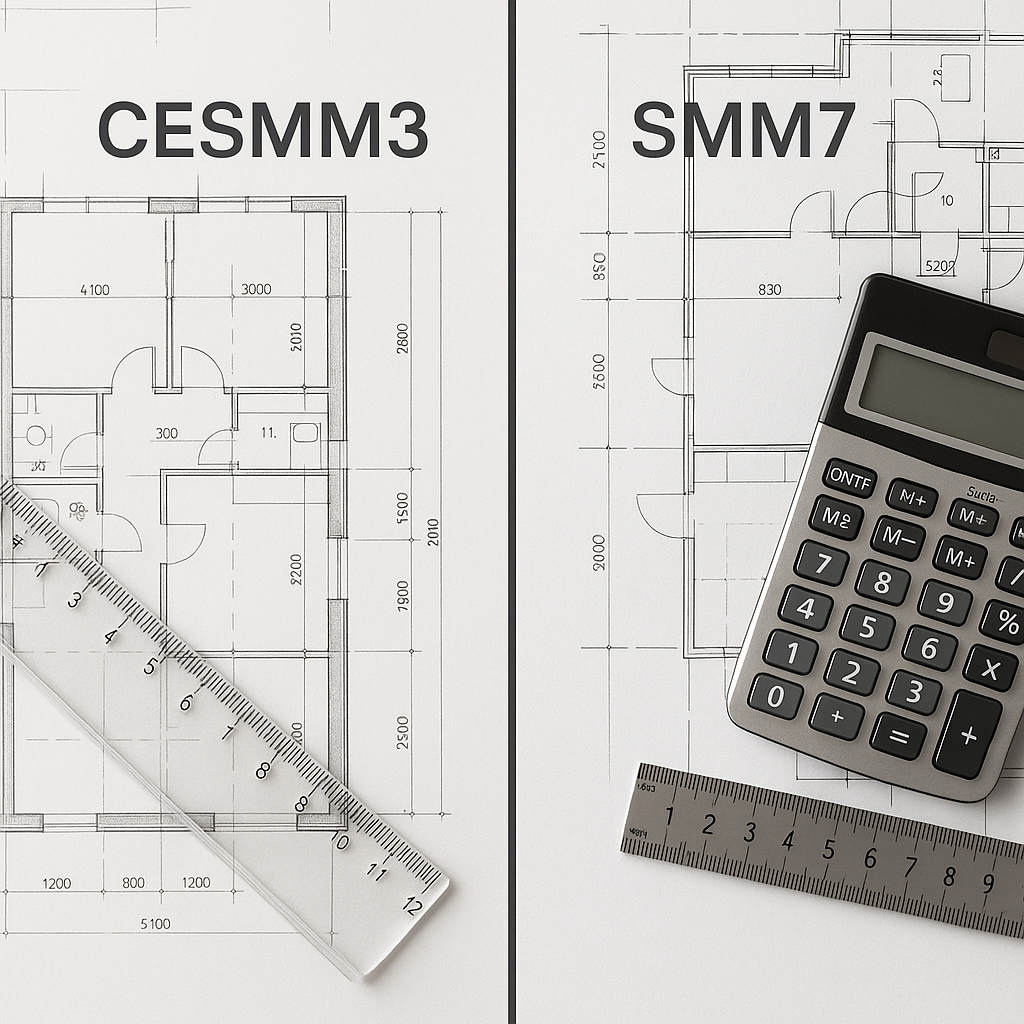
Both CESMM3 (Civil Engineering Standard Method of Measurement) and SMM7 (Standard Method of Measurement 7) are frameworks for measuring quantities in construction projects. They define how to calculate and document quantities for pricing contracts. Here’s the catch: they’re not interchangeable, and using the wrong one can lead to costly errors, especially in subcontractor billing.
CESMM3: Great for Civil Engineering Projects
CESMM3 is tailored for heavy civil engineering works—think highways, dams, and bridges. It’s designed to handle complex measurements like earthworks, concrete structures, and drainage systems. Its hierarchical approach makes it easier to break down large-scale jobs into manageable parts.
Example: Imagine a highway project spanning 15 kilometers. CESMM3 allows you to subdivide the earthworks by sections, calculate volumes for each segment, and standardize measurements for drainage systems. This granular breakdown ensures accurate BOQs and streamlined subcontractor billing.
SMM7: Ideal for Building Projects
SMM7 is better suited for traditional building works, structured around trades like brickwork, plastering, and roofing. It accounts for detailed finishes, making it a favorite for architects and interior designers.
Example: For a high-end residential project with intricate finishes, SMM7 helps you capture details such as decorative plaster moldings, bespoke joinery, and polished flooring. Its trade-specific breakdown ensures that every element is accounted for in the BOQ.
Why Measurement Standards Matter for Margins
Let’s get practical. Every project has a BOQ (Bill of Quantities), and every BOQ depends on accurate measurements. If your measurements don’t align with the standard your client expects, you’re signing up for disputes—and delays.
Actionable Steps to Align Measurement Standards:
- Understand Client Expectations: Before starting the project, confirm whether the client prefers CESMM3 or SMM7. If they don’t specify, ask for clarification.
- Train Your Estimators: Ensure your team understands the nuances of both frameworks. Regular workshops can help bridge knowledge gaps.
- Use Technology: Tools like JobNext can automate measurement processes, ensuring alignment with the chosen standard.
Case Study: Subcontractor Billing Gone Wrong
A contractor in Dubai used CESMM3 for a building renovation project where the client expected SMM7. The result?
- Misaligned BOQs: The client rejected the BOQ structure, forcing the contractor to redo it.
- Disputes: Subcontractor invoices didn’t match the framework, delaying certifications and payments.
- Margin Erosion: The delay added indirect costs—idle equipment, penalty clauses, and extended project staff.
The Hidden Costs of Getting It Wrong
Mistakes in measurement standards don’t just lead to confusion—they directly impact your bottom line. Here’s how:
Misaligned BOQs
If the BOQ structure doesn’t match your client’s expectations, you’re looking at costly rework. For example, a client expecting SMM7 will reject a BOQ prepared in CESMM3 because the trade-specific details won’t align.
Disputes
Subcontractors use the BOQ to bill for completed work. If the BOQ is incompatible with the measurement standard, invoices won’t match, leading to disputes.
Delay Penalties
Construction delays are expensive. A McKinsey report found that disputes over measurement standards accounted for 18% of project delays in GCC construction in 2023. Each delay adds indirect costs, from idle equipment to extended staff overhead.
CESMM3 vs SMM7: Which Should You Choose?
Here’s a quick comparison:
| Feature | CESMM3 | SMM7 |
|---|---|---|
| Best For | Civil engineering projects | Building and interior works |
| Key Advantage | Handles hierarchical, large-scale measurements | Accounts for trade-specific finishes |
| Common Pitfall | Complexity for smaller projects | Overly detailed for civil works |
Decision Framework
Use CESMM3 if:
- Your project involves large civil engineering works like highways, bridges, or water treatment plants.
- You need hierarchical breakdowns for complex measurements.
Use SMM7 if:
- Your project focuses on building construction, interior design, or facilities management.
- You need trade-specific details, like finishes or decorative elements.
Hybrid Approach
If your projects span multiple trades or regions, you may need both standards. JobNext’s measurement module lets you toggle between CESMM3 and SMM7 workflows, ensuring consistency across BOQs.
How AI Can Help
Switching between measurement standards is one thing, but what if your team struggles to apply them correctly? That’s where AI-powered tools like EstimateNext come in.
Benefits of AI:
- Error Detection: AI can analyze BOQs and flag mismatches early.
- Speed: By automating calculations, AI reduces the time required to prepare BOQs.
- Training Support: AI platforms often include tutorials and recommendations tailored to CESMM3 and SMM7.
Example: An estimator uses EstimateNext to prepare a BOQ for a mixed-use project. The AI flags discrepancies, ensuring the BOQ aligns with SMM7 for building elements and CESMM3 for civil works.
FAQ
1. Can I use CESMM3 for building works?
Technically yes, but it’s not ideal. CESMM3 is designed for civil engineering projects. Using it for buildings might lead to overly complex BOQs that don’t align with trade-specific details.
2. What happens if my client uses SMM7 but I use CESMM3?
Expect disputes. If your BOQ doesn’t match your client’s measurement framework, they’ll likely reject it—or demand costly revisions.
3. How does JobNext handle measurement standards?
JobNext lets you toggle between CESMM3 and SMM7 workflows. Its automated measurement-to-billing system ensures your BOQs align perfectly with client expectations.
4. Is SMM7 outdated?
Not entirely. While newer standards like NRM2 are gaining traction, SMM7 is still widely used, especially in building works.
5. Can AI replace measurement standards?
No, but it can make applying them faster and more accurate. Tools like EstimateNext analyze BOQs and rate libraries for errors, saving hours of manual work.
Final Thoughts
Choosing between CESMM3 and SMM7 isn’t just about compliance—it’s about protecting your margins. The right standard ensures accurate BOQs, avoids disputes, and keeps projects on schedule. If you’re struggling with measurement frameworks, tools like JobNext and EstimateNext can help streamline your workflow.
Learn more at EstimateNext