CESMM 7: What Contractors Need to Know
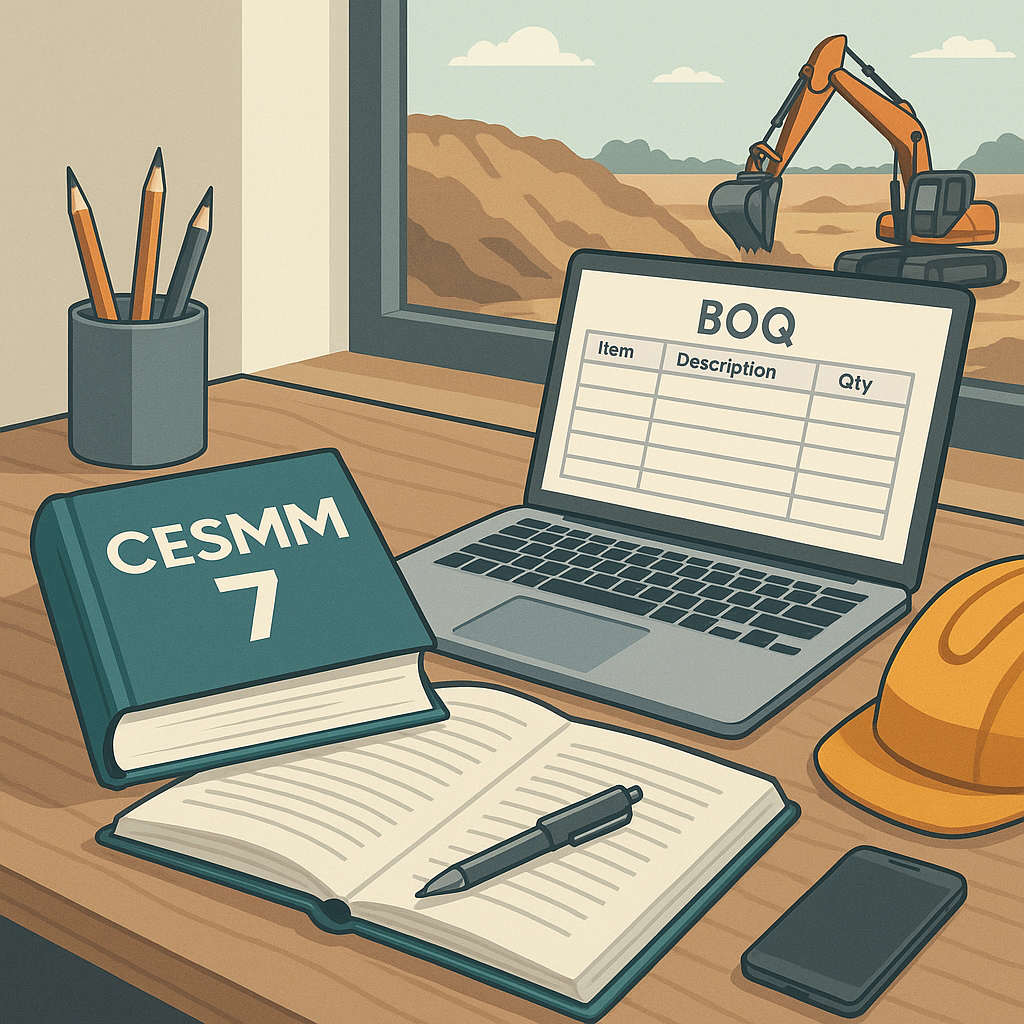
If you’re working on civil projects in India or the GCC, chances are you’ve come across the CESMM (Civil Engineering Standard Method of Measurement) standards. The latest version, CESMM 7, is critical for ensuring accurate BOQs (Bills of Quantities), especially in trades like earthworks, drainage, and utilities. But let’s be honest: most contractors don’t use it properly.
Why? Because they don’t know what’s hiding in the details. Measurement errors, vague item descriptions, and poor unit definitions can quietly kill your margins. CESMM 7 is not just about compliance; it’s about efficiency, accuracy, and profit protection. Let’s unpack this with practical examples and actionable advice.
The Problem: Vague BOQs and Hidden Costs
Here’s a common scenario:
You’re bidding on a road project. The BOQ specifies “Excavation - 500 cubic meters.” Simple enough? Not really. The CESMM 7 framework requires you to specify excavation by type (e.g., rock, soil, mixed material), depth ranges, and disposal distances. These details matter because they each carry different cost implications.
If you skip these details, your vendor quotes will either overestimate (inflated costs) or underestimate (margin erosion). Worse, you might face disputes with subcontractors who claim additional payment for undefined scope details.
Real-World Implications
In my experience, vague BOQs lead to at least 10-15% cost variance during execution. For example, if you simply write "excavation" without specifying depth or material type, subcontractors might charge you higher rates for difficult work (e.g., rock excavation) when the actual task was simpler (e.g., soil excavation). That’s a recipe for losses.
Key takeaway: A vague BOQ doesn’t just create cost overruns—it also leaves room for disputes, delays, and strained relationships with clients and subcontractors.
How CESMM 7 Fixes This
CESMM 7 standardizes how you describe, measure, and price civil works. It provides clear rules for breaking down work items into measurable components, leaving no room for ambiguity. Here are three critical areas where CESMM 7 makes a difference:
1. Earthworks
Earthworks are one of the most cost-intensive parts of any civil project. CESMM 7 categorizes excavation into subcategories like bulk excavation, trenching, pit excavation, and foundation digging. Each of these has precise measurement rules that ensure fair pricing.
- Bulk Excavation: General excavation for site leveling or large-scale works.
- Trenching: Narrow excavation for utilities like pipelines or cables.
- Pit Excavation: Excavation for structures like manholes or underground tanks.
2. Depth Classification
Excavation costs increase with depth due to additional labor, equipment wear, and safety precautions. CESMM 7 requires excavation to be classified by depth ranges (e.g., 0-1m, 1-2m, 2-3m). This ensures contractors get paid appropriately for more challenging tasks.
3. Material Disposal
Another key area CESMM 7 addresses is the disposal of excavated material. It’s not enough to say “excavation”; you must specify what happens to the material afterward:
- On-Site Storage: Material is stockpiled for reuse.
- Off-Site Disposal: Material is transported and disposed of at an authorized location.
- Backfilling: Material is reused to fill voids or trenches.
Each of these disposal methods has different time and cost implications. Ignoring them in your BOQ opens the door to unexpected charges.
Practical Example: Earthworks BOQ Breakdown
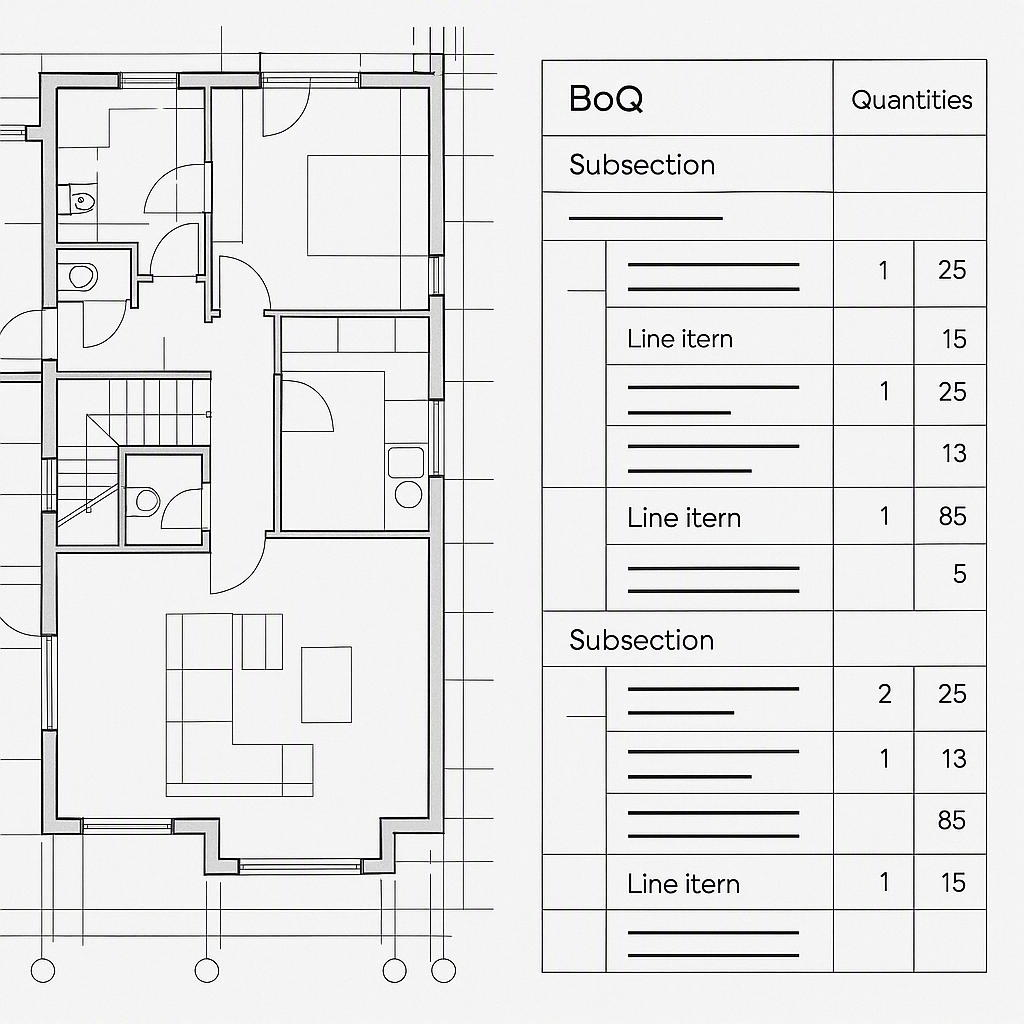
Here’s an expanded example to illustrate how CESMM 7 transforms a vague BOQ into a precise, actionable one:
| Item | Description | Qty | Rate | Amount |
|---|---|---|---|---|
| Excavation (0-1m, soil) | Bulk excavation in loose soil, depth 0-1m | 250 m³ | ₹300/m³ | ₹75,000 |
| Excavation (1-2m, rock) | Bulk excavation in hard rock, depth 1-2m | 150 m³ | ₹600/m³ | ₹90,000 |
| Disposal (on-site) | Transport excavated soil to storage | 250 m³ | ₹50/m³ | ₹12,500 |
| Disposal (off-site) | Transport rock to landfill | 150 m³ | ₹200/m³ | ₹30,000 |
| Total | ₹2,07,500 |
Notice the level of granularity here. This ensures that all stakeholders—client, contractor, and subcontractor—understand the scope clearly, and there’s no ambiguity in pricing.
How to Implement CESMM 7 in Your Projects
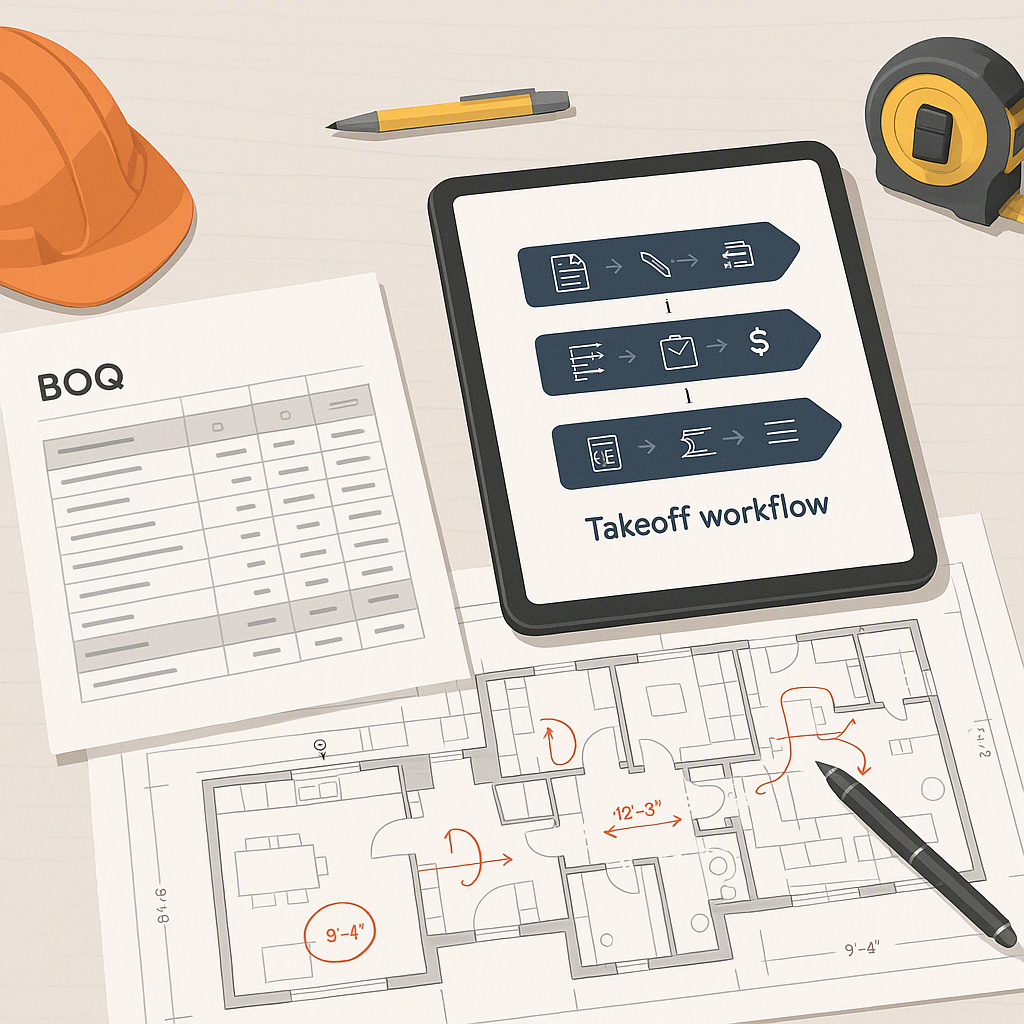
Here’s a practical workflow for contractors looking to adopt CESMM 7:
Step 1: Familiarize Yourself with the Standard
- Purchase a copy of CESMM 7 from ICE Publishing or an authorized reseller.
- Train your team on its structure, especially those involved in tendering and quantity surveying.
Step 2: Break Down Work Items in Detail
- Always classify excavation by type, depth, and disposal method.
- For utilities, specify pipe sizes, material types, and jointing methods.
Step 3: Use Software Tools
Manual BOQ preparation is prone to errors. Consider using software tools like JobNext, Candy, or BuildSmart to streamline the process. These tools help you:
- Automate measurement calculations.
- Integrate BOQ creation with procurement workflows.
- Track changes in scope and their impact on margins.
Step 4: Audit Your BOQs Regularly
- Run a margin analysis weekly to identify cost overruns.
- Cross-check BOQs with subcontractor quotes to ensure alignment.
Common Mistakes to Avoid with CESMM 7
Even with the best intentions, contractors often make these mistakes:
1. Skipping Disposal Details
Disposal can account for 20-30% of an excavation budget. Always specify whether material is being reused, stored, or sent off-site.
2. Ignoring Depth Classes
Rates for excavation vary significantly by depth. Don’t lump all excavation into one rate, as this can lead to disputes and financial losses.
3. Overlooking BOQ Audits
BOQs should be living documents. Regular audits can help catch negative-margin items before they become a problem.
FAQ: CESMM 7 for Contractors
Q1: Can I download CESMM 7 for free?
A: No, CESMM 7 is a proprietary standard. You need to purchase it from ICE Publishing or authorized resellers.
Q2: Is CESMM 7 mandatory for all projects?
A: No, it depends on the project requirements. Some clients specify CESMM 7, while others use local standards (e.g., IS 1200 in India). Confirm the applicable standard before bidding.
Q3: What’s the main difference between CESMM 7 and IS 1200?
A: CESMM 7 offers more detailed guidance, especially for infrastructure projects. IS 1200 is simpler but often misses critical cost factors like disposal and depth classification.
Q4: Can CESMM 7 be used for lump-sum contracts?
A: Yes, CESMM 7 isn’t restricted to remeasurement contracts. Its BOQ structure can be adapted for lump-sum pricing, provided all scope items are clearly defined.
Q5: How can software help with CESMM 7 compliance?
A: Tools like JobNext can automate BOQ preparation, track scope changes, and integrate billing workflows to ensure compliance with CESMM 7. This reduces manual effort and improves accuracy.
Decision Framework: Is CESMM 7 Right for Your Project?
Here’s a quick decision framework to help you evaluate whether to adopt CESMM 7:
| Question | Yes | No |
|---|---|---|
| Is your project infrastructure-focused? | CESMM 7 is highly recommended. | Consider simpler standards. |
| Does the client require CESMM 7 compliance? | Mandatory to follow CESMM 7. | Align with client’s preferred standard. |
| Are BOQ disputes common in your projects? | CESMM 7 can minimize disputes. | Evaluate simpler alternatives like IS 1200. |
| Do you have software tools for BOQ management? | Use software to simplify compliance. | Manual preparation may suffice for small projects. |
CESMM 7 isn’t just paperwork. Get it right, and you’ll control costs, avoid disputes, and protect your margins. And if you’re struggling to implement it, tools like JobNext can take the headache out of BOQ prep.
Streamline your CESMM 7 workflows with JobNext →
Learn more at EstimateNext