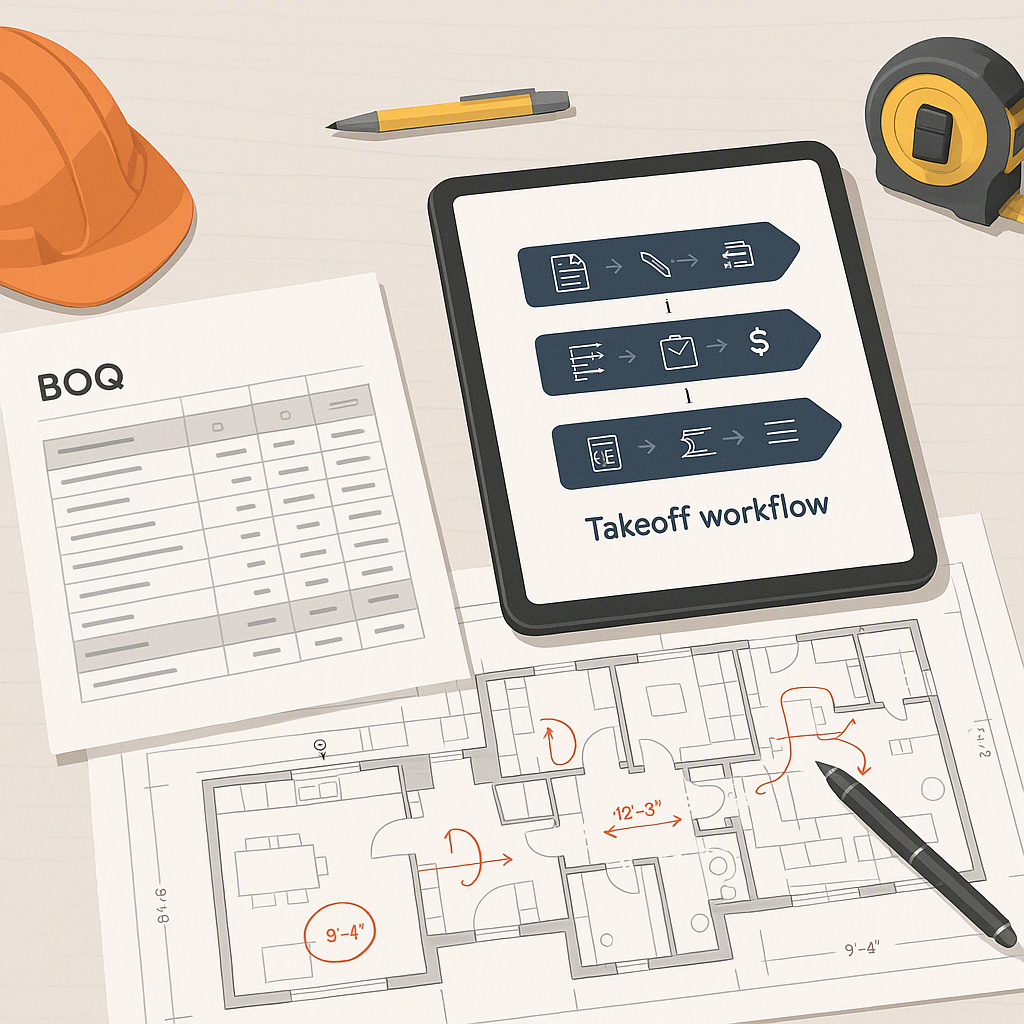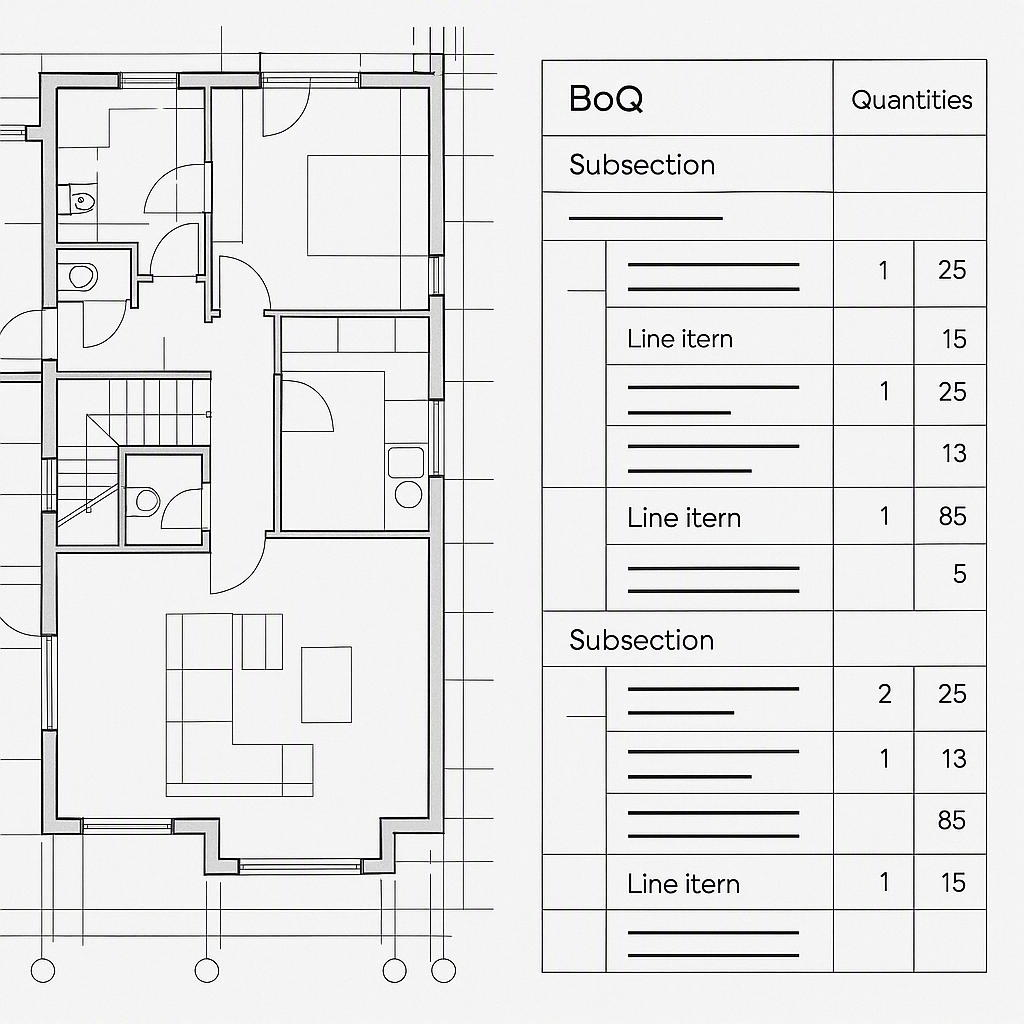
Why Contractors Can’t Afford to Ignore Their BOQ
Margins in construction are thin. One underpriced line item or an overlooked variation order can wipe out profits. That’s why the Bill of Quantities (BOQ) isn’t just a document; it’s a critical tool for keeping projects on track financially.
But here’s the problem: too many contractors treat the BOQ as a checkbox exercise. They use it to win the contract, then toss it aside during execution. That’s a mistake.
What Is a BOQ, Really?
At its core, a BOQ is a detailed list of all client deliverables, broken down into items with quantities, units, and rates. Think of it as the client’s contract language for what they’re paying for. Every cubic meter of concrete, every meter of ducting, every square foot of tiling — it’s all in there.
In systems like JobNext, BOQs are organized hierarchically: Groups (e.g., Civil Works) → Items (e.g., RCC Slab) → Details. This structure mirrors the client’s expectations and ensures nothing gets missed during billing or execution.
Why Profitability Lives and Dies by the BOQ
Here’s why the BOQ is critical:
-
It Drives Billing: Every RA Bill, stage payment, or milestone invoice ties back to the BOQ. If the BOQ doesn’t match the contract scope, you’ll either under-bill or overrun your costs.
-
It Links to Execution: In systems like JobNext, the BOQ connects directly to Scopes and Work Breakdown Structures (WBS). This ensures that what’s promised to the client is what the site team delivers — no more, no less.
-
It Tracks Variations: Clients change their minds. Without a clean BOQ, tracking these changes — and billing for them — becomes a nightmare. JobNext’s BOQ module allows contractors to split items into stages or track variations separately, so nothing falls through the cracks.
The Common BOQ Mistakes That Kill Margins
- Skipping Scope Linking: Many contractors fail to link BOQ items to execution activities. This creates a disconnect between what’s billed and what’s built. Tools like JobNext solve this by enforcing BOQ-to-scope mapping.
- Ignoring Unit Rates: If your BOQ rates don’t reflect current market conditions, your profitability is already in the red before you start. A 2023 McKinsey report shows that poor rate analysis accounts for a significant portion of cost overruns in construction.
- Overlooking Measurements: Billing based on estimated progress rather than actual measurements is a recipe for disputes. JobNext’s measurement-based progress tracking ensures that only completed work gets billed.
Practical Example: BOQ in Action
Illustrative example — Imagine you’re a contractor working on a large-scale project. Your BOQ includes items like:
| BOQ Item | Quantity | Unit Rate | Total |
|---|---|---|---|
| Duct Installation | 10,000 m² | ₹1,200/m² | ₹1.2 crore |
| Chilled Water Piping | 5,000 m | ₹800/m | ₹40 lakh |
| AHU Installation | 50 units | ₹2 lakh/unit | ₹1 crore |
If your team installs a portion of the ducting in the first month, you would record this progress as a BOQ measurement, verify it internally, and generate an RA Bill based on the completed work. This ensures accurate billing and avoids disputes with the client.
Why Systems Like JobNext Are Game-Changers
Most contractors rely on Excel for BOQ management. It works — until it doesn’t. The moment you’re dealing with multiple projects, variations, and billing types, spreadsheets fall apart. That’s where systems like JobNext come in. They centralize your BOQ, link it to scopes, automate measurements, and streamline billing.
For example, JobNext supports multiple billing methods, from RA Bills to stage-wise payments. This flexibility ensures your BOQ aligns with your contract terms, no matter how complex.
FAQ
Q: What’s the difference between a BOQ and a BOM? A BOQ lists what the client pays for (deliverables). A BOM (Bill of Materials) lists what you need to execute the work (materials). Think of the BOQ as the revenue side and the BOM as the cost side.
Q: Can I use a standard BOQ template for all projects? Not really. Each project has unique requirements. However, tools like JobNext allow you to create reusable templates that can be customized per project.
Q: How do I handle BOQ variations? Document every change in writing, link it to the original BOQ item, and update the contract value. Systems like JobNext make this easier by allowing you to split or adjust items without losing the original context.
Call to Action
If BOQ management feels like a constant headache, JobNext can help. Its BOQ module links client expectations to execution and billing, ensuring no revenue leakage. See how it works →
Learn more at EstimateNext