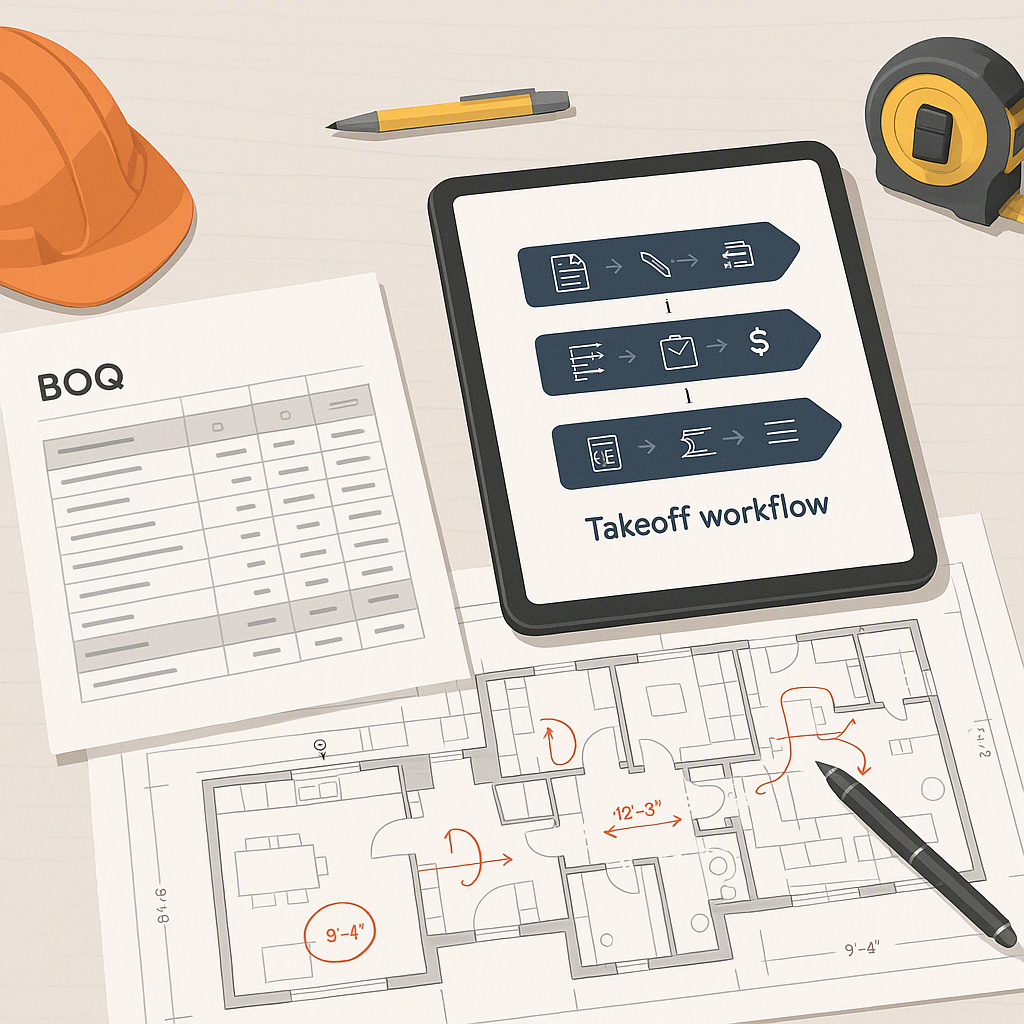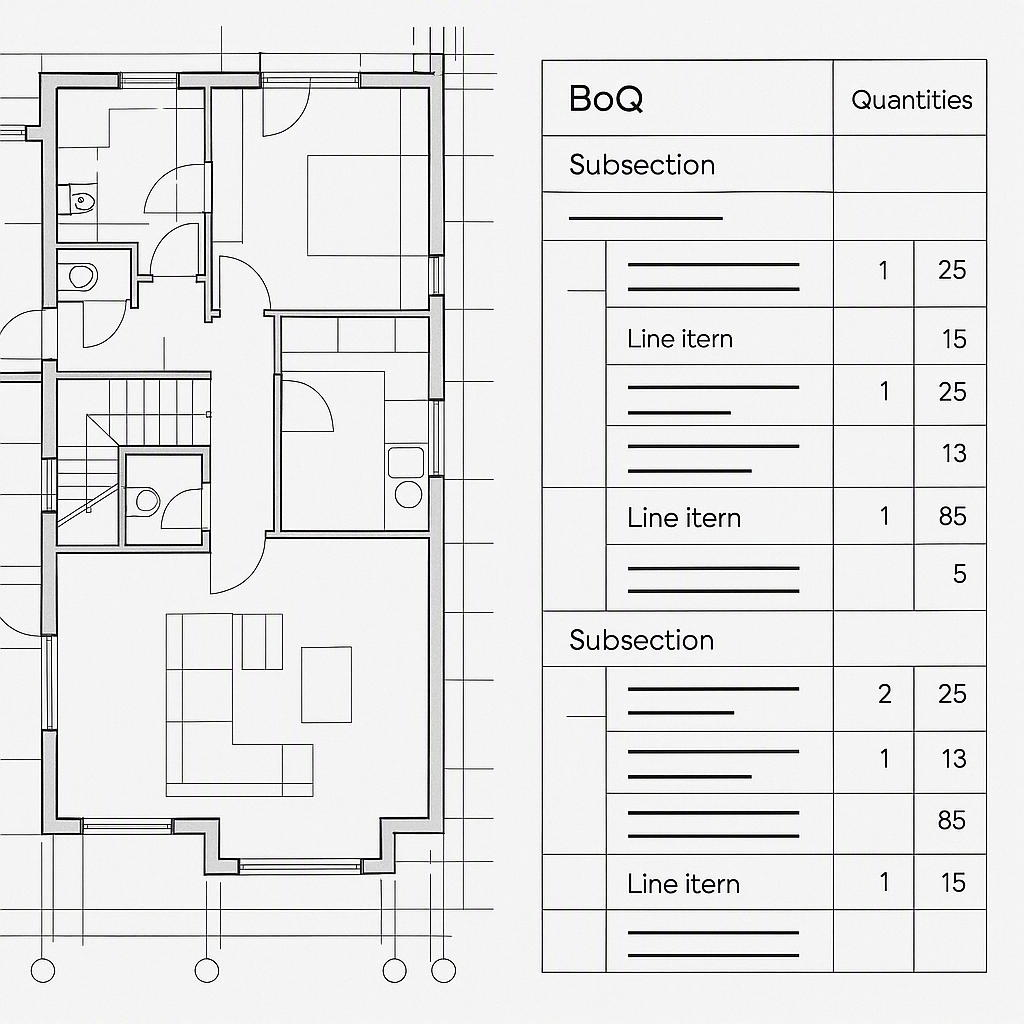
BOQ vs Detailed Estimate: Why It’s More Than Just Semantics
Ever wondered why your project margins keep shrinking despite hitting your BOQ targets? It might be because you're treating BOQs and detailed estimates as interchangeable. They’re not.
In this article, we’ll dive deep into the differences between BOQs and detailed estimates, explore real-world examples, and provide actionable steps to ensure alignment. By the end of this guide, you’ll know how to safeguard your profitability.
BOQ: The Client’s Perspective
A Bill of Quantities (BOQ) is essentially the client’s shopping list. It defines what they expect to pay for—quantity, unit of measure, and rate. For example, a BOQ might state:
- 100 cubic meters of RCC work at ₹5,000 per cubic meter
Simple, right? Not quite.
BOQs are designed to communicate deliverables in the client’s language, not yours. They focus on what the client is paying for, but not necessarily how the contractor will execute the work. This disconnect often leads to cost overruns or margin erosion.
Real-World Example: Infrastructure Project in India
A construction firm working on a bridge project received a BOQ that specified 500 cubic meters of concrete at ₹4,800 per cubic meter. However, the BOQ didn’t account for site-specific challenges like:
- Transporting materials to a remote site
- Hiring additional skilled labor for complex reinforcement work
- Extra costs for environmental compliance
The firm relied on the BOQ without verifying these hidden costs, resulting in a 10% margin loss.
Detailed Estimate: The Contractor’s Reality Check
A detailed estimate is your internal blueprint for execution. It breaks down the BOQ into granular components like materials, labor, equipment, and subcontractor costs.
For instance, that 100 cubic meters of RCC work might require:
- 300 bags of cement
- 10 metric tons of reinforcement steel
- 40 worker-days
- 50 machine-hours for a batching plant
A good detailed estimate doesn’t just calculate costs. It anticipates risks, waste, and inefficiencies. It’s your safety net against margin erosion.
Case Study: Residential Building Project
A contractor bidding for a residential building project used a detailed estimate to uncover hidden costs:
- Material wastage: Estimated cement wastage at 3%, adding ₹15,000 to the project cost.
- Labor inefficiencies: Factored in an extra 20 worker-days for inevitable delays.
- Equipment downtime: Accounted for equipment maintenance costs during the project.
This proactive approach saved the contractor from underestimating costs and resulted in 5% higher profit margins compared to previous projects.
The Hidden Risk: Misaligned BOQs and Estimates
Here’s the trap: if your BOQ isn’t linked to a detailed estimate, you’re flying blind. You might win the bid but lose profitability. Let’s break this down further:
Common Issues with Misalignment
-
Incorrect Unit Conversions: The BOQ specifies concrete in cubic meters, but your labor rates are calculated per square meter. Without proper conversion factors, labor costs could skyrocket.
-
Unaccounted Costs: The BOQ rate might cover materials but ignore site overheads, equipment depreciation, or compliance costs like GST/TDS.
-
Progress Billing Errors: If you’re using stage-wise billing, BOQ stages must align perfectly with your execution milestones. Misalignment leads to underbilling.
Example: Road Construction Project
A contractor in Oman faced severe billing discrepancies because their BOQ was designed in kilometers of road laid, while their detailed estimate broke costs down into square meters of asphalt and crushed stone. The result? A 23% billing shortfall due to incorrect unit conversions.
Fixing the Disconnect with JobNext
This is where tools like JobNext shine. JobNext links BOQs and detailed estimates seamlessly, ensuring every BOQ item translates into an actionable scope of work. Here’s how it works:
Key Features of JobNext
-
BOQ-to-Scope Linking: Every BOQ item is tied to an execution scope, ensuring alignment between client deliverables and contractor activities.
-
Unit Conversion: JobNext uses conversion factors to translate client units (e.g., cubic meters) into execution units (e.g., kilograms of steel).
-
Budget Validation: The estimate serves as both your project budget and the basis for your bid, preventing overspend.
-
Progress Tracking: Work progress rolls up from scopes to BOQ items, enabling accurate stage-wise billing.
Success Story: Mid-Size Contractor
A mid-size general contractor in Oman reduced billing errors by 23% simply by aligning their BOQ and detailed estimates using JobNext.
Practical Steps to Align BOQs and Estimates
-
Start with Scope Mapping: Before creating an estimate, map out every BOQ item to a scope of work. Use tools like JobNext to automate this.
-
Validate Units and Rates: Ensure BOQ units match your execution units. Use conversion factors where applicable.
-
Estimate Bottom-Up: Build your estimate by breaking down each BOQ item into materials, labor, plant, and overheads.
-
Run Margin Simulations: Test your estimate against the BOQ to identify margin risks before bid submission.
-
Track Progress Regularly: Use software to monitor scope-level progress and roll it up to BOQ stages.
Comparison Table: BOQ vs. Detailed Estimate
| Feature | BOQ | Detailed Estimate |
|---|---|---|
| Purpose | Client’s deliverables list | Contractor’s execution plan |
| Level of Detail | High-level | Granular |
| Focus | Quantities and rates | Costs, risks, and inefficiencies |
| Alignment with Work | Often misaligned | Directly tied to execution |
| Risk Mitigation | Limited | Comprehensive |
FAQ
Q: How do I handle BOQs with composite rates?
A: Break them down into individual components in your detailed estimate. Use JobNext’s rate analysis module for accuracy.
Q: What if my BOQ doesn’t cover site-specific costs?
A: Add these costs to your estimate as indirect expenses. Use markup to ensure profitability.
Q: Can JobNext handle multi-stage BOQs?
A: Yes, it supports stage-wise billing and progress tracking, ensuring accurate payments.
Q: How do I avoid margin erosion when costs fluctuate?
A: Use detailed estimates to anticipate cost changes and include escalation clauses in your contracts.
Q: Is JobNext suitable for small contractors?
A: Absolutely. JobNext’s modular pricing makes it accessible for contractors of all sizes.
If you’re dealing with BOQ misalignment, JobNext can help. Get started free →
Learn more at EstimateNext