Manual vs. AI Takeoff: The Brutal Trade-Off
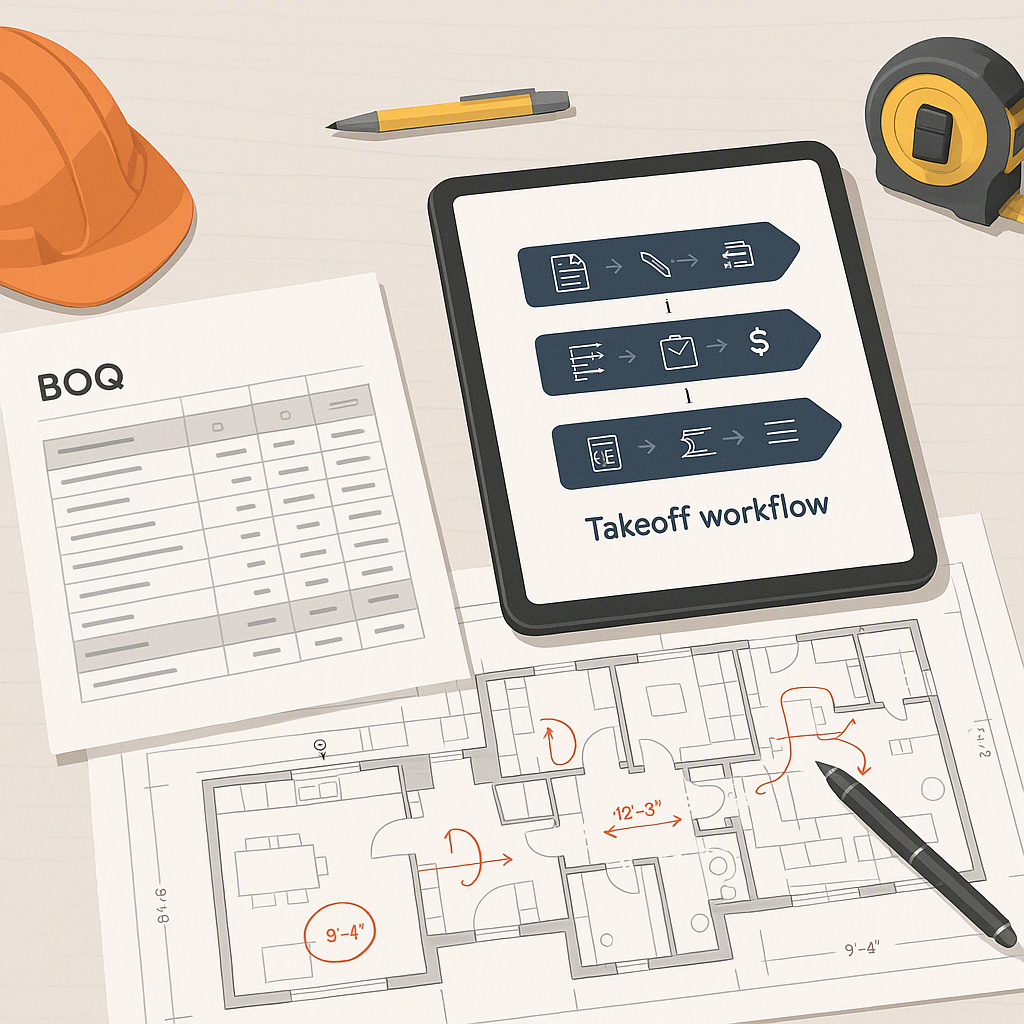
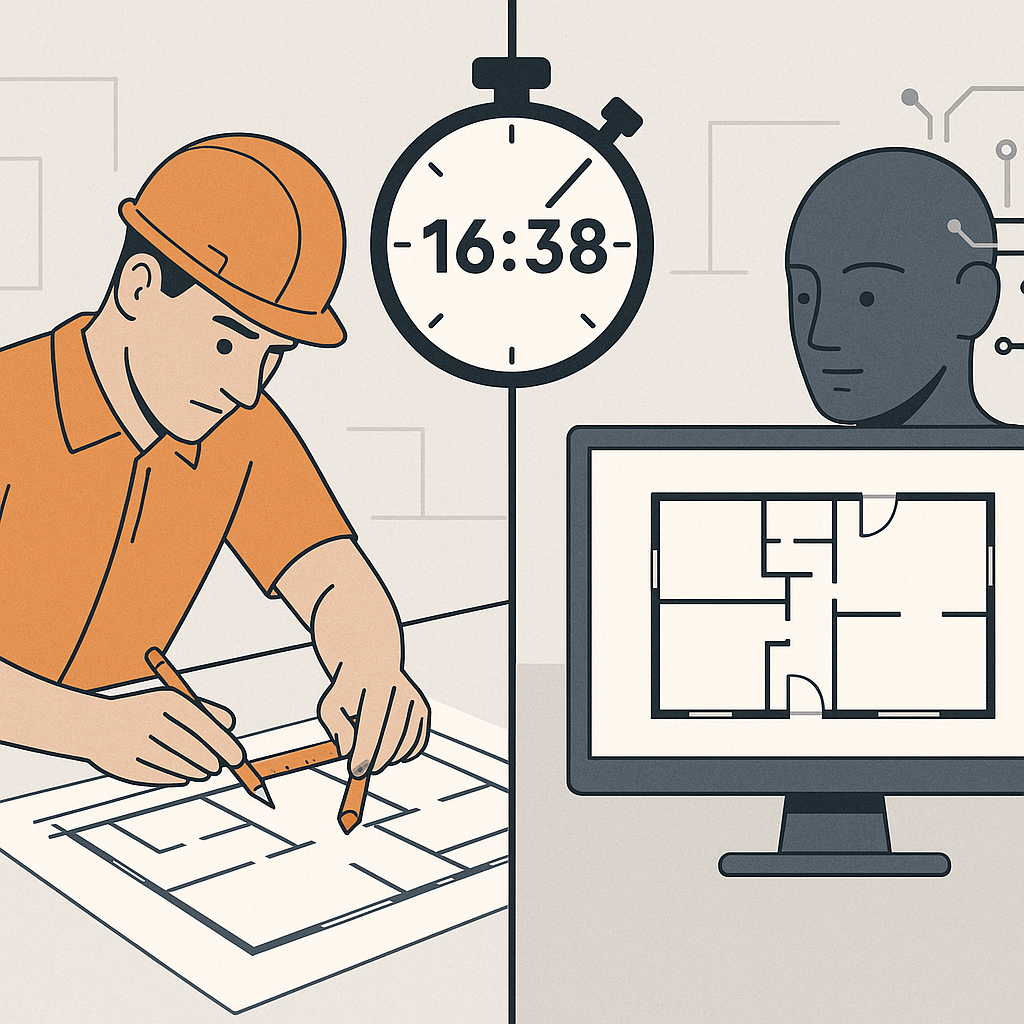
Every estimator has been there: staring at drawings, calculator in hand, chasing down quantities like it’s a scavenger hunt. A manual takeoff can chew through 40 hours per bid, and let’s be honest—mistakes happen. A missed line item or wrong dimension can erode margins before the project even starts.
Beam AI Takeoff claims to fix this. By automating quantity extraction from drawings, it cuts the process to minutes instead of days. But is speed the only factor that matters? Not always. We’ve seen AI tools save time but create confusion when outputs don’t align with project-specific BOQ formats or local rate standards. So, when should contractors trust AI, and when should they stick to manual methods?
When Beam AI Shines
1. Repetitive Projects
AI tools excel in scenarios where designs are repetitive or standardized. For example, if you’re bidding on multiple residential buildings in the same complex, the layouts are often nearly identical. AI can recognize patterns across drawings and execute consistent takeoffs faster than a human could.
Concrete Example:
A mid-sized MEP contractor in Chennai faced a daunting task: performing takeoffs for a 10-building residential project. Each building had the same plumbing layout. By using Beam AI Takeoff, they automated the process and saved over 25 hours per building—an incredible 250 hours across the project. That time savings enabled them to focus on more strategic elements of the bid, like refining labor estimates and sharpening pricing negotiations.
Actionable Steps:
- Identify projects with repetitive layouts or components.
- Train the AI system to recognize these patterns by uploading multiple sets of similar drawings.
- Use the saved time to double-check outputs, ensuring no critical details are missed.
2. Compressed Timelines
Tender deadlines can be brutal, often giving contractors just days to submit accurate estimates. In such high-pressure situations, tools like Beam AI can offer a lifeline by cutting takeoff time dramatically. Instead of spending days poring over drawings, you can let AI handle the bulk of the work while you focus on refining the proposal.
Supporting Data:
A report by EstimatesNext “Stop Guessing: AI Cuts Estimation Time by 90% Without Losing Accuracy” highlights how contractors using AI reduced takeoff time from weeks to minutes. The report also notes that contractors who adopted AI tools were able to submit an average of 30% more bids annually compared to those relying solely on manual methods.
Actionable Steps:
- Prioritize high-volume, time-sensitive projects for AI takeoffs.
- Leverage AI outputs to make early-stage adjustments, such as revising contingency budgets or adjusting unit rates.
- Combine AI speed with manual review for critical items to ensure final accuracy.
3. Error Reduction in Large-Scope Projects
Large-scale projects with complex BOQs are naturally prone to human error during manual takeoffs. A misplaced decimal or missed measurement can wreak havoc on a project’s profitability. Beam AI’s ability to cross-check quantities and flag inconsistencies can save your skin when margins are thin.
Case Study:
A general contractor working on a 500,000-square-foot commercial project in Texas decided to use Beam AI for the structural takeoff. The AI flagged discrepancies in the steel reinforcement quantities between two sets of drawings—an error that would have cost the contractor $85,000 in additional material and labor. Manual checks had missed this issue due to the sheer volume of data.
Actionable Steps:
- Use AI tools to generate initial quantities for large, repetitive components like steel, concrete, and masonry.
- Cross-check AI outputs against BOQ requirements and project specifications.
- Utilize AI’s error-checking capabilities to validate manual estimates.
The Manual Edge
AI isn’t a cure-all, and there are still scenarios where manual methods outperform automation. Here’s where manual takeoffs shine:
1. Unstructured BOQs
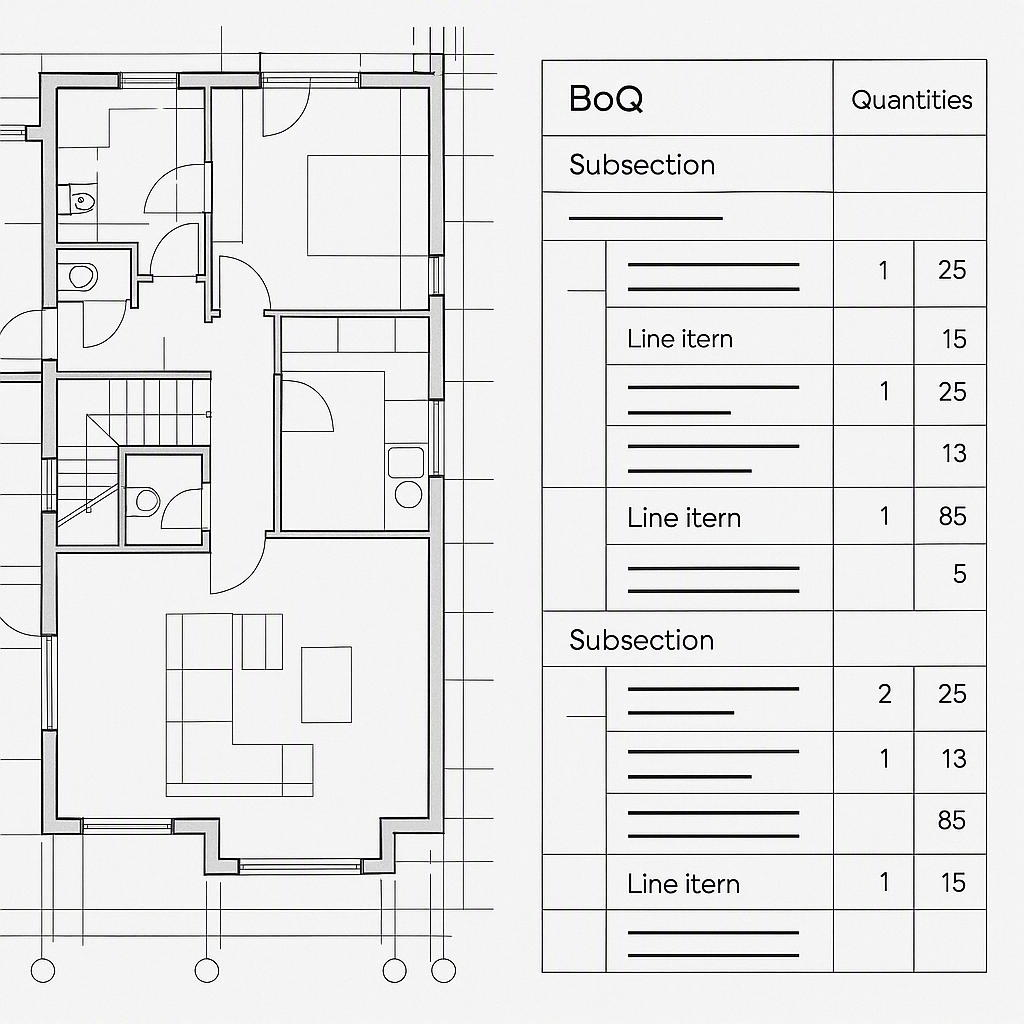
If your client’s BOQ is poorly structured or highly customized, AI tools can struggle to make sense of the data. Clients in industries like luxury construction or bespoke commercial builds often provide BOQs with unique formats, requiring a bottom-up approach to costing.
Example:
A contractor bidding on a high-end villa in Dubai initially used Beam AI for basic quantities. However, the client’s BOQ demanded a granular breakdown of imported fixtures, bespoke finishes, and custom labor rates. The team had to manually map Beam AI’s outputs to match the client’s format, a process that required significant human judgment.
Actionable Steps:
- Evaluate the complexity of the client’s BOQ before relying on AI.
- Use manual methods to supplement AI outputs where customization is required.
- Communicate with clients early to clarify BOQ expectations.
2. Precision in Custom Materials
AI struggles with non-standard materials or proprietary specifications that don’t have established patterns in its database. For example, estimating the cost of custom mahogany woodwork or imported Italian tiles requires a level of nuance and experience that AI currently lacks.
Real-Life Scenario:
An interior design contractor in New York found AI tools ineffective for projects involving custom furniture and high-end finishes. They opted to perform manual takeoffs for these bespoke elements, ensuring that every detail aligned with the client’s vision and budget.
Actionable Steps:
- Identify niche materials or elements during the project initiation phase.
- Perform manual takeoffs for items that require customization or proprietary pricing.
- Collaborate with vendors to ensure accurate pricing and availability.
3. When Relationships Matter
Manual takeoffs allow estimators to develop a deep understanding of the project’s scope, which can be invaluable during client or vendor negotiations. AI might identify quantities, but it can’t explain why marble flooring costs 30% more than ceramic tiles or why certain materials are delayed due to supply chain issues.
Example:
A contractor bidding for a high-stakes government project in California spent extra time manually preparing the BOQ. This allowed them to anticipate questions during the bid presentation and secure the contract by demonstrating their deep understanding of project specifics.
Actionable Steps:
- Use manual methods for projects where client relationships are critical.
- Prepare detailed notes on material and labor choices to support negotiations.
- Leverage your manual expertise to address client concerns and build trust.
The Hybrid Approach: Best of Both Worlds
Why choose one over the other when you can combine the strengths of both? The hybrid approach is gaining traction among contractors who want to maximize efficiency without sacrificing precision.
1. AI for Bulk Quantities
Let AI handle straightforward, high-volume quantities like concrete, steel, and blockwork. These items typically have well-defined parameters, making them ideal for automation.
2. Manual for Unique Elements
Focus your manual efforts on specialty items like custom cabinetry, glass facades, or imported fixtures. This ensures no details are lost in translation.
3. Validation
AI outputs aren’t always perfect. Use manual methods or third-party tools like JobNext’s BOQ Rate Analysis to validate quantities and ensure compatibility with your client’s budget and billing rates.
Decision Framework Table:
| Criteria | Use AI | Use Manual Methods | Hybrid Approach |
|---|---|---|---|
| Repetitive projects | Highly effective | Time-consuming | Best for validation only |
| Custom materials | Ineffective | Essential | Use manual for niche elements |
| Tight deadlines | Excellent time-saver | Risk of errors | Use AI for speed, manual for review |
| Complex BOQs | May require manual tweaks | Best suited | Combine AI for bulk, manual for detail |
FAQs
1. Can Beam AI work with all file formats?
Beam AI supports most CAD and PDF drawings but struggles with scanned, low-quality inputs. For such cases, manual methods are still the go-to option. If you frequently work with scanned documents, consider investing in higher-quality scans or OCR (optical character recognition) software to improve compatibility.
2. Will AI replace estimators?
Unlikely. AI excels at repetitive tasks, but estimators are still needed for interpreting results, making judgment calls, and handling client-specific requirements. Think of AI as a tool that enhances productivity rather than a replacement.
3. Isn’t AI expensive?
While AI tools like Beam AI operate on subscription models, the cost is usually offset by labor savings. For small contractors, the ROI depends on job volume. If you handle fewer than 10 projects annually, manual methods might suffice. For high-volume contractors, AI often pays for itself.
4. How accurate is AI compared to manual methods?
Accuracy depends on the quality of inputs and the complexity of the project. For standard materials and repetitive tasks, AI can achieve near-perfect accuracy. However, for custom or highly detailed tasks, manual methods are often more reliable.
5. Can I train AI tools to recognize my project-specific requirements?
Yes, many AI tools allow customization and training. For example, you can upload multiple projects with similar formats to help the system learn your preferences. However, this process can take time, so it’s best suited for contractors with repetitive project types.
Bottom Line
Beam AI Takeoff is a powerful tool, but it’s not a one-size-fits-all solution. Use it strategically for repetitive or high-volume tasks, and lean on manual methods when precision and customization are key. By adopting a hybrid approach, you can maximize efficiency without sacrificing accuracy. And if you’re looking for a system to tie it all together—budgeting, billing, and beyond—JobNext offers preconstruction tools to streamline your workflow. Explore it today.
Learn more at EstimateNext