The Brutal Truth About Manual Takeoffs
Let's start with the obvious: manual takeoffs are a time sink. For a typical mid-size contractor, a single bid can take up to 40 hours to manually measure and calculate. That's an entire work week spent poring over drawings, manually counting quantities, and cross-checking data. And let's not even talk about the mistakes — one misplaced decimal or forgotten BOQ line can shave thousands off your project margin.
Why is this still a thing? Because many contractors are stuck with outdated workflows — Excel spreadsheets, disconnected software, or even pen and paper. You might think, "Well, it works for us." Sure, until it doesn't. Maybe you miss a bid deadline. Maybe an error costs you a client. Or maybe you're just stuck in a cycle of inefficiency while competitors move faster and smarter.
Manual takeoffs are not just outdated; they are holding you back.
AI-powered takeoff tools are changing the game. And no, this isn't hype. It's real, it's proven, and it's saving contractors time and money. Let's dive deeper into how this technology works, why it matters, and exactly how it can transform your business.
What Are AI Takeoffs and How Do They Work?
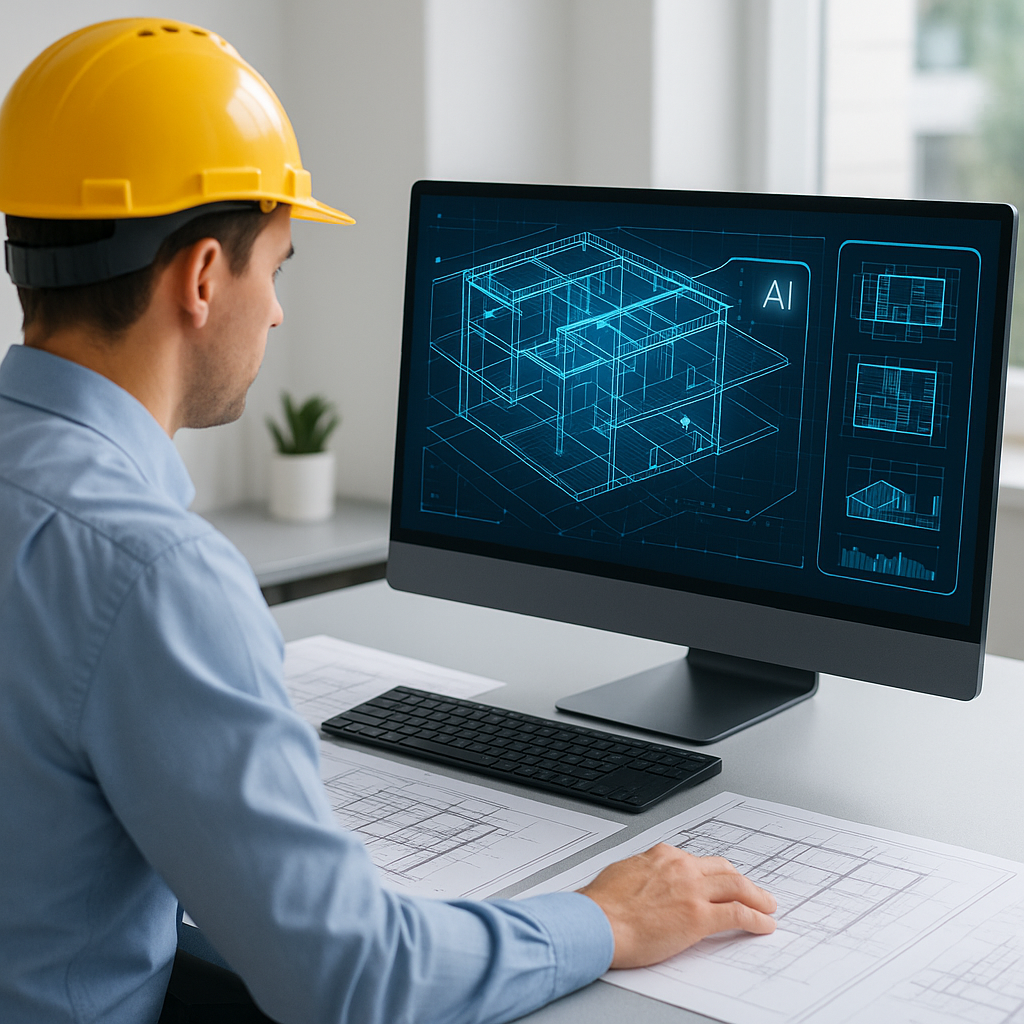
AI takeoffs use machine learning to process construction drawings and automatically extract quantities. Think of it as having a junior estimator who works 24/7, doesn’t make mistakes, and never gets tired. But don’t misunderstand — this isn’t about replacing estimators. It’s about giving them tools to work smarter and faster.
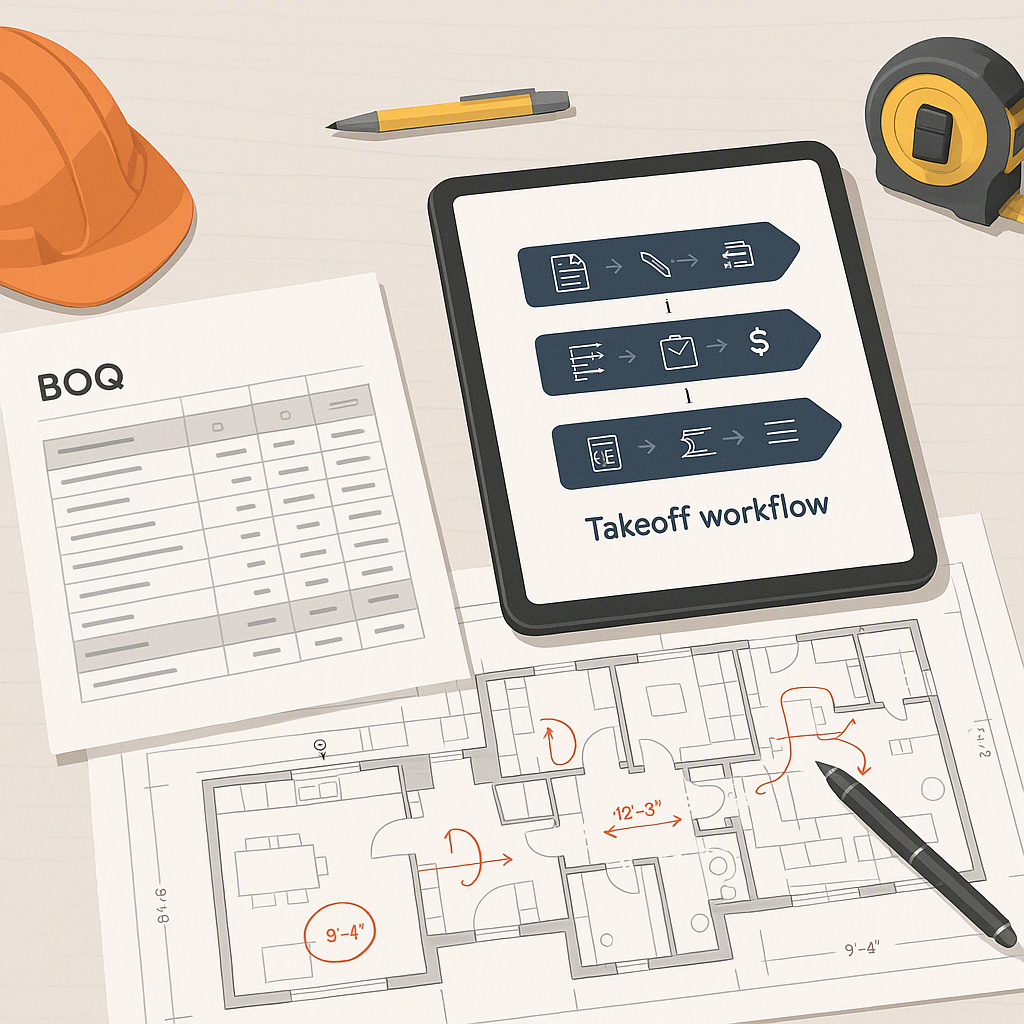
Here’s a breakdown of how AI-powered takeoffs typically work:
-
Upload Your Drawings: Whether it’s a PDF, CAD file, or even a scanned image, AI tools can handle a variety of file types. Some advanced tools can even process drawings with multiple layers or poor resolution.
Example: A renovation contractor uploads a scanned PDF of a 30-year-old blueprint, and the AI tool identifies the walls, plumbing points, and electrical fixtures with no manual input.
-
AI Identifies Elements: The system scans for various components — walls, doors, windows, electrical points, plumbing fixtures, structural elements, etc. It can even distinguish between different materials (e.g., concrete, drywall) based on annotations or standard symbols on the drawing.
Real-world case: A commercial contractor bidding on a high-rise project used AI takeoff software to extract over 1,200 unique material types across 50 floors in just under 30 minutes.
-
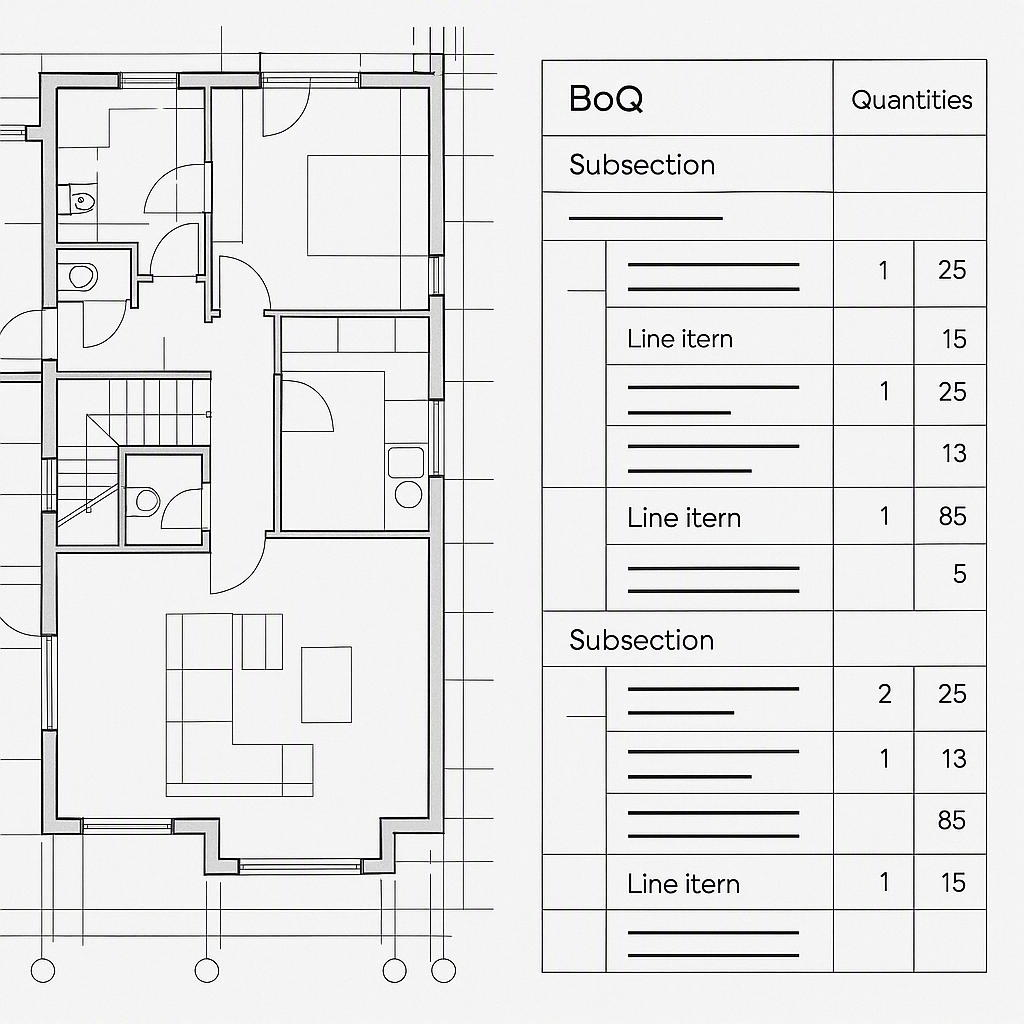
Auto-Calculates Quantities: Using the extracted data, the AI tool matches items to your Bill of Quantities (BOQ) and calculates all relevant material quantities — down to the last nail, if needed.
-
Generates Reports: Once the quantities are calculated, the system generates detailed, shareable reports. These are often exportable to Excel or directly integratable with estimating software like JobNext.
The result? What used to take 40 hours now takes 10 minutes. EstimateNext reported a staggering 90% reduction in time spent on takeoffs for contractors who implemented their AI-powered solution.
Why Manual Takeoffs Are Costing You More Than Time
Time is money, especially in construction. But the cost of manual takeoffs goes beyond lost hours:
1. Labor Costs
For a mid-size contractor, manual takeoffs can cost upwards of ₹20,000 per bid in labor alone. Multiply that by 50 bids annually, and you’re spending ₹1,000,000 just on estimating labor — and that’s assuming you don’t make any mistakes.
| Category | Manual Takeoff | AI Takeoff | Savings |
|---|---|---|---|
| Time per bid | 40 hours | 10 minutes | ~39.8 hours |
| Labor cost (₹500/hour) | ₹20,000 | ₹125 | ₹19,875 per bid |
| Annual bids (50 avg.) | ₹1,000,000 | ₹6,250 | ₹993,750 annually |
2. Errors and Rework
Mistakes in manual takeoffs can be devastating. A single error — like underestimating rebar by 10% — can lead to unforeseen material costs, project delays, and even penalty clauses. AI tools significantly reduce this risk by ensuring calculations are consistent and error-free.
Case study: A mid-sized contractor in Bengaluru reported saving ₹15 lakhs in rework costs after switching to AI takeoff tools, thanks to a 99.5% accuracy rate on their bids.
3. Lost Opportunities
While you’re stuck doing manual takeoffs, your competitors are submitting bids faster. In today’s market, speed is often the deciding factor. AI takeoffs allow you to bid on more projects without increasing your estimating team’s workload.
How AI Takeoffs Improve Competitiveness
Beyond cost savings, AI takeoffs give you a strategic edge. Here’s how:
1. Shorter Bid Timelines
When bids are due in days (or hours), manual takeoffs leave no room for error. AI tools help you meet deadlines with ease — and sometimes even submit bids early, leaving a lasting impression on potential clients.
2. Focus on Strategy, Not Admin Work
Instead of wasting time on repetitive tasks, your estimators can focus on strategy — fine-tuning pricing, identifying value engineering opportunities, and building relationships.
3. Higher Win Rates
Faster, more accurate bids mean you’ll win more projects. For example, a US-based civil contractor reported a 25% increase in bid-win rates after adopting AI takeoff software, as they were able to bid on more projects with higher accuracy.
Connecting the Dots: How JobNext Fits In
So, where does JobNext come into this? While JobNext isn’t an AI takeoff tool itself, it integrates seamlessly with your preconstruction workflow. Here’s how:
-
BOQ Linking: With JobNext, you can directly import quantities from AI takeoff tools into your BOQ. No manual data entry, no errors.
-
Real-Time Costing: Once your BOQ is populated, JobNext tracks costs against budgets in real time. This ensures you’re not just bidding faster, but bidding profitably.
-
Approval Workflows: Every estimate goes through a structured approval chain, ensuring nothing slips through the cracks.
-
Post-Bid Tracking: After winning a project, JobNext ensures seamless handoff from estimating to execution, tracking costs and progress throughout the project lifecycle.
In short, JobNext ensures that the efficiency gains you get from AI takeoffs flow seamlessly into the rest of your project lifecycle. From estimate to execution, it’s all connected.
FAQ: Real Questions from Contractors
1. Do AI tools replace estimators?
No, they don’t. Instead, they enhance the efficiency of your estimating team. Estimators are still needed to validate results, apply their expertise, and make strategic decisions. Think of AI as a tool that handles the grunt work, so your team can focus on high-value tasks.
2. Are AI tools reliable for complex projects?
Yes, most AI takeoff tools are designed to handle multi-discipline projects, including MEP, HVAC, and interiors. Advanced tools can even process overlapping layers, non-standard symbols, and poorly scanned drawings with high accuracy.
3. How much do these tools cost?
Pricing varies, but most AI takeoff tools offer flexible plans, including pay-per-use or monthly subscriptions. When compared to the savings in labor and errors, the ROI is often realized within the first few bids.
4. How does JobNext work with AI takeoff tools?
JobNext integrates BOQ data from AI tools and tracks costs in real time. This ensures your project stays profitable, from preconstruction to execution.
5. Can smaller contractors benefit from AI takeoffs?
Absolutely. In fact, smaller contractors often see the biggest impact because AI tools help them compete against larger firms that have more resources.
Decision Framework: Should You Switch to AI Takeoffs?
| Question | If Yes, AI Takeoffs Are for You |
|---|---|
| Do you spend over 20 hours per bid? | AI will save you time and cost. |
| Do you face frequent errors in bids? | AI ensures 99%+ accuracy, reducing rework costs. |
| Are you losing bids due to slow turnarounds? | AI speeds up bid preparation by 90%. |
| Do you work with complex drawings? | AI tools handle multiple disciplines effortlessly. |
| Do you want to scale without hiring? | AI enables you to bid on more projects. |
The Bottom Line
If you’re still on the fence about AI takeoffs, ask yourself this: Can your business survive if your competitors are consistently faster, cheaper, and more accurate? The construction industry is competitive enough without self-inflicted inefficiencies.
Tools like JobNext ensure that you’re not just saving time on takeoffs but turning those savings into real margin improvement across your projects. Embrace AI, streamline your workflows, and stay competitive in an increasingly tech-driven industry.
Get started with JobNext today →
Learn more at EstimateNext