Why BOQ Estimation Errors Are Killing Your Margins
Most contractors think their margins vanish during execution. Wrong. The real bleed often starts in preconstruction — specifically in BOQ estimation. A single missed quantity can snowball into procurement overruns, billing disputes, and subcontractor claims. And manual estimation? It's riddled with human errors. One typo can cost lakhs.
Real-World Example: The ₹80 Lakh Oversight
Take this real-world example: A civil contractor underestimated concrete quantities by 8% on a ₹10 crore project. The result? ₹80 lakh in unbudgeted procurement costs. Worse, the client had already approved the flawed BOQ, leaving no room for negotiation or recovery. This contractor learned the hard way that mistakes in estimation have ripple effects across the entire project lifecycle.
Why Do BOQ Errors Happen?
BOQ estimation errors are often the result of:
- Manual Calculations: Even seasoned estimators can miscalculate quantities or rates, especially under tight deadlines.
- Incomplete Data: Missing site surveys or outdated material rates can lead to inaccurate estimates.
- Assumptions: Estimators sometimes rely on assumptions instead of hard data, which can backfire when real costs differ.
- Human Fatigue: Long hours and repetitive tasks increase the likelihood of errors, especially when estimators juggle multiple projects.
AI-Powered Estimation: How It Fixes BOQ Problems
This is where AI tools step in. AI estimation software analyzes BOQ items line by line, cross-checks quantities, and flags inconsistencies before they spiral into bigger issues. For example, platforms like EstimateNext use AI to match rates across 78,000+ items in seconds, ensuring accuracy and consistency.
Features of AI Estimation Tools
AI tools offer advanced features that make them indispensable for modern contractors:
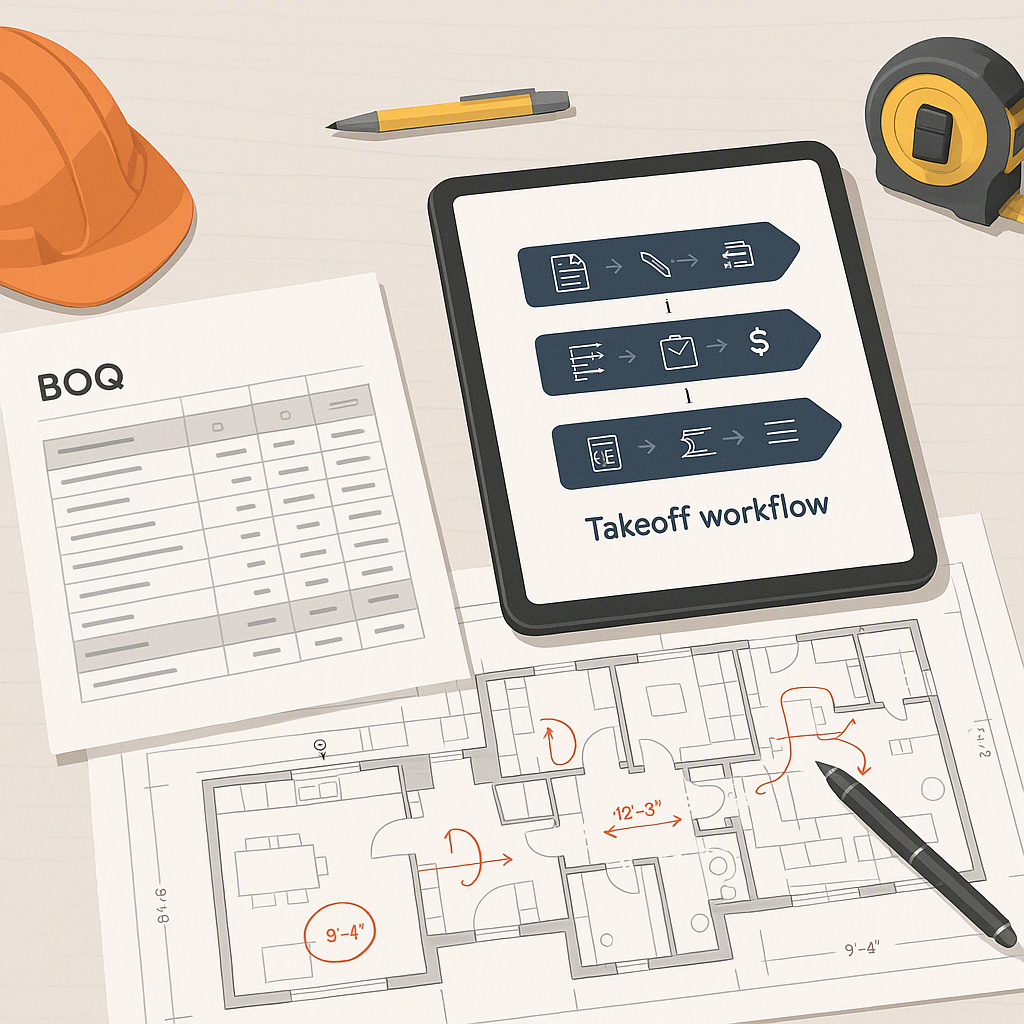
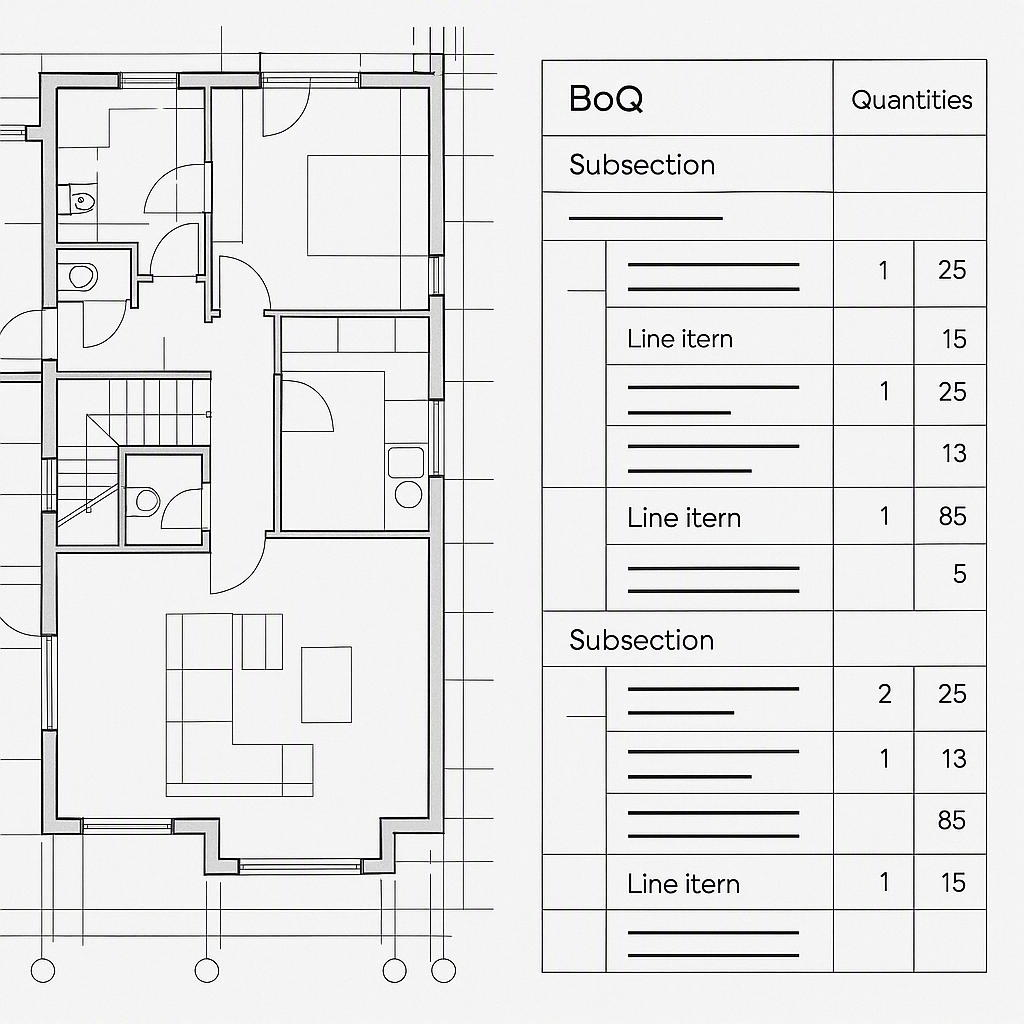
- Automated Quantity Takeoffs: AI-powered systems can extract quantities directly from drawings and specifications, reducing manual input.
- Rate Matching Across Databases: Tools like EstimateNext access massive databases to ensure rates are up-to-date and standardized.
- Error Flagging: AI identifies discrepancies in BOQ data, such as missing items or mismatched rates, before estimates are finalized.
- Scalability: Whether you're estimating a ₹5 crore project or a ₹500 crore mega-project, AI tools can handle complexity without breaking a sweat.
JobNext’s Advanced Features
JobNext, our internal ERP system, takes this further. The Estimate-based Quote feature allows detailed bottom-up costing. Here's how it works:
- Full Resource Breakdown: Every BOQ line item gets split into labor, materials, plant, subcontract, and overhead costs. This eliminates vague lump sums and ensures transparency.
- Non-Budget Estimates: These allow you to refine estimates without affecting execution budgets, a critical feature for maintaining financial control.
- Direct Execution Integration: Approved estimates auto-convert into execution jobs, eliminating the risk of manual re-entry errors.
Concrete Example: Ducting Quantity Corrections
An MEP contractor in Mumbai used JobNext's Estimate-based Quote for a ₹25 crore residential project. During estimation, the AI flagged discrepancies in ducting quantities. Correcting these errors upfront saved the team ₹50 lakh in procurement costs and prevented billing disputes later.
A Practical Fix: Weekly BOQ Margin Reviews
Even with AI, margins need active monitoring. The BOQ Margin Report in JobNext is a critical tool. It highlights:
- Items with negative margins (red flags).
- Variances between estimated and actual costs.
- Scope changes affecting profitability.
Step-by-Step Weekly Review Process
- Generate Margin Reports: Use your AI-powered system to pull a report that shows estimated vs. actual costs.
- Identify Red Flags: Highlight any line items where costs exceed estimates.
- Investigate Scope Changes: Check if any client-driven changes are causing overruns.
- Adjust Procurement: If certain items are over budget, negotiate better rates with suppliers or find alternative sources.
- Update BOQ: Make corrections to the BOQ for future projects based on lessons learned.
Anecdotally, I’ve seen weekly reviews save contractors 5–10% of their margins by catching procurement overruns early. It’s a simple practice that pays enormous dividends.
Case Studies: Numbers That Speak
₹50 Lakh Saved on a Residential Project
An MEP contractor in Mumbai corrected ducting quantities flagged by JobNext’s AI tool. The initial BOQ had underestimated quantities, which would have caused procurement overruns. By addressing the errors upfront, the contractor saved ₹50 lakh and avoided disputes during billing.
₹15 Lakh Saved on a Commercial Tower
A contractor working on a ₹40 crore commercial tower project used EstimateNext to flag discrepancies in steel reinforcement quantities. By recalculating and correcting the BOQ, the team avoided ₹15 lakh in excess procurement costs and streamlined billing.
₹1 Crore Recovered on a Highway Project
On a ₹100 crore highway project, AI estimation tools flagged missing quantities related to asphalt paving. The contractor renegotiated rates with suppliers and recovered ₹1 crore in margins that would have been lost to procurement oversights.
Common Objections (And Why They're Wrong)
“AI tools are too expensive.”
Not true. The cost of these tools is negligible compared to the ₹₹₹ saved on margin protection. Many platforms offer tiered pricing for smaller contractors, making them accessible regardless of company size.
“Manual estimation works fine for us.”
Does it? Studies show that manual estimation errors cost contractors 5–15% of their margins. AI isn’t perfect, but it’s far more accurate than human guesswork.
“We don’t have the time to implement AI systems.”
AI tools like JobNext are designed for quick onboarding. Most systems take 2–3 weeks to set up, after which they save time by automating repetitive tasks.
Comparison Table: Manual vs. AI-Powered BOQ Estimation
| Feature | Manual Estimation | AI-Powered Estimation |
|---|---|---|
| Accuracy | Prone to human errors | 95%+ accuracy |
| Speed | Time-consuming | Matches rates in seconds |
| Scalability | Limited | Handles complex projects |
| Error Flagging | None | Automatic |
| Cost Savings | Margins lost to errors | 5–15% margin protection |
| Initial Setup Time | None | 2–3 weeks |
FAQ
Q: Can AI fix scope creep?
A: No, but it flags cost overruns early so you can renegotiate scope changes and avoid margin losses.
Q: How accurate is AI estimation?
A: Platforms like JobNext and EstimateNext achieve 95%+ accuracy on BOQ takeoffs and rate matching.
Q: Is AI suitable for small contractors?
A: Yes. Many tools are designed for contractors with fewer than 50 employees and offer affordable pricing tiers.
Q: How long does setup take?
A: Most systems, including JobNext, take 2–3 weeks for initial onboarding and training.
Q: What’s the ROI on AI estimation?
A: Contractors typically save 5–15% of project costs by catching BOQ errors early, which can translate to lakhs or even crores in savings.
Final Thoughts
AI estimation tools aren’t just shiny tech — they’re practical solutions to real problems. BOQ estimation errors don’t just kill margins; they also erode client trust and operational efficiency. If you're still manually estimating BOQs, you’re leaving money on the table. It’s time to fix that.
Learn more at EstimateNext