Why Regional Standards Matter in Australia's Construction Industry
Australia’s construction industry is uniquely regulated, with state-specific compliance requirements and regional labor and material cost variations. These regional standards impact everything from how you structure your Bills of Quantities (BOQs) to how you bid on tenders. Contractors who fail to account for these standards risk losing contracts, facing compliance penalties, or eroding their profit margins. This article expands on why regional standards matter, how unstructured BOQs cause problems, and actionable steps to create structured BOQs tailored to Australian requirements.
The Importance of Regional Standards in Construction
Understanding Regional Standards
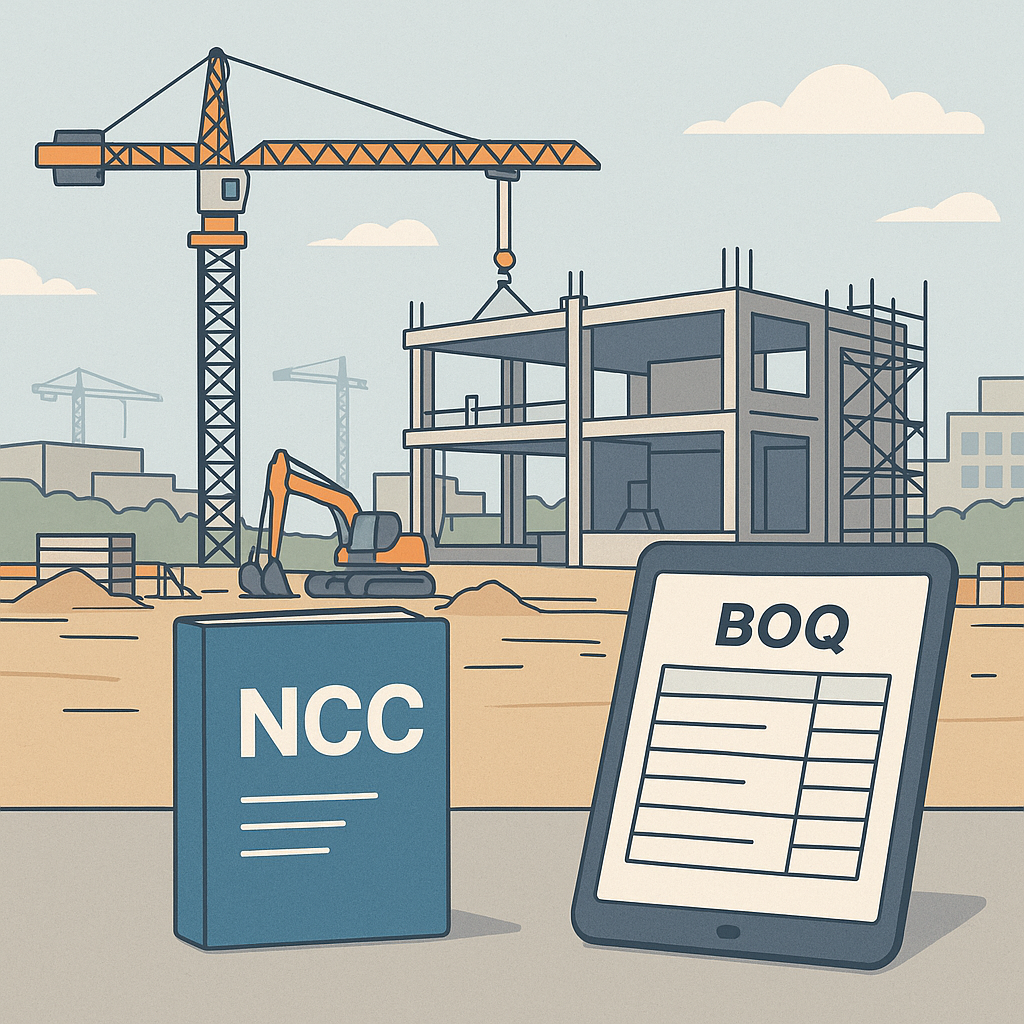
Regional standards in Australia are shaped by state-specific regulations, guidelines, and market conditions. For instance, Queensland’s public infrastructure projects emphasize detailed environmental impact assessments, while New South Wales may focus more on urban planning compliance. The National Construction Code (NCC) sets overarching guidelines but allows states and territories to implement additional requirements.
Here’s why regional standards matter:
- Compliance with Legal Requirements: Non-compliance with NCC or state-specific codes can lead to rejected bids, fines, or even project shutdowns.
- Accurate Cost Estimation: Variations in labor and material costs between states can heavily influence project budgets. For example, labor rates in Western Australia are often higher due to remote project locations.
- Environmental Accountability: Many states require detailed environmental line items in BOQs to account for stormwater management, waste disposal, and energy efficiency measures.
Actionable Steps to Adapt to Regional Standards
- Research State-Specific Guidelines: Start by reviewing local construction codes and tender guidelines. Websites like ABCB and state government portals provide up-to-date regulations.
- Consult Local Experts: Engage with quantity surveyors or consultants who specialize in your project’s location.
- Update BOQ Templates: Ensure your BOQ templates include fields for state-specific requirements, such as environmental impact assessments or local compliance measures.
The Problem: Unstructured BOQs Lead to Errors
Common Issues with Unstructured BOQs
Unstructured BOQs are a frequent pain point in the construction industry. Here’s why they lead to errors:
- Unit of Measure (UOM) Inconsistencies: A mismatch in UOMs (e.g., cubic meters vs. square meters) can cause confusion during procurement and execution.
- Client Feedback Loops: Poorly structured BOQs often require multiple rounds of revisions, delaying your tender submission.
- Billing Disputes: Inaccurate BOQs lead to disagreements over project costs, delaying payments and eroding trust with your clients.
- Regulatory Non-Compliance: Missing compliance-related line items can result in your tender being disqualified.
Example of Errors in UOM
Imagine a residential project in Melbourne. The BOQ specifies concrete in cubic meters (m³), but your estimator mistakenly uses square meters (m²). This error not only confuses your procurement team but could lead to significant cost overruns or a rejected bid.
Actionable Steps to Avoid BOQ Errors
- Standardize UOMs: Use a predefined list of UOMs aligned with industry standards and ensure all team members adhere to it.
- Automate BOQ Validation: Use software tools that flag mismatches in UOM or missing line items.
- Review and Cross-Check: Implement a two-tier review process where a senior estimator validates the BOQ before submission.
The Solution: Structured BOQs Built for Regional Standards
Leveraging Technology for Structured BOQs
The construction industry has seen significant advancements in BOQ management tools. Software like JobNext streamlines the process by offering pre-configured Work Breakdown Structures (WBS) aligned with regional standards. Here’s how these tools solve common problems:
- Pre-defined WBS Libraries: JobNext includes libraries of standard scope items tailored to Australian projects. For example, excavation jobs can include predefined line items like “Topsoil removal” or “Bulk excavation,” complete with compliant UOMs and default rates.
- Excel Import for Client-Specific BOQs: If a client provides their own BOQ format, JobNext allows you to import it directly. This eliminates manual entry errors and ensures alignment with the client’s structure.
- Stage-wise BOQ Tracking: Australian projects often require phased delivery. JobNext enables you to split BOQ items into stages (e.g., foundation, superstructure, interior), making progress tracking and billing easier.
Actionable Steps to Build Structured BOQs
- Adopt BOQ Software: Invest in tools like JobNext to streamline BOQ creation and ensure compliance with local standards.
- Customize Templates: Use software features to customize BOQ templates for specific project types or regions.
- Train Your Team: Ensure your team is trained on using BOQ software effectively, particularly for importing and validating data.
Practical Example: Handling UOM Conversion Errors
Let’s dive into a practical example to illustrate how structured BOQs prevent costly mistakes.
Scenario: UOM Mismatch in Sydney
You’re bidding on a commercial project in Sydney. The client specifies structural steel in tonnes, but your procurement team prices it in kilograms. This mismatch could lead to inaccurate cost estimates and a rejected bid. Here’s how a tool like JobNext resolves this:
- BOQ Import: You import the client’s BOQ into JobNext.
- Error Flagging: The software automatically detects the UOM mismatch and flags the error.
- Correction: You adjust the UOM to match the client’s specifications before submitting the bid.
By addressing these errors upfront, you avoid delays, rework, and potential bid rejection.
Comparison Table: Manual BOQs vs. Structured BOQs with Software
| Feature | Manual BOQs | Structured BOQs with Software |
|---|---|---|
| Error Detection | Manual review required | Automated error flagging |
| Compliance | Prone to omissions | Built-in compliance checks |
| Time Efficiency | Time-consuming | Streamlined process |
| Customization | Limited | Highly customizable |
| Collaboration | Challenging | Centralized, real-time sharing |
FAQ
Q: What’s the biggest mistake contractors make with BOQs in Australia?
A: Ignoring regional compliance requirements like NCC codes or state-specific environmental standards. These omissions can invalidate your bid and lead to penalties.
Q: How do I handle client-supplied BOQs?
A: Use a software tool with an import feature, like JobNext. This allows you to upload the client’s BOQ, review mismatches, and adjust line items as needed.
Q: Can structured BOQs work for smaller residential projects?
A: Yes. Structured BOQs are scalable and can be customized for both small residential jobs and large commercial projects.
Q: What is the best way to ensure compliance with NCC and state standards?
A: Regularly update your BOQ templates and software libraries to reflect changes in NCC and state-specific regulations. Consulting local experts can also help.
Q: Are there free tools available for BOQ management?
A: While some free tools exist, they often lack advanced features like compliance checks and error flagging. Investing in a paid solution like JobNext offers more robust functionality.
Common Mistakes to Watch For
- Overloading Provisional Quantities: Regulators often scrutinize BOQs with excessive provisional sums. Avoid guessing; instead, use precise quantity takeoff methods.
- Ignoring Environmental Line Items: Public projects frequently require detailed environmental assessments. Always include line items for stormwater management, waste disposal, and energy efficiency.
- Underestimating Labor Rates: Labor costs can vary significantly between states. Use updated rate schedules to ensure accurate pricing.
- Skipping Validation: Always validate your BOQ for errors and compliance before submission.
The Bottom Line
Adapting BOQs to regional standards is not optional in Australia’s construction industry — it’s a necessity. Structured BOQs built with tools like JobNext save contractors from costly errors, compliance issues, and missed opportunities. By automating error detection, ensuring compliance, and streamlining workflows, these tools empower contractors to focus on delivering high-quality projects.
For further reading, check out this article on AI-powered rate matching, which explores how technology can optimize estimation processes.
Learn more at EstimateNext