The Silent Killer of Construction Margins: Takeoff Errors
Let’s cut to the chase. Most contractors think their takeoffs are accurate. They’re not. Manual quantity takeoffs, even from experienced estimators, miss 10-20% of quantities on average. That’s not just a small error—it’s enough to destroy your profit margins before the project even starts.
Why? Missed quantities lead to underbidding. Underbidding leads to cost overruns. And cost overruns? They come straight out of your pocket. But here’s the thing: AI-powered takeoff tools are now pushing accuracy to over 95%. If you’re not using them, you’re leaving money on the table.
Why Manual Takeoffs Fail
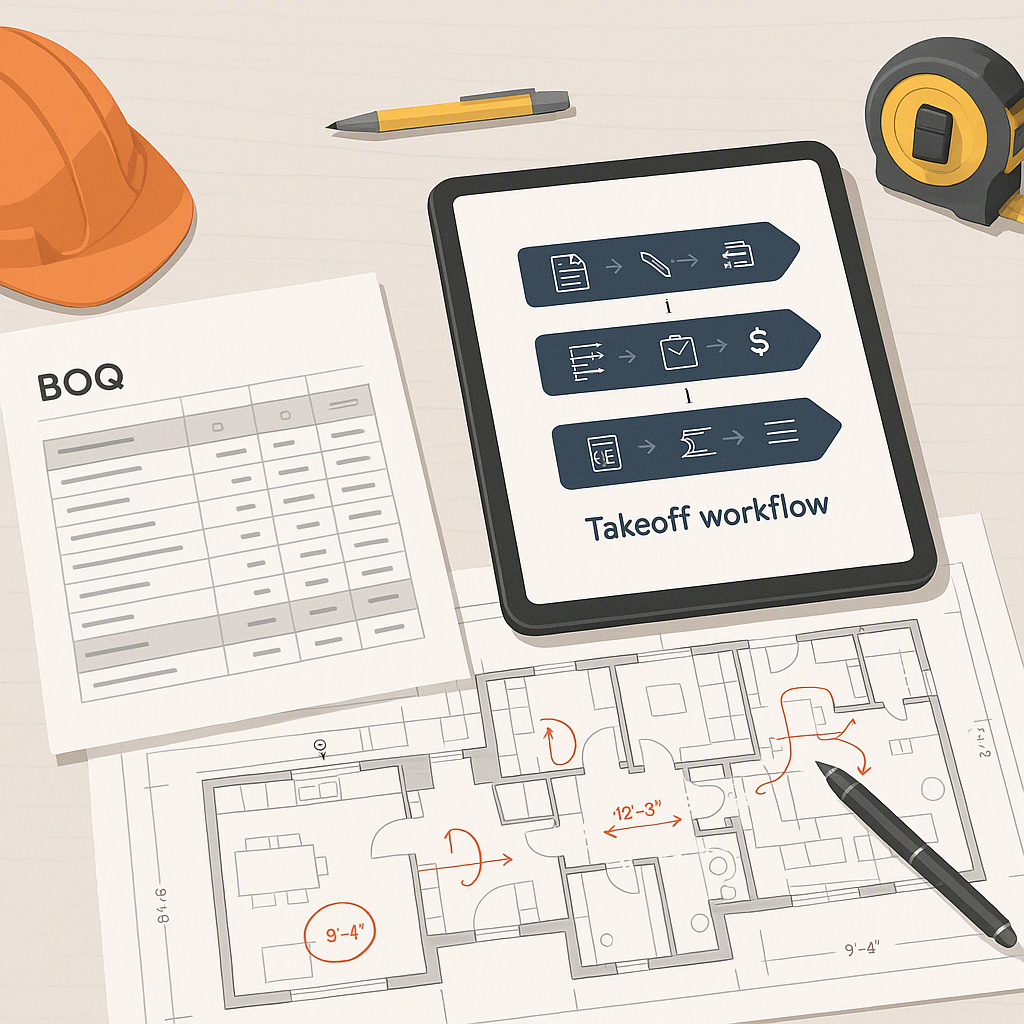
Manual takeoffs are slow, tedious, and prone to human error. Here’s how it usually plays out:
- Time Sinks: Flipping through hundreds of pages of drawings, marking lengths, areas, and volumes by hand. Even with digital PDFs, it’s a grind.
- Inconsistent Measurements: Two estimators could measure the same scope and come up with different results.
- Missed Scope Items: Overlooking a line item or mixing up units (meters vs. feet) isn’t uncommon.
A 2023 McKinsey report found that over 70% of contractors still rely on manual methods for their takeoffs, despite the availability of automated tools. Why? Mostly inertia. “This is how we’ve always done it.” But that mindset is costing you.
Real-World Example: Missed Quantities Cost Millions
A Canadian civil engineering firm lost $2.3 million on a municipal road project in 2022 due to missed quantities during manual takeoffs. The estimator overlooked 18% of the required paving materials, leading to significant cost overruns. Worse, the client refused to approve a change order for the additional expenses. This single error wiped out the firm’s profit for the entire year on that project.
Psychological Bias: Overconfidence in Manual Processes
Another issue with manual takeoffs is the overconfidence of experienced estimators. Studies show that humans tend to underestimate their likelihood of error, particularly in repetitive tasks. Estimators with years of experience may assume their methods are foolproof, but the data tells a different story. These blind spots can cost your business dearly.
How AI Takeoff Tools Achieve 95%+ Accuracy
AI-based takeoff tools aren’t just faster—they’re smarter. Here’s how these tools work to lock in high precision:
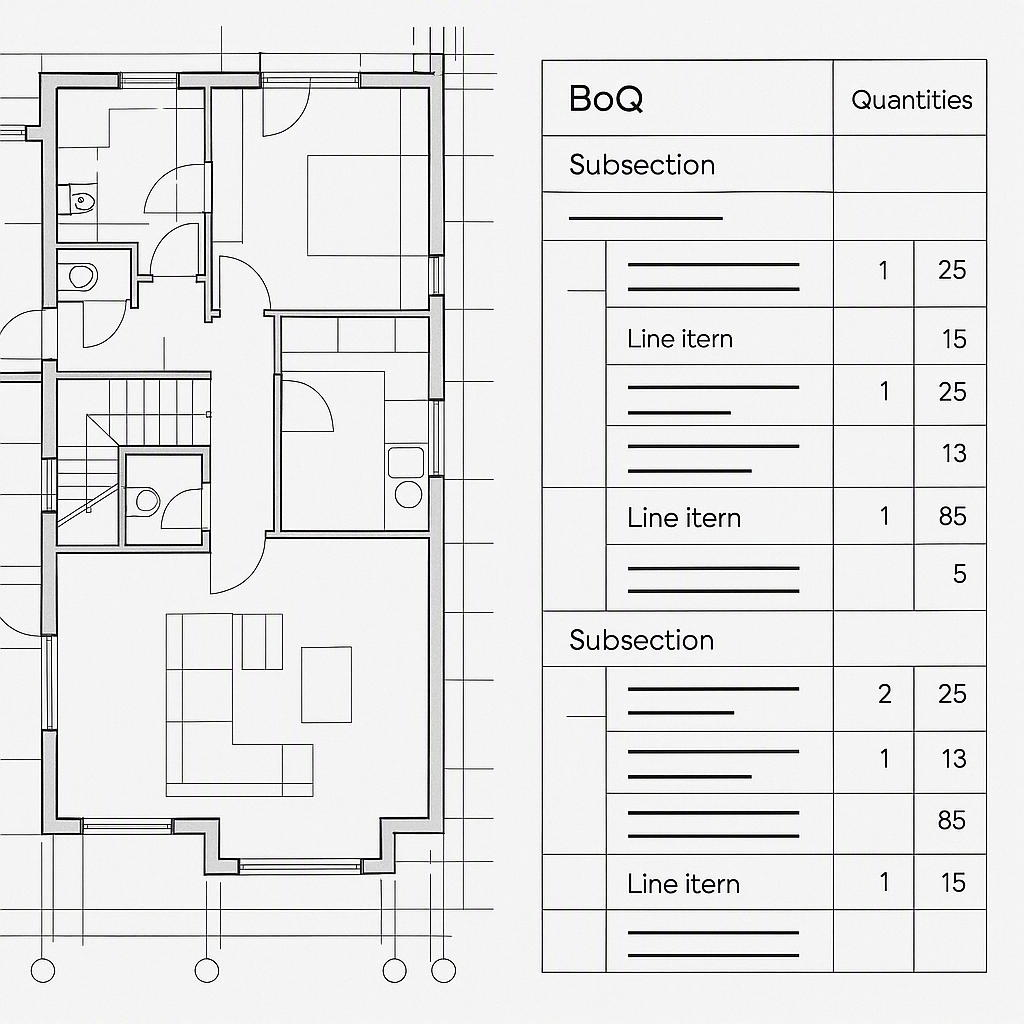
- Automated Quantity Recognition: AI scans drawings and identifies quantities directly from the BOQ and plans. For example, tools like Bluebeam Revu or PlanSwift can automatically detect dimensions and calculate volumes.
- Error Reduction: AI doesn’t miss items or make unit conversion mistakes. If your plans use both metric and imperial units, the system flags inconsistencies in real time.
- Real-Time Checks: The system flags discrepancies between the estimate and the scope during the takeoff process. For example, if your drywall calculation is off by 10%, it alerts you before submission.
- Learning Over Time: AI tools improve with use, adapting to your measurement styles and project types. Think of it as having an estimator that gets smarter every year.
Case Study: ₹12 Lakh Saved by AI Detection
A mid-size MEP contractor in Hyderabad implemented an AI takeoff tool for the first time in 2023. During a review of HVAC plans, the tool flagged a 15% discrepancy in ducting quantities. This saved the contractor ₹12 lakh in material costs and avoided a major dispute with the client. The estimator later admitted they would have missed the error using their traditional manual method.
Actionable Steps for Contractors
Ready to stop bleeding margins? Here’s what you need to do:
1. Audit Your Current Process
- Calculate the number of errors you’ve caught in the past year. How much did they cost you?
- Identify the most common types of errors (e.g., missed quantities, unit conversions).
2. Test an AI Tool
- Start with a single project. Tools like EstimateNext, JobNext, or On-Screen Takeoff offer free trials.
- Compare the AI results to your manual takeoff. Document the differences.
3. Train Your Team
- Even the best tool won’t help if your team doesn’t know how to use it properly. Invest in training sessions provided by the software vendor.
- Assign a tech-savvy team member as the "AI Champion" to lead the adoption process.
4. Compare Results Over Time
- Track the accuracy rates of your AI tool vs. manual takeoffs over multiple projects.
- Measure the time savings and calculate the ROI.
5. Scale Gradually
- Once you see the benefits on smaller projects, scale the tool across your entire preconstruction team.
Comparison Table: Manual vs. AI Takeoffs
| Feature | Manual Takeoffs | AI Takeoffs |
|---|---|---|
| Accuracy | 80-90% (with errors) | 95%+ |
| Time Required | 30-40 hours per project | 10-15 minutes |
| Human Error | High (missed items, etc.) | Low (real-time checks) |
| Learning Curve | Minimal | Moderate (requires training) |
| Cost Savings | None | 8-12% of project costs |
The Bigger Picture: Cutting Preconstruction Time
It’s not just about accuracy. AI tools also slash preconstruction time. According to EstimateNext, manual takeoffs take up to 40 hours per bid. AI tools cut that to just 10 minutes. Imagine what your team could do with 30+ extra hours per project.
Breaking Down the ROI
- Labor Savings: If your estimator charges ₹2,000/hour, saving 30 hours per project translates to ₹60,000 per project.
- Error Reduction: Avoiding just one major error per year (₹10 lakh+) can easily pay for the cost of the software.
FAQ
Q: How accurate are AI takeoff tools compared to manual methods?
A: AI tools can achieve 95%+ accuracy, while manual takeoffs often miss 10-20% of quantities.
Q: What’s the ROI on switching to AI-based takeoff tools?
A: Contractors typically save 8-12% of project costs by avoiding missed quantities and scope errors.
Q: Are AI tools hard to integrate with existing workflows?
A: Most modern tools, like JobNext, integrate seamlessly with preconstruction and execution workflows.
Q: Do AI tools work for all trades?
A: Yes, they’re particularly effective for MEP, HVAC, civil works, and interiors.
Q: What’s the biggest drawback of AI takeoff tools?
A: They require upfront training and setup, but the savings more than justify the effort.
Final Thoughts
In my view, sticking with manual takeoffs is like refusing to use a smartphone in 2024. Sure, it might work, but it’s outdated, inefficient, and costing you more than you realize. AI takeoff tools aren’t perfect, but at 95%+ accuracy, they’re a massive step forward. The numbers don’t lie.
If you’re ready to stop losing margins to avoidable takeoff errors, tools like JobNext can help. Start small, test the results, and see how much you can save.
Learn more at EstimateNext