Why Your BOQ Could Be Killing Your Margins
Ever wonder why your project margins keep shrinking, even when your estimates look solid on paper? A big culprit is often hiding in plain sight: your BOQ (Bill of Quantities). If your BOQ is incomplete, disorganized, or just plain wrong, you're starting your project with a financial hole you may never climb out of. In my experience, the BOQ is where many contractors unknowingly give away their profits.
So, how do you create a BOQ that won't sink your margins? Let’s break it down into actionable steps, real-life examples, and practical insights.
Step 1: Start with a Structured Format
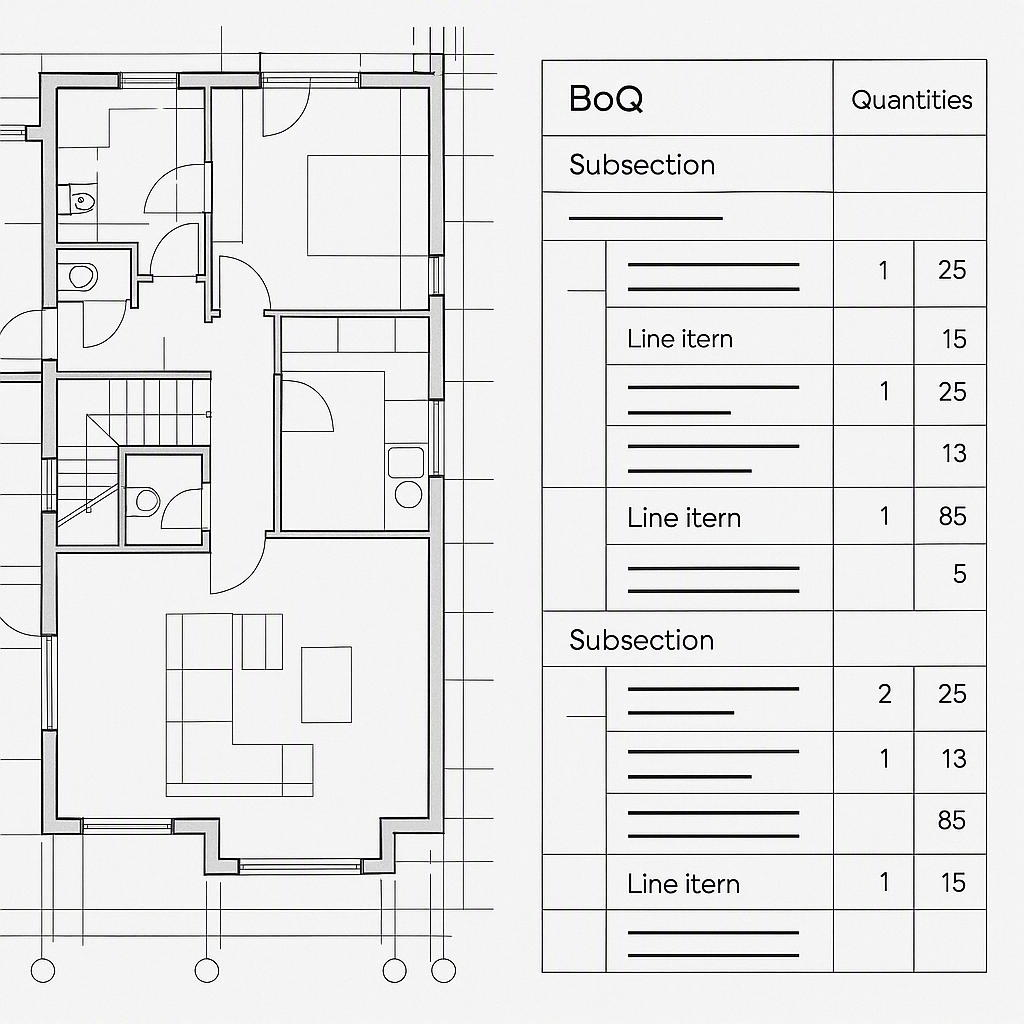
The BOQ isn't just a list of items—it's the foundation of your entire project. Without a structured format, it's easy to overlook key components or miscalculate costs. Use a structured hierarchy: Groups → Items → Units → Rates → Quantities. For example:
| Group | Item | Unit | Rate (₹) | Quantity |
|---|---|---|---|---|
| Civil Works | Excavation (500 CUM) | CUM | 120 | 500 |
| Electrical | Wiring (3-phase) | MTR | 15 | 200 |
This structure ensures nothing gets missed. And trust me, missed items mean surprise costs later. For instance, if you forget to include scaffolding costs in a high-rise construction BOQ, you'll absorb those expenses later in the project, eating into your margins.
Actionable Steps:
- Use Templates: Start with a pre-built BOQ template that includes standard categories and items for your specific industry (e.g., civil works, electrical, plumbing).
- Leverage Software: If you're working on a large project with hundreds of line items, consider using tools like JobNext, which let you import BOQs from Excel. This avoids the hours of manual entry—and the inevitable typos. Their documentation warns against skipping this step, as corrections after an upload can be a painful time sink.
Real Example:
A mid-sized contractor in Mumbai reported saving over 12 hours per project by switching from manual BOQs to JobNext’s BOQ import feature. They also reduced errors in their BOQs by 30% after using structured templates.
Step 2: Define Your UOMs (Units of Measure) Correctly
Incorrect UOMs are one of the most common BOQ mistakes I see. If your BOQ says "BAG" but your supplier quotes in "KG," you’re setting yourself up for confusion—and likely overpayment. These mismatches often lead to disputes, delays, and cost overruns.
For example, imagine your BOQ specifies cement in "bags," but your supplier invoices in "metric tons." Without a clear conversion factor, you might overpay or underorder, causing disruptions on-site.
Actionable Steps:
- Standardize UOMs: Predefine standard UOMs in your system to avoid mismatches.
- Cross-Check with Suppliers: Align your BOQ UOMs with your suppliers' quoting format.
- Use Software Libraries: Platforms like JobNext offer WBS (Work Breakdown Structure) libraries with predefined UOMs, rates, and quantities. This is especially useful for repeatable services like landscaping or pest control.
Real Example:
A contractor in Dubai switched to standardized UOMs in their BOQs and was able to reduce supplier disputes by 40%. This change also helped them negotiate better rates, as their suppliers appreciated the clarity.
Step 3: Use Stage-Wise BOQs for Large Projects
Phased projects demand more than a flat BOQ. Imagine working on a high-rise—your excavation BOQ will cover the entire project, but billing and execution will happen floor by floor. Without breaking it down into stages, you’ll struggle to track costs and progress accurately.
Why Stage-Wise BOQs Matter:
- They ensure better cash flow management by linking costs to milestones.
- They provide better visibility into project progress, enabling you to identify delays early.
Actionable Steps:
- Break Down Quantities by Stages: For example:
| Stage | BOQ Item | Stage % | Quantity |
|---|---|---|---|
| Foundation | Excavation (500 CUM) | 50% | 250 |
| Superstructure | Excavation (500 CUM) | 50% | 250 |
- Link to Milestones: Use stage-wise BOQs to link progress payments to tangible milestones, ensuring you’re never out of pocket.
- Automate Tracking: JobNext’s stage-wise feature lets you allocate percentages and track progress against them easily.
Real Example:
A high-rise developer in Bangalore adopted stage-wise BOQs and reduced their billing disputes by 60%. By linking progress payments to stage-wise milestones, they also improved cash flow predictability.
Step 4: Validate Your Data with a BOQ Template
A good BOQ template is your best friend. It ensures consistency, reduces errors, and provides a clear framework for your team to work within. A reliable template should include:
- Item Code: Unique identifier for each item.
- Description: Clear, detailed description (e.g., "3-phase wiring for 200 sq. ft.").
- Unit: Unit of measure (e.g., CUM, MTR, BAG).
- Rate: Cost per unit.
- Quantity: Number of units.
Actionable Steps:
- Download a Pre-Built Template: Use a platform like JobNext to get a ready-made BOQ template.
- Double-Check Before Uploading: Mismatched columns or invalid data types can cause your import to fail. Always double-check before uploading.
- Test with Small Data: Before uploading your full BOQ, test the process with a few line items to ensure everything aligns.
Step 5: Link BOQ Items to Execution Scopes
A BOQ isn't just for quoting—it’s the backbone of your project execution. Linking BOQ items to scopes ensures that what you bill aligns with what you deliver. For example, a BOQ for "Excavation (500 CUM)" might break down into:
- Scope 1: Excavation for foundation (250 CUM).
- Scope 2: Excavation for superstructure (250 CUM).
Actionable Steps:
- Use tools like JobNext to link BOQ items directly to execution scopes within your WBS. This reduces communication gaps between the tendering and execution teams.
- Regularly update scopes and quantities as the project progresses to reflect changes.
Real Example:
A contractor in New Delhi linked their BOQs to execution scopes and reduced project delays by 25%. This alignment also helped them avoid disputes with clients over the scope of work.
Step 6: Automate Where You Can
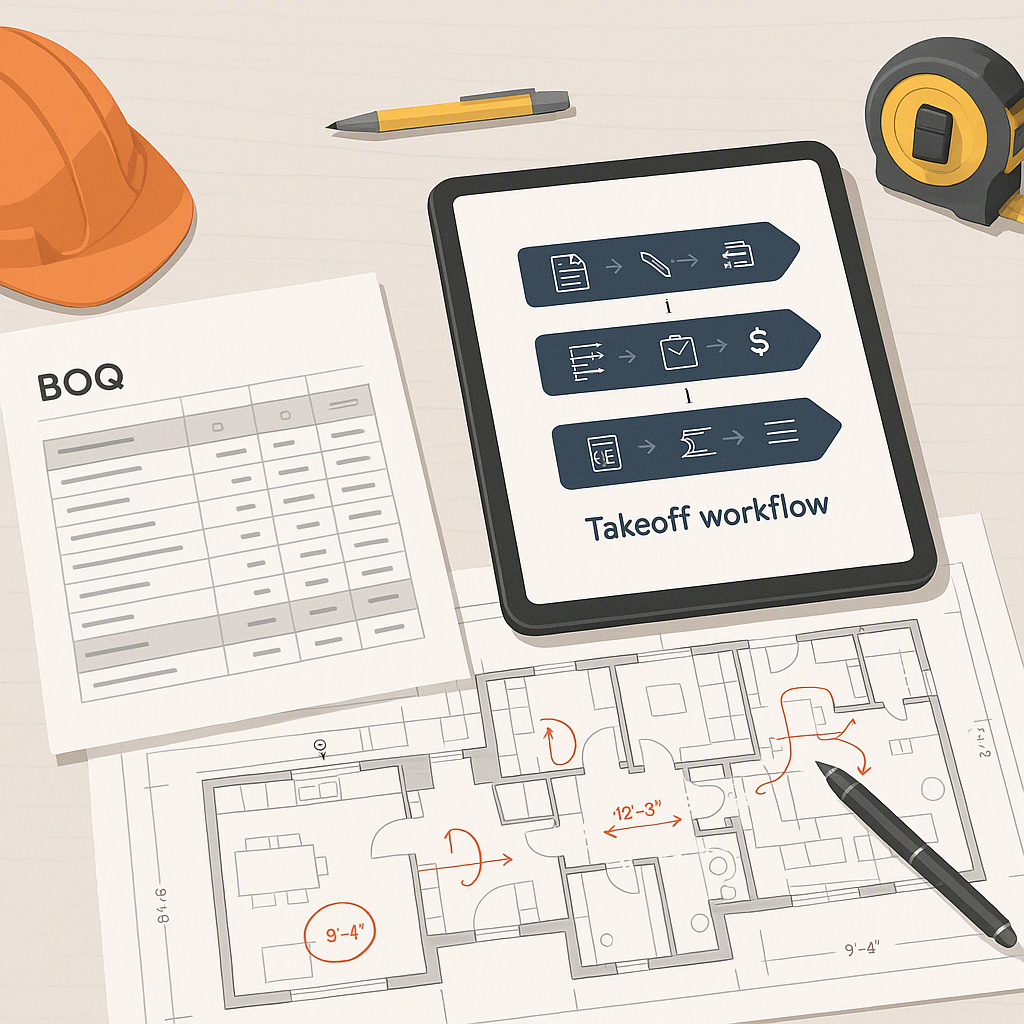
Manual BOQ preparation is slow, error-prone, and costly. Tools like EstimateNext can drastically speed up the process. Their AI-driven platform claims to cut manual takeoff time from 40 hours to just 10 minutes. That’s a game-changer for contractors juggling multiple bids.
Actionable Steps:
- Evaluate Tools: Platforms like EstimateNext and JobNext offer free trials. Test them to see if they fit your workflow.
- Invest in Training: Ensure your team knows how to use these tools effectively.
Common BOQ Mistakes to Avoid
- Skipping UOM Alignment: Always match UOMs across your BOQ, supplier quotes, and execution plans.
- Underestimating Quantities: Cushion your estimates for waste and rework.
- Forgetting Stage-Wise Breakdown: Especially important for phased projects.
- Relying on Manual Entry: Use tools to avoid human error.
- Ignoring Progress Tracking: Link BOQs to execution scopes for real-time updates.
FAQ
1. What’s the fastest way to create a BOQ?
Use a pre-built template or import from Excel. Tools like JobNext make this process seamless.
2. How do I ensure my BOQ is accurate?
Double-check UOMs, rates, and quantities. Validate your BOQ against your WBS.
3. Why should I use stage-wise BOQs?
They help track costs and progress for phased projects, reducing surprises and improving cash flow.
4. Can AI tools really help with BOQs?
Yes. Platforms like EstimateNext can cut takeoff time from 40 hours to 10 minutes, freeing up valuable resources.
5. What’s the ROI of investing in BOQ software?
Contractors report saving 20-30% on admin costs and reducing errors by up to 50% after adopting automation tools.
Decision Framework: Manual vs. Automated BOQ Preparation
| Criteria | Manual BOQ | Automated BOQ |
|---|---|---|
| Time Required | 20-40 hours per project | 2-10 hours per project |
| Error Rate | High (10-15% errors) | Low (1-2% errors) |
| Scaling Capability | Difficult | Easy |
| Cost | Low upfront, high overtime | Higher upfront, lower overtime |
| Best For | Small projects | Mid to large projects |
If you're tired of losing margins to messy BOQs, tools like JobNext can help you create, track, and manage them effortlessly. Get started free →
Learn more at EstimateNext