The Problem Nobody Talks About: Invisible Cost Erosion
Margins in construction are tight. We're talking 8-12% on most projects. But here's the kicker—contractors lose up to 20% of those margins due to poor cost tracking. You might be thinking, "I know my direct costs—materials, labor, subcontractor fees." Sure, but what about the indirect costs? Idle equipment, delayed billing, missed compliance penalties—those are killing your profits.
A Real Example: How Manual Cost Tracking Erodes Margins
Let’s say you’re running a mid-size HVAC project. You’ve budgeted ₹1 crore, with 10% profit baked in. But you don’t have a system to track costs in real-time. What happens?
- Material procurement delays: You needed 200 tons of ducting material last week, but your MR got stuck in approvals. The site sits idle for 3 days. That’s ₹1.25 lakh in wasted overhead.
- Billing errors: RA bills were submitted late, delaying client payments. You’re now paying ₹50,000 in interest on your overdraft.
- Idle equipment: Your crane isn’t being used for 40% of the project lifecycle. Depreciation eats another ₹75,000.
That’s ₹2.5 lakh gone—and your 10% margin is wiped out.
How Real-Time Cost Tracking Changes The Game
Contractors who track costs in real-time don’t face these problems. They know exactly where every rupee is going, whether it’s direct costs (material, labor) or indirect ones (equipment downtime, finance charges).
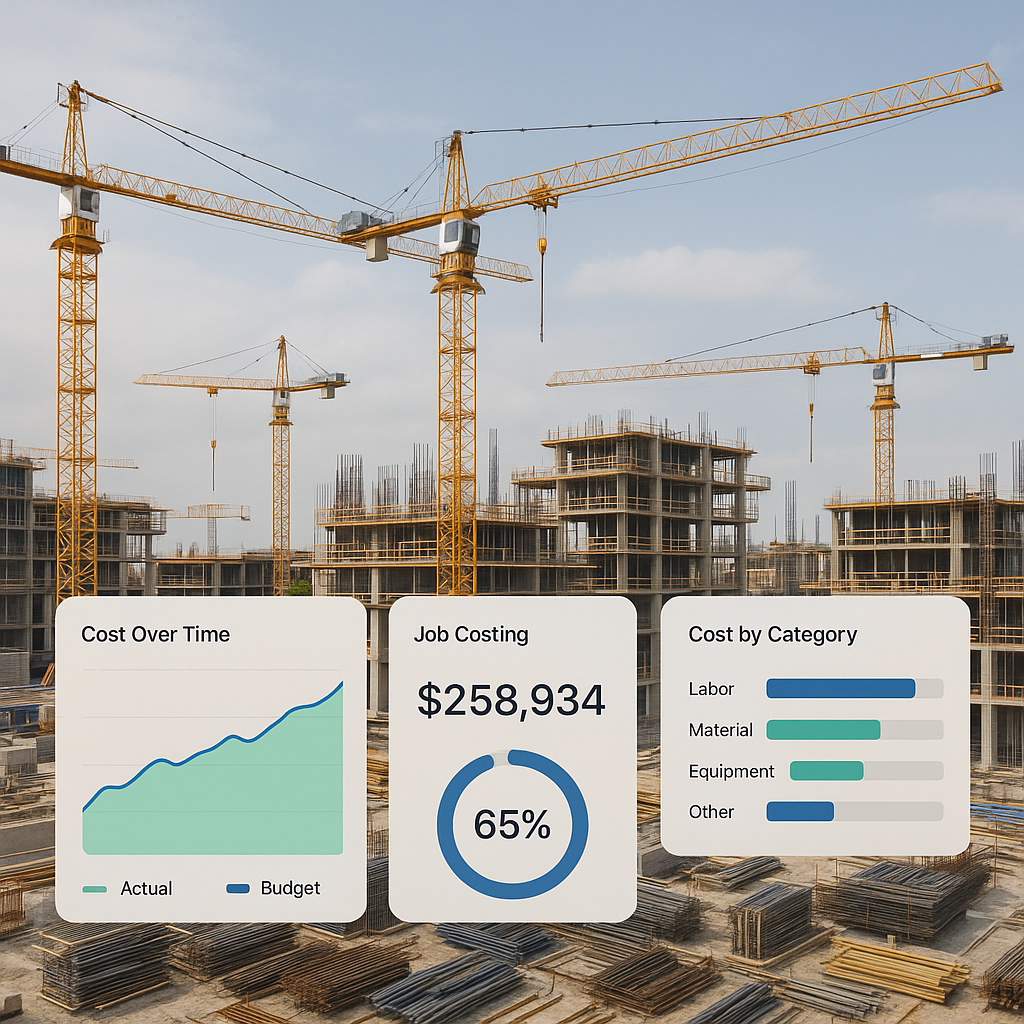
Here’s where JobNext comes in. It’s not just an ERP—it’s a real-time profitability monitor. For every BOQ item, scope, or WBS, you can see:
- Budgeted vs. actual costs
- Variances by resource category
- Live margin updates as the project progresses
Practical Example: JobNext’s Cost Tracking in Action
Imagine you’re managing a ₹5 crore EPC project. With JobNext, you:
- Track material costs: Your procurement workflow (MR → RFQ → PO) ensures you never miss approvals or vendor deadlines.
- Monitor equipment utilization: JobNext flags idle machinery, letting you reallocate or offload assets.
- Control subcontractor billing: Payment controls tied to work progress (WR → RFP → WO → Measurements) ensure you don’t overpay.
This isn’t theory—it’s what real contractors are doing to protect their margins. Why Contractors Using Cloud ERP Grow Faster: A Hard Truth About Margins dives deeper into how contractors are stopping margin erosion.
The Skeptic’s Objection: “We Already Track Costs”
Sure, but are you tracking them accurately and consistently? Most contractors rely on Excel sheets or disconnected systems. That’s where the leaks happen:
- Missed updates: Your site manager didn’t update last week’s material consumption. Now your report is off by ₹3 lakh.
- Delayed insights: By the time you see the overspend, it’s too late to fix.
- Human error: Manual entry mistakes can cost you thousands.
Cloud ERP solves this. Systems like JobNext automate tracking, so you get real-time, error-free insights. Why Contractors Without Cloud ERP Are Bleeding Margins (And How to Stop It) explains this in detail.
Actionable Steps to Improve Cost Management
- Audit Your Current Systems: How do you track costs? If it’s manual or siloed, you’re losing money.
- Set Up Real-Time Dashboards: Use tools like JobNext to monitor profitability by BOQ, scope, and WBS.
- Automate Procurement: Structured workflows (MR → RFQ → PO) eliminate delays and errors.
- Standardize Billing Controls: Implement measurement-based subcontractor payments to avoid overbilling.
- Monitor Equipment Utilization: Track idle time and reallocate assets to active projects.
Key Takeaway
Construction cost management isn’t just about knowing your budget—it’s about tracking every rupee in real-time. Contractors who skip this step lose margins they can’t afford. The good news? Fixing it is easier than you think. Tools like JobNext make real-time cost tracking accessible—and essential.
Want to see how it works? Check out Why Contractors Struggle Without Cloud ERP: A Real Procurement Problem Solved.
Ready to see JobNext in action?
Multi-tenant SaaS ERP for construction, facilities management, and contracting — covering preconstruction, project execution, procurement, HR & payroll, equipment, finance, and 150+ analytics reports.
Get Started Free →Learn more at EstimateNext