The Brutal Reality of Bid Markup in GCC Projects
If you’re running projects in the GCC (Gulf Cooperation Council), you already know the pressure to bid competitively. But here’s the brutal truth: most contractors bleed margins before the first shovel hits the ground. Why? Because they either guess their markup or use outdated formulas that don’t reflect actual costs.
In my experience, the problem isn’t just math—it’s visibility. You can’t fix what you can’t see. Without granular insight into your costs and risks, you’re setting yourself up for margin erosion.
Where Most Contractors Go Wrong
1. Miscalculating Overheads
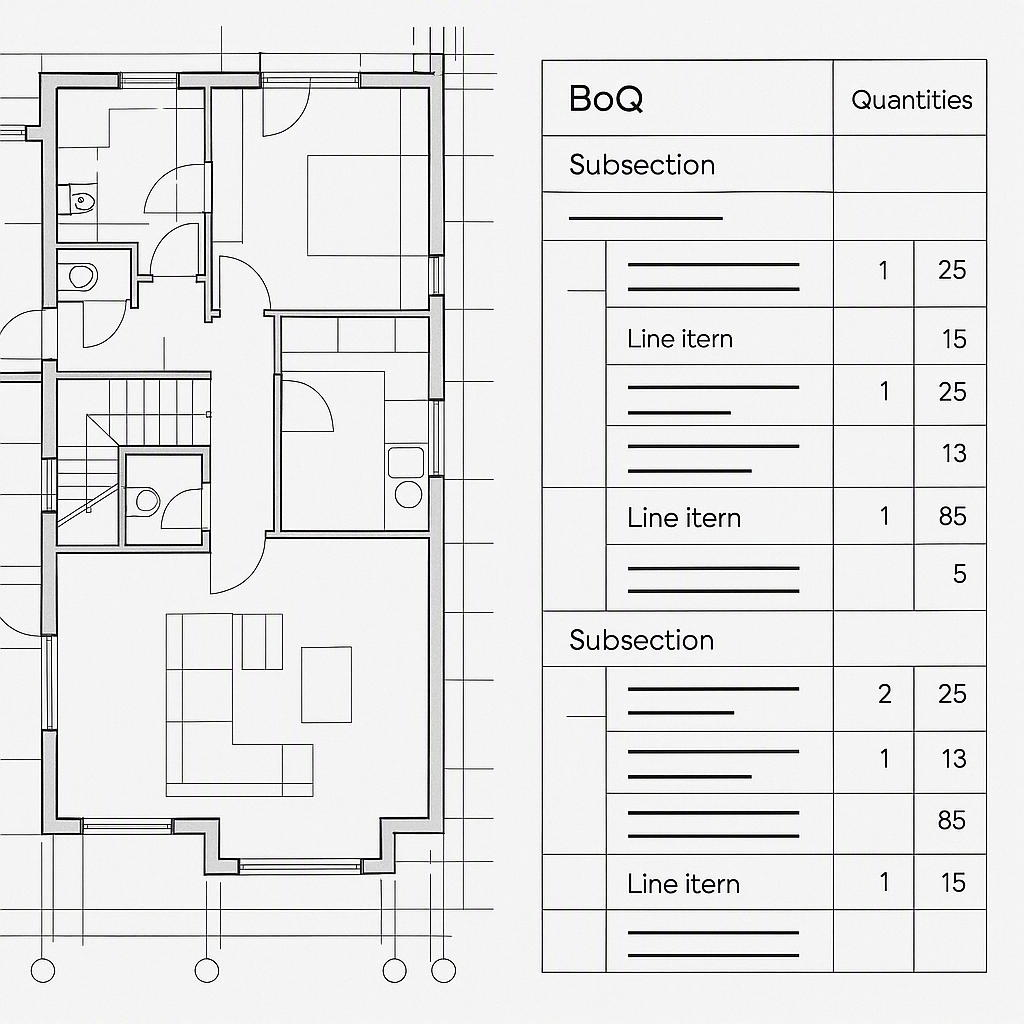
Contractors often underestimate overheads or distribute them evenly across all BOQ (Bill of Quantities) items. This approach fails to account for items with disproportionately high logistical or compliance costs. Treating all items equally is a recipe for disaster.
Example: Imagine your project overhead is ₹20,00,000. You decide to spread this evenly across all 50 BOQ items, assigning ₹40,000 per item. Now, consider one item with higher freight costs and customs charges that total ₹60,000. That item alone has already cost you an additional ₹20,000, eating into your margin.
Actionable Steps:
- Break down overhead costs into specific categories: administrative, logistical, compliance, and fixed costs.
- Assign overheads based on the actual cost drivers for each BOQ item.
- Use historical data from previous projects to refine your overhead distribution model.
2. Ignoring Scope Creep
Scope changes are common in GCC contracts, especially when milestone-based billing is involved. These changes can include additional requirements, design modifications, or delays, all of which eat into your contingency. If your bid markup doesn’t account for potential scope creep, your margins will evaporate.
Example: In a Qatar-based road construction project, a contractor underestimated scope creep by failing to anticipate additional drainage installations due to unforeseen weather conditions. The project overran its contingency budget, resulting in a ₹30,00,000 loss.
Solution: Use a bottom-up costing method like Estimate-based Quotes in JobNext. This method breaks down costs into labor, material, plant, subcontract, and overhead for each BOQ item, giving you precise visibility. Additionally, allocate a contingency percentage to cover unexpected scope changes.
3. Applying Flat Markup Percentages
A flat 15% markup across all BOQ items might seem convenient, but it’s a margin killer. High-cost items, such as imported HVAC units, might require a lower markup to stay competitive. Conversely, low-cost, labor-intensive items need higher markups to account for risks.
Example: Consider two BOQ items:
- A ₹50,00,000 HVAC unit with a 15% markup adds ₹7,50,000. However, if your competitors bid at a 10% markup, your offering is overpriced.
- A ₹1,00,000 plastering job with a 15% markup adds only ₹15,000, which is insufficient to cover labor risks.
Actionable Steps:
- Categorize BOQ items into high-cost and labor-intensive segments.
- Assign variable markup percentages based on the risk profile and market competition.
- Use tools like JobNext to simulate different markup scenarios and optimize your bid.
The Better Way: BOQ Margin Analysis
This is where tools like JobNext’s BOQ Margin Report shine. Instead of guessing or relying on flat formulas, BOQ Margin Analysis compares your estimated costs against contracted values for each BOQ item, flagging negative-margin items before they become a problem.
How It Works:
- Break down each BOQ item into its cost components: Material, Labor, Plant, Subcontractor, and Overhead.
- Apply variable markups based on item-specific risks and market rates.
- Monitor margins weekly to catch erosion early.
Real-World Example
A contractor in Oman used JobNext to analyze their BOQ margins for a commercial building project. They discovered that one subcontractor’s quote for structural works had a 5% higher cost than estimated. After renegotiating the contract and reallocating resources, they saved ₹12,00,000 on a single project phase.
Actionable Steps:
- Perform BOQ Margin Analysis before submitting your bid.
- Use negotiation strategies to address high-cost subcontractor quotes.
- Monitor margins during project execution to avoid surprises.
Actionable Steps to Calculate Better Bid Markups
-
Start with Detailed Estimates: Use Estimate-based Quotes in tools like JobNext to break down costs into granular categories.
-
Apply Risk-Based Markups: Assign different markup percentages to high-risk versus low-risk items based on historical data and market trends.
-
Monitor Margins Weekly: Use tools like JobNext to flag negative-margin items and adjust pricing or resource allocation as needed.
-
Plan for Scope Creep: Include a contingency percentage in your markup calculations. For GCC projects, this could range from 5-15%, depending on complexity.
-
Leverage Real-Time Data: Use AI-powered estimation tools like EstimateNext to match real-time rates and market conditions.
Why AI Estimation is a Game-Changer
Manual rate lookups and flat markup formulas are outdated. AI tools like EstimateNext are revolutionizing the industry by cutting BOQ pricing time from hours to minutes. They also provide smarter rate matching, ensuring your markup stays competitive without sacrificing margins.
Benefits of AI Tools:
- Speed: Generate estimates in minutes, not hours.
- Accuracy: Match rates to current market conditions for precise pricing.
- Risk Management: Flag high-risk items automatically.
Comparison Table: Flat Markups vs Variable Markups
| Criteria | Flat Markup | Variable Markup |
|---|---|---|
| Ease of Calculation | Simple formula | Requires analysis |
| Competitiveness | May overprice items | Tailored per item |
| Risk Management | Ignores risk factors | Accounts for risks |
| Margin Protection | Vulnerable to erosion | Safeguards margins |
FAQ
Q: What’s the difference between markup and margin? A: Markup is the percentage you add to your cost to set your selling price. Margin is the percentage of your selling price that’s profit. For example, a 20% markup on a ₹1,00,000 cost gives a ₹1,20,000 price. The margin is ₹20,000/₹1,20,000 = 16.67%.
Q: How do I handle scope creep in my bids? A: Use a detailed estimation method like JobNext’s Estimate-based Quotes and include a contingency percentage in your markup. Plan for potential changes by reviewing historical scope creep from similar projects.
Q: Can I use the same markup for all BOQ items? A: You can, but it’s risky. High-cost items may need lower markups to stay competitive, while low-cost items may need higher markups to cover risks.
Q: How does JobNext calculate BOQ margins? A: JobNext’s BOQ Margin Report compares contracted values against costs for Material, Labor, Plant, Subcontractor, and Overhead. It flags negative-margin items and provides actionable insights.
Q: Are AI tools worth it for small contractors? A: Absolutely. AI tools like EstimateNext save time and improve accuracy, directly impacting your margins. Even small contractors can benefit from faster estimates and smarter pricing strategies.
Final Thoughts
Bid markup isn’t just a number; it’s your first line of defense against margin erosion. By fixing common errors and leveraging modern tools like JobNext and EstimateNext, you can protect your profits—and win more bids. GCC projects are challenging, but with the right strategies and tools, they don’t have to be margin killers.
If you’re dealing with margin loss in GCC projects, JobNext can help. Track your BOQ margins in real-time and make every bid count.
Learn more at EstimateNext