Why Most Procurement Strategies Fail
Let’s be honest. Procurement is where contractors often bleed money. Unapproved material requests, poorly negotiated vendor rates, delayed deliveries — it adds up fast. A Deloitte report found that 79% of companies miss cost-saving opportunities due to fragmented procurement processes Deloitte. Sound familiar?
But here’s the good news: fixing it isn’t rocket science. With the right strategy, you can plug these leaks and even improve project timelines. Let’s break it down into five actionable steps.
Step 1: Centralize Your Procurement Workflow
If your team is still juggling WhatsApp approvals, Excel sheets, and phone calls to vendors, you’re not managing procurement — you’re firefighting. Centralization is the first step to control costs. Why? Because it gives you visibility.
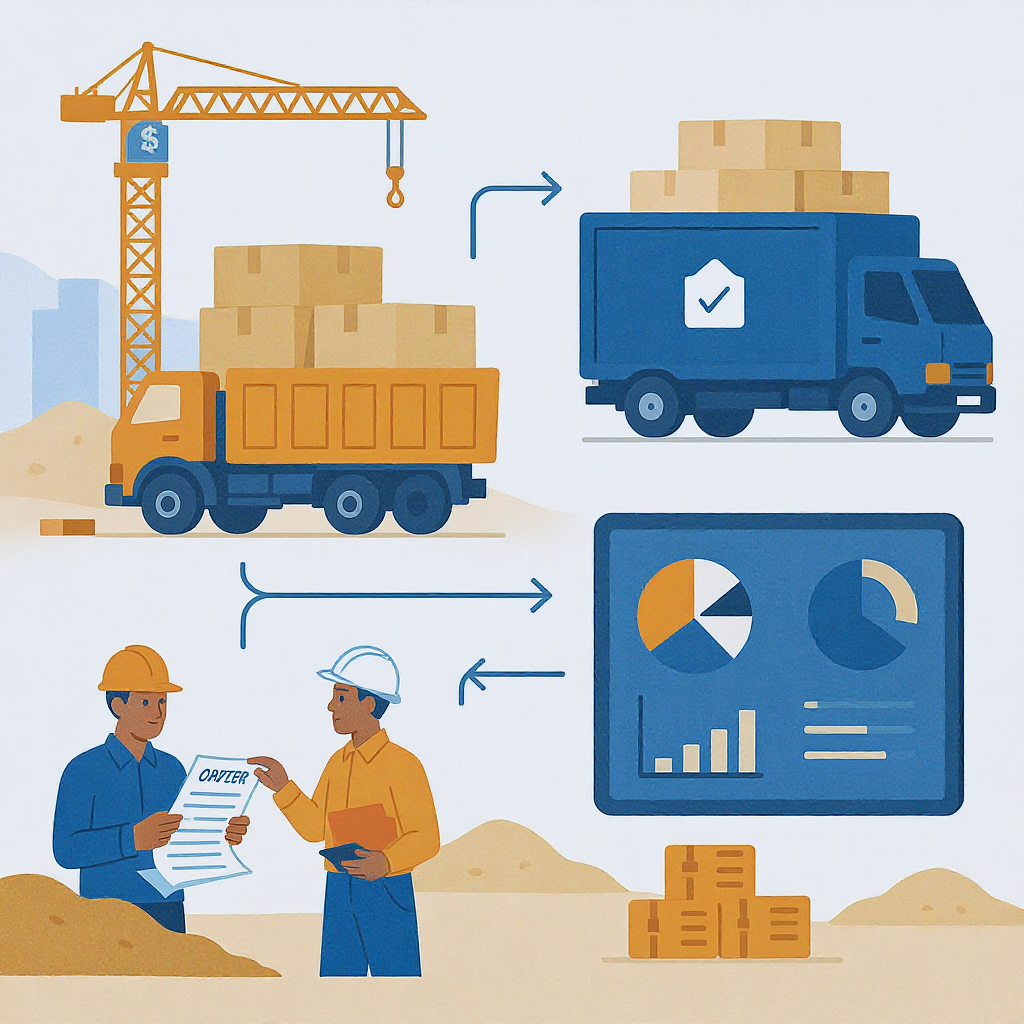
Take the Material Request (MR) → RFQ → Vendor Offers → PO flow. If this is happening across disconnected tools, you’re likely overordering or duplicating orders. A unified system like JobNext ensures every material request is tracked, approved, and converted into orders systematically. It even integrates approval workflows, so no one bypasses the process.
According to The Hidden Cost of Tool Fragmentation from JobNext.ai, disconnected systems can reduce productivity by up to 20% — a massive hit for contractors already operating on thin margins.
Step 2: Standardize Vendor Evaluation
Do you know which of your suppliers consistently deliver on time? Or which one sneaks in hidden costs? If not, you’re likely paying a premium for inefficiency. A procurement strategy must include a vendor evaluation framework.
Here’s a simple formula:
| Criteria | Weightage (%) | Vendor A | Vendor B |
|---|---|---|---|
| On-time delivery | 40% | 85 | 95 |
| Pricing | 30% | 90 | 80 |
| Quality | 20% | 75 | 85 |
| Responsiveness | 10% | 80 | 70 |
| Total Score | 100% | 83 | 85 |
Notice that Vendor B scores higher overall, even though Vendor A offers better pricing. This approach ensures you’re not just chasing the lowest price tag but the best value.
Step 3: Negotiate Smarter Contracts
Ever signed a contract, only to find out later it’s bleeding you dry? That’s what happens when you don’t negotiate terms like payment cycles, penalties for delays, or discounts for bulk orders. Always aim for long-term contracts with clear terms — they give you leverage and predictability.
And don’t overlook the importance of data. If you’re using a system like JobNext, you can pull historical purchase data to strengthen your negotiation game. Suppliers respect numbers, not vague promises of future orders.
Step 4: Monitor Real-Time Procurement Costs
Here’s where most contractors fail. They track expenses at the end of the project, not during execution. By then, it’s too late to course-correct.
Real-time cost monitoring is critical. JobNext’s dashboards, for example, let you see project-wise procurement spend the moment it happens. This means you can spot cost overruns early — and act. According to Construction Supply Chain Resilience, contractors who monitor real-time costs reduce material wastage by up to 15%.
Step 5: Build a Vendor Performance Database
Think about it: you wouldn’t hire a subpar subcontractor twice. So why tolerate bad vendors? A vendor performance database tracks key metrics like delivery times, quality issues, and responsiveness.
Here’s a practical example. One of our clients used JobNext to record vendor performance on a project in Oman. By the next project, they’d weeded out 3 vendors who were consistently late. Result? 12% faster project delivery.
Final Thoughts
Procurement isn’t just about buying materials. It’s about controlling costs, improving efficiency, and setting your projects up for success. And yes, it’s hard work. But with tools like JobNext and a structured approach, it’s doable.
If you’re still relying on spreadsheets or disconnected systems, you’re leaving money on the table. Check out The Contractor's First ERP to understand why digital transformation is the next step for your procurement strategy.
Ready to see JobNext in action?
Multi-tenant SaaS ERP for construction, facilities management, and contracting — covering preconstruction, project execution, procurement, HR & payroll, equipment, finance, and 150+ analytics reports.
Get Started Free →Learn more at EstimateNext