Why Contractors Bleed Margins Without Risk-Based Bid Pricing
Margins in construction are razor-thin. You’re up against rising material costs, unpredictable labor markets, and clients who want everything faster and cheaper. But here’s the real kicker: most contractors lose money before they even start the project. Why? Because their bids don’t account for risk properly.
Risk-based bid pricing isn’t just a buzzword. It’s a survival tool. If you’re still guessing on contingencies or treating risk as an afterthought, you’re throwing money away. Let’s break it down.
The Brutal Truth About Risk in Construction Bids
Every project has risk—delayed approvals, scope creep, material shortages, or even vendor defaults. The problem? Most contractors either:
- Ignore these risks entirely. They bid too low to win the job, only to watch their costs explode later.
- Overcompensate with blanket contingencies. They add a random 10-15% markup across the board, making their bid uncompetitive.
Neither works. One loses you money. The other loses you jobs.
A risk-based approach is different. It forces you to identify, quantify, and price risks individually. For example:
- What happens if steel prices jump mid-project?
- What’s the cost of a potential delay caused by subcontractor underperformance?
- How much should you budget for rework if the design isn’t finalized?
You build these factors into your bid from Day 1. Not as guesswork—but as calculated, defensible line items.
Real-World Example: Steel Price Volatility
Steel prices have historically shown wild fluctuations. In 2021, global steel prices surged by over 50% due to supply chain disruptions. Contractors who didn’t account for this in their bids faced massive cost overruns. A risk-based bid would have flagged this as a high-probability, high-impact risk and included a contingency tied to steel costs.
The 3-Step Framework for Risk-Based Bid Pricing
So how do you actually price risk? Here’s a simple framework we’ve seen work for contractors:
1. Identify Likely Risks Early
Don’t wait until execution to start thinking about risks. Use the preconstruction phase to pinpoint issues. Review:
- Historical data from similar projects
- Vendor and subcontractor performance records
- Market trends for materials and labor
Actionable Steps:
- Conduct a Risk Brainstorming Session: Gather input from your estimators, project managers, and procurement team. Each team member will have unique insights.
- Leverage Industry Reports: Publications like ENR (Engineering News-Record) or McKinsey’s construction studies often highlight emerging risks in the industry.
- Create a Risk Register: List potential risks by category (e.g., material, labor, design, client delays) and track them throughout the project lifecycle.
Example: If you’re bidding on an MEP project and know copper prices are volatile, flag that upfront. Similarly, if the client’s approvals process is notoriously slow, bake in those delays.
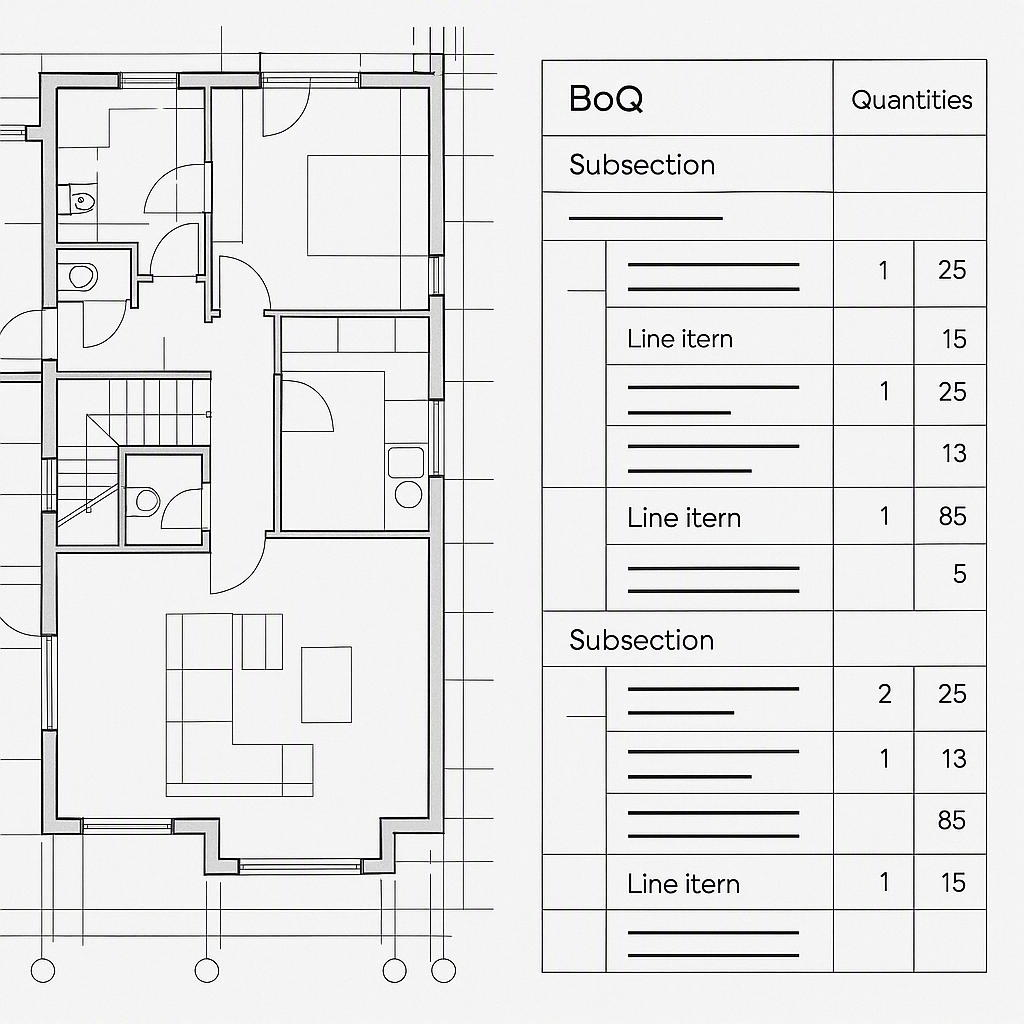
Tool Tip: The JobNext Preconstruction module helps contractors track risks against BOQ (Bill of Quantities) items directly. You can attach notes, historical rates, and even contingencies by scope.
2. Quantify the Impact
Here’s where most contractors fail—they stop at identifying risks but don’t calculate their financial impact. Don’t make that mistake. Ask:
- What’s the worst-case scenario?
- What’s the probability of it happening?
Example Calculation
For instance, if steel prices rise 20%, how much will that add to your material costs? Multiply the cost impact by the likelihood to get a risk-adjusted cost.
| Risk | Impact (₹) | Probability (%) | Risk-Adjusted Cost (₹) |
|---|---|---|---|
| Steel price volatility | 5,00,000 | 30% | 1,50,000 |
| Subcontractor delay | 3,00,000 | 50% | 1,50,000 |
| Design rework | 2,00,000 | 40% | 80,000 |
| Total Risk Adjustment | ₹3,80,000 |
Actionable Tip:
- Use Monte Carlo simulations or sensitivity analysis if you’re dealing with a large, complex project. These tools give you a more robust understanding of how risks interplay.
3. Integrate Risk Into Your Bid
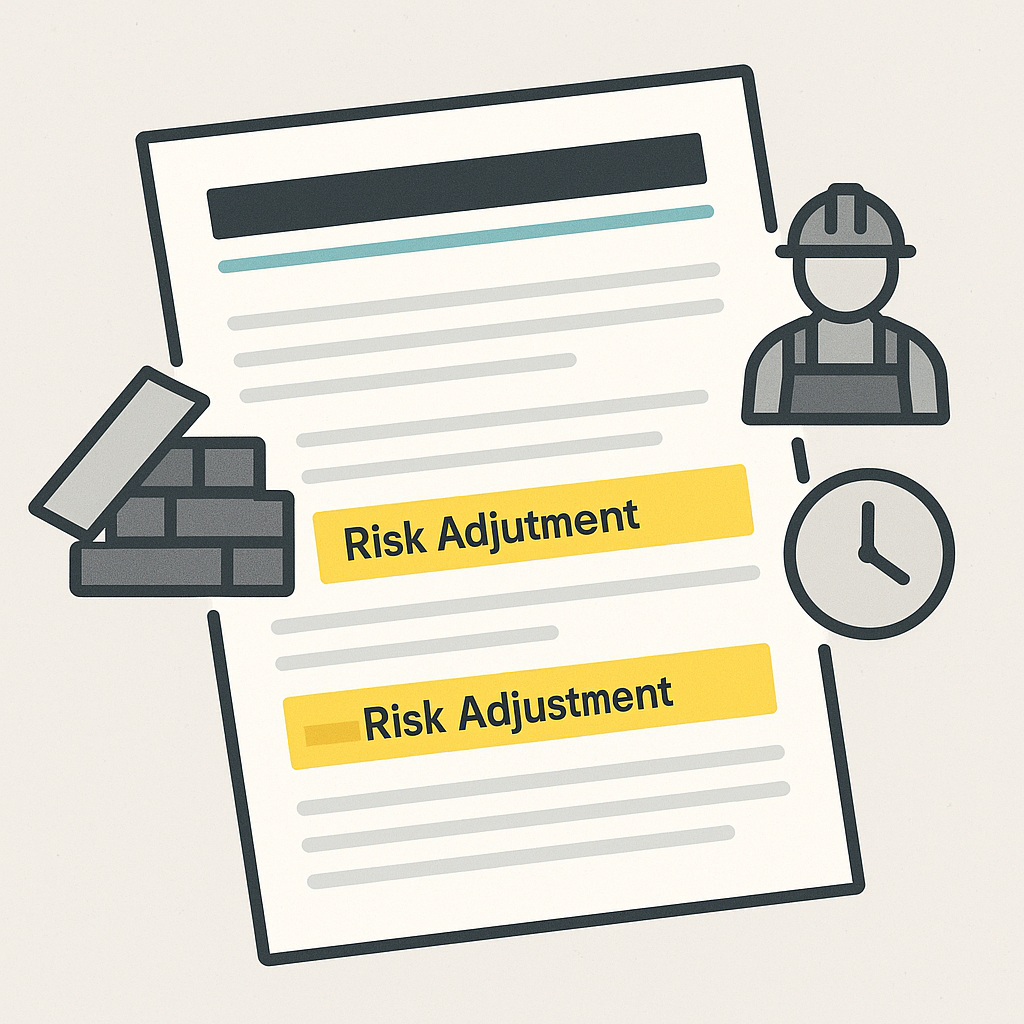
You’ve quantified the risks. Now, where do they go in your bid? Here’s the trick: don’t lump them under “contingency.” Instead, allocate them to specific BOQ items or phases.
Example Allocation:
- Add steel price volatility under “Material Costs.”
- Include subcontractor delay costs in “Site Overheads.”
- Account for design rework in “Miscellaneous Expenses.”
This transparency not only makes your bid more realistic, but it also builds trust with clients. If they question your pricing, you can point to specific risks and data—not vague justifications.
Tool Highlight: JobNext’s Estimate-Based Quote feature is perfect for this. It lets you build bottom-up estimates with detailed breakdowns for labor, material, plant, and subcontractor costs. Risks can be added as line items without messing up project budgets.
Why Most Contractors Get It Wrong
You might be thinking: “This sounds great, but who has time for all this analysis?” That’s fair. Most teams are already stretched thin.
But here’s the reality: skipping this process costs you more in the long run. A 2023 McKinsey report found that poorly priced bids are the #1 reason contractors lose 5-10% of their margins on large projects. The math is brutal, but it’s also avoidable.
Common Pitfalls:
- Relying on Gut Instincts: Many contractors guess contingencies without data.
- Underestimating Risks: A minor oversight, like assuming vendor reliability, can snowball into major delays.
- Failing to Update Risk Models: Market conditions change rapidly. Yesterday’s assumptions may not apply today.
The good news? Tools like JobNext make this manageable. You can automate risk tracking, integrate it into your BOQ, and even generate “what-if” scenarios. For example, if steel prices rise 15%, you’ll know exactly how it impacts your bid.
Case Study: An HVAC Contractor Who Got It Right
One of our clients—a mid-size HVAC contractor in the UAE—used to bid aggressively low to win jobs. They’d win contracts but lose margins because of unexpected risks like:
- Vendor delays on imported ductwork
- Scope changes during execution
- Rising labor costs during peak summer months
Their Transformation:
Using JobNext’s risk-based pricing tools, they restructured their approach. Here’s what changed:
- Flagged High-Risk BOQ Items: For example, they identified imported components as a risk category.
- Added Risk-Adjusted Costs: They included contingencies based on historical data.
- Evaluated Subcontractor Bids Holistically: Instead of choosing the lowest bid, they considered risk factors like past performance and reliability.
Results:
- Improved Margins: Their average project margins increased from 6% to 10% over 12 months.
- Reduced Disputes: With transparent bids, clients were less likely to contest change orders.
The Link Between Risk Pricing and Profitability
Here’s the bottom line: if you’re not pricing risk, you’re gambling with your margins. And in today’s volatile construction market, that’s a bet you can’t afford to lose.
Want proof? A recent blog on EstimateNext.ai showed that even a 2% underestimation on material markups can wipe out 30% of a project’s profits. The numbers speak for themselves.
FAQ
1. How do I convince clients to accept risk-adjusted bids?
Be transparent. Break down the risks and their costs. Clients appreciate data-backed estimates over vague contingencies.
2. What if I don’t have historical data for risk pricing?
Start small. Use industry benchmarks or consult with vendors. Over time, track your own project data to refine estimates.
3. Aren’t risk-adjusted bids less competitive?
Not if done correctly. Most bids fail because they overlook risks, leading to mid-project cost escalations. Risk-based pricing builds trust and credibility.
4. What’s the best way to track risks during execution?
Use project management tools that integrate risk tracking with schedules and budgets. JobNext, for example, lets you update risks dynamically as the project progresses.
5. How can I estimate probabilities for risks?
Use historical data, consult industry experts, or apply probabilistic models like Monte Carlo simulations.
Ready to Stop Bleeding Margins?
If you’re dealing with margin erosion, JobNext can help. Its risk-based pricing tools make it easy to track, quantify, and price risks accurately. Get started free →
Learn more at EstimateNext