How Indian FM Companies Can Streamline Multi-Project Cost Tracking with ERP Solutions
I used to think cost tracking in facilities management (FM) was a straightforward task. You assign budgets, track expenses, and compare totals. If something goes over, you adjust mid-project. Simple, right? Turns out, I was wrong.
The cracks started showing when I worked with an FM company managing multiple large projects across India. Despite having a dedicated finance team and a project management tool, margins were shrinking. And no one could pinpoint why. I could see there were delays in approvals and missed billing, but the real problem was deeper: their cost data was scattered. Materials, labor, equipment—none of it was being tracked in real-time across projects. What’s worse? They relied heavily on Excel sheets and emails to manage it all.
This isn’t unique. A study by KPMG found that 78% of construction and FM companies still rely on manual processes for cost tracking. The result? Lost margins, billing errors, and unapproved costs slipping through.
The Tipping Point
One incident made the issue unavoidable. Equipment rental costs were being billed to the wrong project for months due to the lack of a centralized tracking system. By the time the error was caught, the project’s margin had dropped significantly. Fixing it required hours of reconciling spreadsheets, phone calls, and back-and-forth emails. The worst part? This wasn’t a one-off. Similar issues were found across multiple projects.
Why the Old System Lasted So Long
If this process was so flawed, why did it persist? Because it was “good enough.” When you’re running multiple projects, the focus is on delivering results, not questioning systems. Teams are reluctant to adopt new tools because they don’t want to disrupt workflows. There’s also a mindset of “We’ve always done it this way, and it works.”
But does it really work? Not when you’re losing money without knowing where it’s going. Not when project managers spend hours digging through emails to match invoices. And definitely not when clients complain about billing errors.
The Real Fix: Unified ERP for Centralized Cost Tracking
Here’s what changed my perspective: implementing an ERP system. Specifically, I saw how a platform like JobNext addressed every one of the FM company’s challenges. Let me break it down.
1. Real-Time Project Cost Visibility
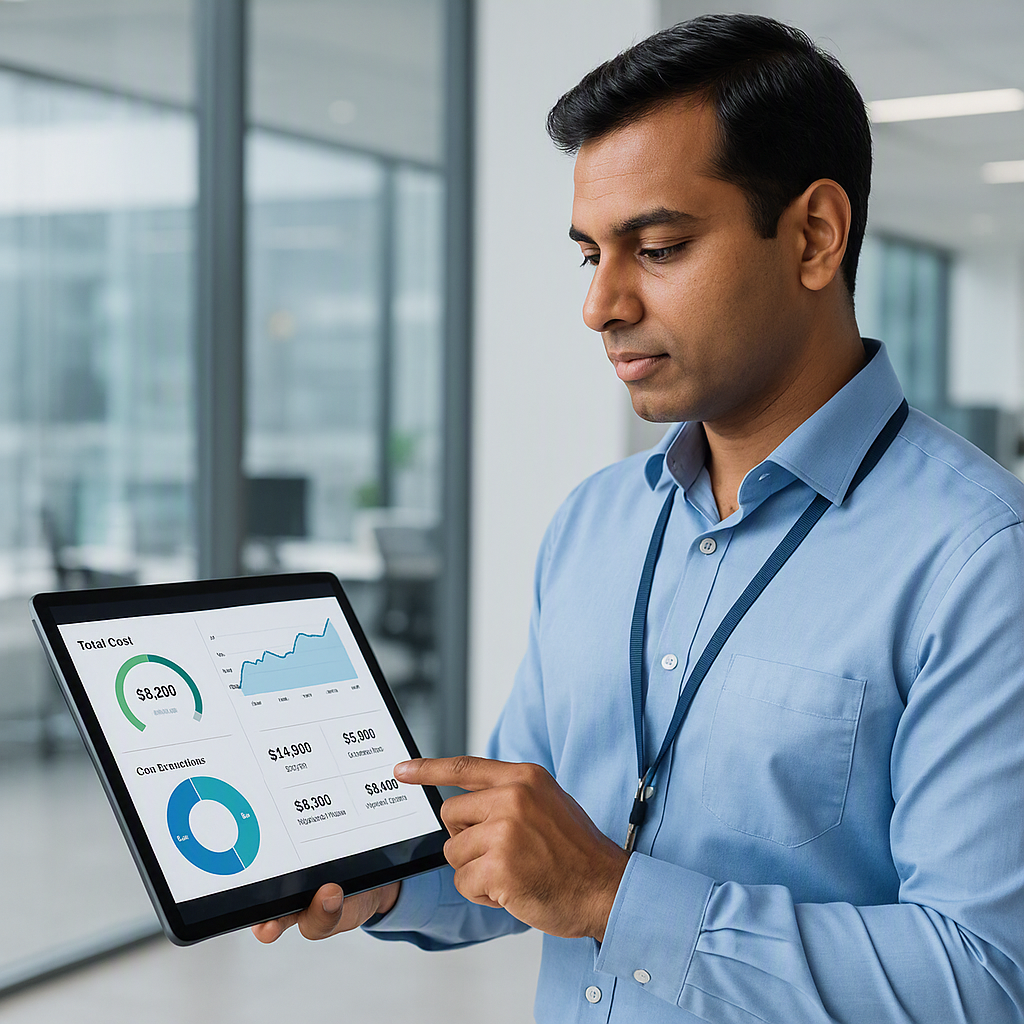
With an ERP system, every cost—labor, materials, equipment—is tied to a specific project. No more hunting through Excel sheets or relying on memory. The system tracks cost versus budget at the BOQ, scope, and estimate levels. If a project starts to go over budget, managers get automatic alerts. This kind of visibility makes a world of difference.
Illustrative example — Let’s say you have three ongoing projects, and one is running over budget on labor while another is underutilizing its workforce. A good ERP lets you shift resources in real-time, balancing costs across projects and protecting your margins.
2. Enforced Budget Controls
Another feature that stands out is how an ERP enforces budget discipline. Every purchase order, subcontractor payment, or material request is automatically checked against the approved budget. If there’s a mismatch, the system flags it before the cost is incurred. This isn’t about micromanaging—it’s about stopping waste before it happens.
Too often, FM companies find themselves in scenarios where a single unapproved purchase snowballs into a significant overspend. Even small unapproved material orders can accumulate into substantial unaccounted costs across multiple projects.
3. Centralized Billing with Multiple Methods
Billing is another weak spot in FM operations. Some projects use milestone-based billing, others are monthly, and some require a mix of supply BOQ and one-off invoices. Without a standardized system, it’s easy to miss invoicing completed work or double-bill, both of which bleed revenue.
An ERP’s ability to handle multiple billing methods ensures all completed work is invoiced correctly and on time. It also integrates directly with financial modules to track payments and aging, reducing the need for manual reconciliation.
4. Multi-Site Workforce Management
Indian FM companies often manage teams spread across dozens of sites. Attendance, payroll, and leave tracking across these locations can become a nightmare, especially when you’re using disconnected systems. With an ERP, you can centralize all workforce data. This means real-time visibility into who’s working where, automated payroll processing, and accurate cost allocation for labor.
Illustrative example — An ERP allows FM companies to allocate labor costs based on attendance data directly tied to specific sites. This eliminates guesswork and ensures that each project bears its fair share of costs.
What I Do Differently Now
After seeing the impact of a unified ERP platform, I approach cost tracking very differently. The first step is always centralizing data. If your costs are scattered across spreadsheets, emails, and standalone tools, you’re setting yourself up for failure. Second, I prioritize real-time tracking. Delayed data is useless when margins are shrinking.
Finally, I’ve learned to question the “good enough” mindset. If your current system works, great. But does it scale? Can it handle 10 projects? 20? If the answer is no, it’s only a matter of time before it breaks.
What I’m Still Not Sure About
The biggest challenge is adoption. Even the best ERP system won’t work if teams don’t use it. Training, change management, and ongoing support are critical, and they’re often underestimated. How do you convince a project manager with 20 years of experience to trust a new tool? That’s a question I’m still grappling with.
FAQ
1. How do I know if my FM company needs an ERP?
If you’re managing multiple projects and struggling with cost tracking, it’s time to consider an ERP. Look for signs like frequent billing errors, unapproved costs, and difficulty tracking expenses across projects.
2. Isn’t an ERP too expensive for small FM companies?
Not necessarily. Modern SaaS ERPs are subscription-based, so you pay only for what you need. Plus, the cost savings from preventing revenue leakage often outweigh the subscription fees.
3. How long does it take to implement an ERP?
Implementation timelines vary depending on the complexity of your operations. For small to mid-size FM companies, it can take several months. The key is planning and proper training.
4. Can an ERP integrate with my existing accounting software?
Yes, most modern ERPs offer integrations with popular accounting tools like Tally. This ensures smooth statutory reporting and compliance.
5. What’s the biggest risk of not adopting an ERP?
Margin erosion. Without a centralized system, you risk losing money to billing errors, unapproved costs, and inefficient resource allocation.
If this sounds familiar, an ERP solution can help. It’s a unified platform designed for Indian FM companies managing multiple projects. Learn more and get started today. →
Learn more at EstimateNext