The Ugly Truth About Estimation Errors
Let’s face it—most contractors lose money before they touch the site. Why? Because the estimation process is riddled with blind spots. You think you’ve covered everything, but six months into the project, the overruns start piling up. Sound familiar?
Here’s the good news: value engineering during estimation can stop the bleeding. Done right, it doesn’t just cut costs—it ensures you’re spending money on what matters most. And with tools like JobNext’s Estimate-Based Quote process, you can make this a repeatable system, not a one-off fluke.
What Is Value Engineering During Estimation?
Don’t roll your eyes. This isn’t about slashing budgets haphazardly. Value engineering is about maximizing functionality at the lowest cost. It’s asking, "Am I overengineering this? Could I get the same result for less?"
Key Principles of Value Engineering
- Functionality Over Excess: The goal is to achieve the necessary functionality without unnecessary expenses. This could mean rethinking material choices, construction methods, or even the project design itself.
- Stakeholder Collaboration: Bringing all relevant parties—engineers, procurement teams, and even clients—into the estimation process ensures no stone is left unturned.
- Continuous Improvement: Value engineering isn’t a one-time task. It’s a mindset that should be applied throughout the project lifecycle.
How It Looks in Practice
-
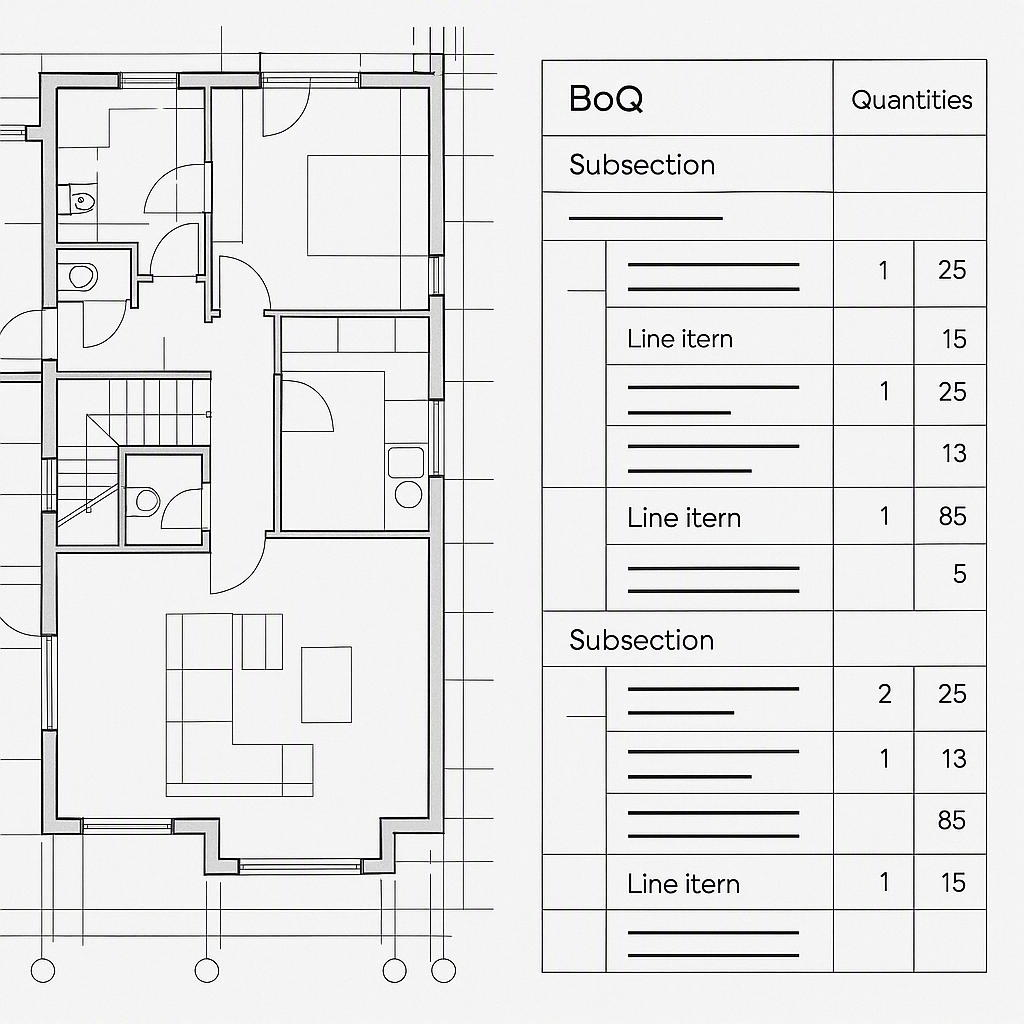
Break Down the BOQ: Analyze every line item in your Bill of Quantities (BOQ). For example:
- Are you specifying high-grade materials where medium-grade would suffice?
- Could a simpler design reduce labor hours and complexity?
Example: A contractor working on a ₹15 crore residential project realized that using locally sourced, mid-grade bricks instead of imported bricks reduced costs by 20% without compromising structural integrity.
-
Assess Alternatives: Substituting doesn’t always mean compromising. For instance:
- Using precast concrete elements instead of site-cast can save both time and money without affecting quality.
- Opting for engineered wood over solid wood can balance cost and aesthetics.
-
Involve Stakeholders Early: Too often, engineers and procurement teams get involved after the estimate is locked. Their input during the estimation stage can uncover savings you’d otherwise miss.
Case Study: In a ₹10 crore commercial project, early input from the procurement team helped identify a local supplier for steel reinforcements, saving ₹30 lakh in transportation costs.
Data-Driven Decisions
Data is a cornerstone of effective value engineering. By using historical project data and market trends, you can better predict costs and identify opportunities for savings. Tools like JobNext make this possible by providing real-time analytics and cost breakdowns.
The Role of Accurate Estimation Tools
Here’s where most contractors fail: they rely on guesswork instead of data. A 2023 McKinsey report found that inaccurate estimates are the #1 driver of margin erosion in construction projects [Source: McKinsey, 2023].
Features of Advanced Estimation Tools
With tools like JobNext’s Estimate-Based Quote, you can:
- Build Detailed Cost Estimates: Break down costs for labor, materials, equipment, and overheads—line by line.
- Account for Waste Percentages: Reflect real-world conditions by applying waste percentages (e.g., 3-10% for materials).
- Maintain Clarity: Keep the budget separate from the quotation estimate to ensure transparency and control over your numbers.
Why This Matters
This approach doesn’t just improve accuracy—it’s a game-changer for cost optimization. Inaccurate estimates often lead to:
- Scope creep
- Unplanned budget overruns
- Strained client relationships
Concrete Example: A contractor using outdated spreadsheets for a ₹5 crore renovation project underestimated material waste, leading to ₹10 lakh in unexpected costs. A tool like JobNext would have flagged these discrepancies early.
Real-World Example: The ₹50 Lakh Overrun That Never Happened
One of our clients recently bid on a ₹20 crore interior design project. During estimation, they spotted a ₹50 lakh savings opportunity using JobNext’s Estimate-Based Quote. How?
- Labor Optimization: Instead of hiring additional skilled workers, they adjusted the BOQ to include modular components that reduced on-site labor needs.
- Material Substitution: Switching from imported marble to a high-quality domestic alternative saved ₹25 lakh without compromising aesthetics.
- Equipment Utilization: They scheduled machinery more efficiently, cutting idle time by 40%.
The result? A winning bid and a 12% profit margin instead of the usual 5%.
Actionable Takeaway: Look for modular solutions and domestic alternatives as part of your estimation process. These often deliver significant savings without affecting quality.
Why Most Contractors Miss These Opportunities
Overconfidence in Historical Data
Just because a material or method worked before doesn’t mean it’s the best choice now. Market rates, availability, and client priorities change. For example, the cost of imported steel skyrocketed in 2022 due to supply chain disruptions. Contractors who didn’t adapt to these changes faced significant overruns.
Reliance on Manual Processes
Spreadsheets are fine for small jobs. But for complex projects, they’re a liability. They don’t flag missing line items or calculate waste percentages automatically.
Example of Failure: A contractor working on a ₹50 crore hospital project forgot to include scaffolding costs in their BOQ. This oversight cost them ₹15 lakh. Tools like JobNext would have flagged this omission.
The Cost of Doing Nothing
Think skipping value engineering is no big deal? Let’s do the math:
-
Unoptimized Material Costs:
- Over-specifying materials by just 5% can add ₹10 lakh to a ₹20 crore project.
-
Labor Inefficiencies:
- Wasted worker hours cost ₹500-₹800 per day per worker. Multiply that by 100 workers over six months.
-
Equipment Idle Time:
- A single crane sitting idle costs ₹1 lakh+ per day.
Case Study: In a ₹100 crore infrastructure project, failing to optimize crane usage caused ₹2 crore in additional costs over two years.
How to Get Started
If you’re new to value engineering, start small:
- Pick One Project: Select a medium-sized project to pilot value engineering techniques.
- Review the BOQ: Identify at least three line items where cost-saving alternatives could be used.
- Use the Right Tools: Implement a structured tool like JobNext to track changes and measure results.
Example Framework:
| Task | Action | Tool/Process |
|---|---|---|
| Material Optimization | Analyze alternatives | JobNext BOQ module |
| Labor Efficiency | Introduce modular designs | JobNext Scheduler |
| Equipment Utilization | Plan usage to minimize idle time | JobNext Analytics |
FAQ
1. What’s the difference between cost-cutting and value engineering?
Cost-cutting focuses purely on reducing expenses, often at the expense of quality. Value engineering prioritizes efficiency without compromising functionality.
2. Can small contractors benefit from this process?
Absolutely. Even on a ₹50 lakh project, a 5% savings adds ₹2.5 lakh directly to your bottom line.
3. Is value engineering time-consuming?
It can be if done manually. But with tools like JobNext, it becomes a streamlined process integrated into your estimation workflow.
4. How do I convince clients to accept value-engineered solutions?
Focus on the benefits: cost savings, faster timelines, and maintaining quality. Provide detailed cost-benefit analyses to make your case.
5. What metrics should I track to measure success?
Key metrics include cost savings, profit margin improvements, and reduction in project timelines.
Call to Action
If you’re tired of watching your margins erode, it’s time to act. JobNext makes value engineering during estimation simple, accurate, and repeatable. Start optimizing your estimates today →
Learn more at EstimateNext